3.8
9 verified reviews
About
For over a century, the Eixample was defined by the Cerdà grid—a relentless, beautiful, but ultimately suffocating machine for moving cars and people through a haze of diesel fumes. It was a masterpiece of urban planning that forgot one thing: the people actually living in it. Enter the Superilla, or the Superblock. It is a radical, high-stakes experiment in urban surgery, and the stretch of Carrer del Comte Borrell and Consell de Cent is its beating, sometimes contested, heart. This isn't a park in the way you’re used to. There are no gates, no manicured lawns, and no 'keep off the grass' signs. It is a street that decided it didn't want to be a street anymore.
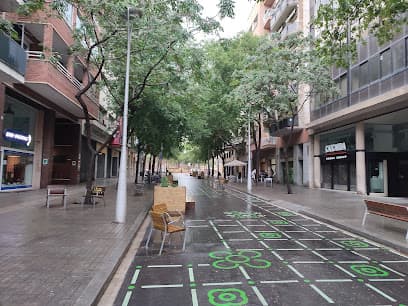
Walking onto the Superilla Eixample for the first time is a disorienting experience for anyone who knows the old Barcelona. You expect the screech of brakes and the smell of exhaust; instead, you get the sound of a toddler falling off a tricycle and the sight of elderly men occupying benches like they’re front-row seats at a theater. The asphalt has been ripped up and replaced with granite blocks and permeable paving. The intersections, once dangerous whirlpools of traffic, have been transformed into 'plazas'—open squares filled with oversized planters, wooden benches that look like modern art, and playgrounds that actually get used. It’s a vision of a city that has decided to stop apologizing for its density and start embracing its humanity.
But don't let the pretty planters fool you; this place is a political lightning rod. To some, it’s a green utopia, a breath of fresh air in a city that desperately needs it. To others—mostly the ones who need to drive a delivery van or a taxi—it’s a bureaucratic nightmare that has pushed traffic to the surrounding streets and sent property values into the stratosphere. You can feel that tension in the air. You see it in the high-end specialty coffee shops that have sprouted like mushrooms where dusty hardware stores used to be. It’s the classic Barcelona struggle: the fight between preserving the soul of a neighborhood and the inevitable creep of gentrification.
The best way to experience the Superilla is to do exactly what the planners intended: nothing. Sit down. Watch the flow. You’ll see the 'Green Axes' (Eixos Verds) in action—pedestrians reclaiming the center of the road, cyclists gliding past without fear of being doored, and the local dogs sniffing at the new Mediterranean flora. The planting is deliberate—low-water, hardy shrubs and trees that will eventually provide a canopy of shade over the granite. It’s a work in progress, a living laboratory for how we might survive the next century of urban living.
Is it worth your time? If you want the 'classic' tourist experience, go to the Gothic Quarter and get lost in the alleys. But if you want to see where Barcelona is going—for better or worse—you come here. You grab a vermut from a corner bar, find a spot on one of those chunky wooden benches, and watch the city try to figure itself out. It’s honest, it’s messy, and it’s a hell of a lot more interesting than another souvenir shop. It’s a reminder that a city isn't just a collection of buildings; it’s a negotiation between the people who live there and the space they’re allowed to occupy.
Type
Park
Duration
1-2 hours
Best Time
Late afternoon when the neighborhood comes alive with families and the 'after-work' vermut crowd.
Features
Park
Categories
Urban DesignPublic SpaceSustainabilityArchitecture
Ticket Prices
Free Admission
No tickets required
Must-See Highlights
The 'Plaza' at the intersection of Consell de Cent and Comte Borrell
The sustainable drainage gardens and new tree canopies
The massive wooden 'social' benches designed for group seating
The integrated children's play areas built directly into the streetscape
Visitor Tips
Don't just walk through; grab a coffee or a beer and sit on the public benches to truly feel the neighborhood vibe.
Visit the nearby Mercat de Sant Antoni first, then walk up Comte Borrell to see the transition from old market to new superblock.
Watch out for bicycles and scooters; while cars are restricted, it's a major thoroughfare for eco-friendly transport.
Good For
Families with childrenArchitecture and urban planning enthusiastsSlow travelersPhotographers looking for modern urban shots
Why Visit
Revolutionary urban 'Superblock' design reclaiming 70% of street space for pedestrians
The 'Green Axes' featuring sustainable Mediterranean landscaping and permeable paving
Public 'living rooms' with custom-designed street furniture and community play areas
Nearby Landmarks
- Mercat de Sant Antoni (4-minute walk)
- University of Barcelona (12-minute walk)
- Plaça d'Espanya (15-minute walk)
Accessibility
- Fully wheelchair accessible
- Level paving throughout
- Ample public seating
- Tactile paving for the visually impaired
Location
Carrer del Comte Borrell, 235
Eixample, Barcelona
Nearby Hotels
Nearby Restaurants
In Eixample
ATTRACTION
Mural Margalef
Eixample
A towering splash of Mediterranean blue breaking the rigid geometry of Eixample, Joan Margalef’s mural is a visceral reminder that Barcelona’s soul isn't just in its museums.
0.0(0)
Tourist attraction
ATTRACTION
Mural Margalef
Eixample
A geometric middle finger to urban decay, this massive kinetic mural by Eduard Margalef turns a drab Eixample blind wall into a rhythmic, shifting explosion of optical art.
0.0(0)
Tourist attraction
ATTRACTION
Happy Foodies
Eixample
Forget the plastic-wrapped tourist traps; this is a deep dive into the grease, garlic, and soul of Catalan cooking where you actually learn to handle a knife and a porrón.
0.0(0)
Sightseeing tour agencyTour agency
Frequently Asked Questions
Is Superilla Eixample worth visiting?
Yes, if you are interested in urban design or want to see a quieter, more local side of the city. It’s a unique example of how modern cities are reclaiming space from cars for people.
What is the best part of the Superblock to walk?
The intersection of Carrer del Consell de Cent and Carrer del Comte Borrell is the heart of the project, featuring the most significant pedestrian plazas and greenery.
Are there places to eat in the Superilla?
Absolutely. The pedestrianization has led to an explosion of terrace dining and specialty cafes along Consell de Cent and Comte Borrell, ranging from traditional bodegas to modern brunch spots.
How do I get to the Superilla Eixample?
The easiest way is via Metro Line 1 (Urgell) or Line 2 (Sant Antoni). From there, it's a short 5-minute walk to the pedestrianized zones.
Reviews
0 reviews for Superilla Eixample
No reviews yet. Be the first to share your experience!