4.1
8 verified reviews
About
Most people come to Barcelona for the chaos. They want the clatter of tapas plates, the neon hum of the Raval, and the relentless, sun-drenched march of the Eixample. But eventually, the stone starts to close in. You need green. You need dirt. You need to breathe air that hasn't been filtered through a million scooter exhausts. That’s where the Servei de Gestió de Parcs Naturals comes in, though it’s probably not what you’re expecting.
Located on the third floor of the Edifici del Rellotge—the Clock Building—this isn't a park. Let’s get that straight. If you show up here in zip-off trekking pants and a CamelBak expecting a trailhead, you’re going to look like an idiot. This is the administrative nerve center for the Xarxa de Parcs Naturals, the network of twelve natural spaces that keep Catalonia from becoming one giant parking lot. It’s a place of maps, permits, and the quiet, essential bureaucracy of conservation.
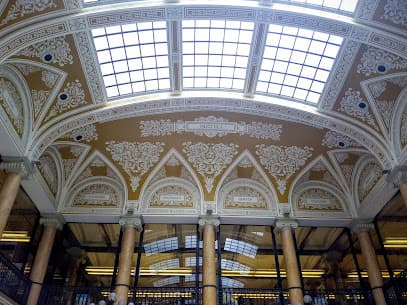
But here’s the thing: even if you don’t have a burning need to discuss forest management or pick up a topographical map of Montseny, the building itself is a goddamn masterpiece. The Edifici del Rellotge is part of the Escola Industrial complex, a sprawling testament to Barcelona’s industrial might. This used to be the Can Batlló textile factory, a place of sweat and steam, before it was transformed into a temple of technical education. The architect, Joan Rubió i Bellver—a man who spent years in Gaudí’s orbit—took the bones of the old factory and turned them into something noble. The red brickwork, the soaring ceilings, and that iconic clock tower are pure Barcelona soul.
Walking into the Escola Industrial feels like stepping into a different century, one where we still believed that industry and beauty could live in the same house. The Servei de Gestió de Parcs Naturals sits inside this shell, managing the wild from within the heart of the city’s most rigid grid. It’s a beautiful irony. From this office in the Eixample, they oversee the jagged peaks of Montserrat, the volcanic landscapes of Garrotxa, and the salt marshes of the Delta de l'Ebre.
Is it worth visiting? If you’re an architecture nerd, absolutely. The Escola Industrial is one of the most underrated sites in the city, blissfully free of the selfie-stick-wielding hordes that plague the Sagrada Familia. If you’re a serious hiker or a nature lover planning a deep dive into the Catalan backcountry, it’s a goldmine of information. You can find out which trails are closed, where the mountain refuges are, and how to respect the land you’re about to tramp over.
The vibe is quiet, professional, and distinctly un-touristy. It’s a working office in a historic monument. You’ll see students from the nearby engineering school lounging in the courtyards and civil servants moving with that specific, measured pace of people who know the mountains aren't going anywhere. It’s a reminder that Barcelona isn't just a playground; it’s a functioning capital that takes its surrounding wilderness seriously.
Don't come here for a souvenir t-shirt. Come here to see the gears of the city turning inside a brick-and-mortar relic. Come here to realize that the best parts of Barcelona are often the ones that lead you right out of it. It’s the starting point for every great Catalan adventure, even if the only thing you’re climbing is the stairs to the third floor.
Type
Park, Nature preserve
Duration
30-45 minutes
Best Time
Weekday mornings when the administrative offices and the Escola Industrial complex are fully active.
Features
Park
Nature preserve
Tourist attraction
Categories
ArchitectureNature InformationIndustrial Heritage
Ticket Prices
Free Admission
No tickets required
Opening Hours
- Monday8:30 AM to 5:30 PM
- Tuesday8:30 AM to 5:30 PM
- Wednesday8:30 AM to 5:30 PM
- Thursday8:30 AM to 5:30 PM
- Friday8:30 AM to 5:30 PM
- SaturdayClosed
- SundayClosed
Must-See Highlights
The iconic Clock Tower (Torre del Rellotge)
The intricate brickwork of the Escola Industrial courtyards
Topographical maps of the Catalan natural park network
Visitor Tips
Don't expect a park; come for the maps and the architecture.
The Escola Industrial complex is a great spot for quiet photography.
Check their website beforehand if you need specific permits for activities like drone flying or large group events in the parks.
Good For
Architecture loversHikers and outdoor enthusiastsHistory buffsSolo travelers seeking quiet spots
Why Visit
Housed in the historic Edifici del Rellotge, a masterpiece of industrial architecture
The primary information hub for all 12 natural parks in the Barcelona province
Located within the impressive Escola Industrial complex, a quiet escape from tourist crowds
Nearby Landmarks
- 5-minute walk from Hospital Clínic
- 10-minute walk from Mercat del Ninot
- 15-minute walk from Plaça de Francesc Macià
Accessibility
- Elevator access to the 3rd floor
- Accessible entrance to the Escola Industrial complex
Location
Edifici del Relllotge, Carrer del Comte d'Urgell, 187, 3a planta
Eixample, Barcelona
Nearby Hotels
Nearby Restaurants
In Eixample
ATTRACTION
Mural Margalef
Eixample
A towering splash of Mediterranean blue breaking the rigid geometry of Eixample, Joan Margalef’s mural is a visceral reminder that Barcelona’s soul isn't just in its museums.
0.0(0)
Tourist attraction
ATTRACTION
Mural Margalef
Eixample
A geometric middle finger to urban decay, this massive kinetic mural by Eduard Margalef turns a drab Eixample blind wall into a rhythmic, shifting explosion of optical art.
0.0(0)
Tourist attraction
ATTRACTION
Happy Foodies
Eixample
Forget the plastic-wrapped tourist traps; this is a deep dive into the grease, garlic, and soul of Catalan cooking where you actually learn to handle a knife and a porrón.
0.0(0)
Sightseeing tour agencyTour agency
Frequently Asked Questions
Is the Servei de Gestió de Parcs Naturals an actual park?
No, it is the administrative office located in the Eixample district that manages the network of natural parks across the province of Barcelona. It is a resource for maps, information, and permits rather than a place for outdoor recreation.
Can I visit the Edifici del Rellotge for its architecture?
Yes, the building is part of the historic Escola Industrial complex and is a significant example of industrial Modernista architecture. While the offices are for administrative use, the exterior and the general complex are accessible and highly recommended for architecture enthusiasts.
What kind of information can I get here?
You can find detailed information, maps, and brochures regarding the 12 natural parks in the Barcelona region, including Montseny, Montserrat, and Sant Llorenç del Munt i l'Obac.
How do I get to the Servei de Gestió de Parcs Naturals?
The office is located at Carrer del Comte d'Urgell, 187. The easiest way to get there is via the Metro Line 5 (Blue) to the Hospital Clínic station, which is just a short walk away.
Reviews
0 reviews for Servei de Gestió de Parcs Naturals
No reviews yet. Be the first to share your experience!