4.1
9 verified reviews
About
The intersection of Avinguda Diagonal and Passeig de Gràcia is a cacophony of ambition, exhaust fumes, and tourists clutching shopping bags like holy relics. It is the high-octane heart of Eixample, a place where the city’s pulse beats at a frantic, expensive pace. But then, there is the Robert Palace Garden—or Jardins del Palau Robert—a space that feels like a glitch in the matrix of urban chaos. You step through the gate and the volume knob of the city is suddenly turned down to a low hum. It’s not just a park; it’s a tactical retreat.
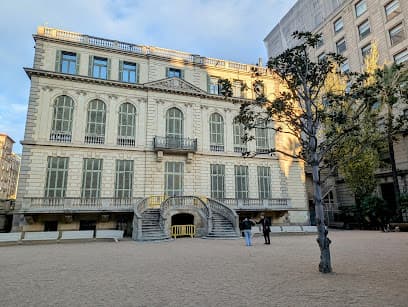
The garden is the backyard of a late 19th-century neoclassical palace built for Robert Robert i Surís, the Marquis of Robert. He was a man of immense wealth and influence, and he wanted a home that reflected a certain Parisian elegance. He got it. The palace itself is all yellow stone and sober lines, designed by Henri Grandpierre and executed by Joan Martorell. But the garden, designed by Ramon Oliva—the same man who laid out the Parc de la Ciutadella—is where the real soul of the place resides. It’s a lush, slightly overgrown pocket of Mediterranean greenery that feels remarkably indifferent to the high-fashion boutiques just a few meters away.
Walking in, you’re greeted by the crunch of gravel underfoot and the sight of massive Canary Island palms reaching for the sky. There are ivy-covered walls, orange trees that scent the air when the season is right, and a collection of benches that have seen decades of clandestine meetings, student study sessions, and weary travelers trying to remember why they thought walking ten miles in espadrilles was a good idea. The layout is irregular, winding, and intimate. It doesn’t demand your awe like the Sagrada Família; it just offers you a seat and a bit of shade.
Today, the palace serves as a cultural center for the Generalitat de Catalunya. This means that while the gardens are a public sanctuary, the building itself is often hosting thoughtfully curated, usually free exhibitions. You might wander in for the shade and end up spending an hour looking at a retrospective of Catalan photojournalism or a deep dive into the history of local fashion. It’s a bit of bureaucratic grace in a city that can sometimes feel like it’s trying to monetize every square inch of sidewalk.
The people here are the real draw. You’ll see office workers from the nearby banks eating their bocadillos in silence, elderly locals who remember when the Diagonal was a dirt road, and the occasional savvy traveler who has realized that the best things to do in Eixample don't always require a ticket or a queue. There is a specific kind of stillness here, a heavy, leafy quiet that is increasingly rare in Barcelona. It’s the kind of place where you can actually hear yourself think, which is a dangerous but necessary thing in a city this beautiful.
Is it the most spectacular garden in the world? No. But it is one of the most necessary. It’s a reminder that even in the middle of a global tourism magnet, there are still places that belong to the locals, or at least to anyone who knows how to find the entrance. It’s a place to reset your internal compass before diving back into the fray of the Eixample. If you’re looking for a free attraction in Barcelona that offers more than just a photo op, this is it. It’s honest, it’s quiet, and it’s exactly what you need when the weight of the city starts to feel a little too heavy.
Type
Garden
Duration
45-90 minutes
Best Time
Weekday mornings for maximum silence or late afternoon to catch the golden hour through the palm fronds.
What People Say
bank(2)
Features
Garden
Categories
ArchitectureCultural CenterPublic ParkExhibition Space
Ticket Prices
Free Admission
No tickets required
Must-See Highlights
The massive Canary Island palms
The neoclassical facade of the main palace
The rotating photography exhibitions in the interior galleries
The quiet benches tucked away in the ivy-covered corners
Visitor Tips
Enter through the Passeig de Gràcia gate for the most dramatic transition from city noise to garden quiet.
Check the official website for current exhibitions; they are often top-tier and almost always free.
There is a tourist information office inside the palace that is much less crowded than the one in Plaça de Catalunya.
Good For
Solo travelersBudget travelersPhotography enthusiastsFamilies with children needing a run-aroundCouples looking for a quiet moment
Why Visit
A completely free oasis in the most expensive district of Barcelona
Compelling rotating cultural and historical exhibitions
Landscape design by Ramon Oliva, the architect of Parc de la Ciutadella
Nearby Landmarks
- 3-minute walk from Casa Milà (La Pedrera)
- 8-minute walk from Casa Batlló
- 1-minute walk from Passeig de Gràcia
- 10-minute walk from Casa de les Punxes
Accessibility
- Wheelchair accessible entrance
- Flat gravel paths
- Elevators available inside the palace for exhibitions
Location
Carrer del Rosselló, 255, 2º 1ª, Eixample
Eixample, Barcelona
Nearby Hotels
Nearby Restaurants
In Eixample
ATTRACTION
Mural Margalef
Eixample
A towering splash of Mediterranean blue breaking the rigid geometry of Eixample, Joan Margalef’s mural is a visceral reminder that Barcelona’s soul isn't just in its museums.
0.0(0)
Tourist attraction
ATTRACTION
Mural Margalef
Eixample
A geometric middle finger to urban decay, this massive kinetic mural by Eduard Margalef turns a drab Eixample blind wall into a rhythmic, shifting explosion of optical art.
0.0(0)
Tourist attraction
ATTRACTION
Happy Foodies
Eixample
Forget the plastic-wrapped tourist traps; this is a deep dive into the grease, garlic, and soul of Catalan cooking where you actually learn to handle a knife and a porrón.
0.0(0)
Sightseeing tour agencyTour agency
Frequently Asked Questions
Is Robert Palace Garden free to enter?
Yes, both the gardens and the majority of the exhibitions inside the Palau Robert are free to the public.
What are the opening hours for Jardins del Palau Robert?
The gardens typically open at 9:00 AM and close at sunset, usually around 8:00 PM in summer and 7:00 PM in winter.
Is Palau Robert worth visiting?
Absolutely, especially if you need a break from the crowds of Passeig de Gràcia. It offers a peaceful atmosphere and high-quality cultural exhibits for free.
How do I get to Robert Palace Garden?
It is located at the top of Passeig de Gràcia. The easiest way is to take the Metro (L3 or L5) to the Diagonal station, which is right next to the entrance.
Reviews
0 reviews for Robert Palace Garden
No reviews yet. Be the first to share your experience!