4.2
43 verified reviews
About
Forget the incense and the hushed cathedrals for a second. If you want to find the real soul of Barcelona’s spiritual history, you don’t go to the Gothic Quarter; you put on some boots and sweat your way up into the Collserola hills. The Revolta de les Monges—the Revolt of the Nuns—isn’t a museum or a curated experience. It’s a clearing in the woods, a set of ruins, and a story that feels more like a punk rock manifesto than a religious footnote.
In 1946, while Spain was still reeling under the grey, suffocating thumb of the post-Civil War era, a group of nuns from the Order of the Immaculate Conception decided they’d had enough. They weren’t protesting the theology; they were protesting the comfort. They wanted a life of primitive austerity, a return to the dirt and the silence that the church hierarchy wasn't providing. So, they went rogue. They fled their convent and set up a makeshift camp right here, on the slopes of the Serra de Collserola. They lived in the elements, praying under the stars and thumbing their noses at the Bishop until the authorities finally dragged them back.
Getting here requires a bit of effort, which is exactly why the tourist buses don't bother. You take the Funicular de Vallvidrera up from the city, feeling the temperature drop as the urban heat gives way to the pine-scented air of the mountains. From the top station, it’s a trek along the PR-C 35 trail. The path is dusty, lined with Mediterranean scrub and the occasional mountain biker screaming past, but as you approach the site, things quiet down.
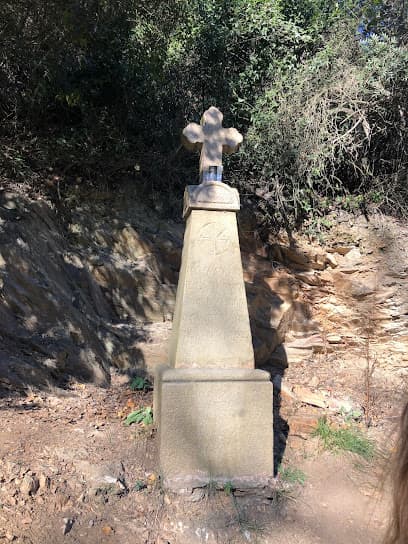
What’s left today are the skeletal remains of their stone shelters and a commemorative plaque that marks the spot of their defiance. It’s a humble place. There are no gift shops, no velvet ropes, and no one trying to sell you a miniature plastic nun. It’s just you, the wind, and the heavy silence of the woods. You sit on a stone, maybe crack open a liter of water, and look down.
This is one of the best hiking spots in Barcelona for a reason. The view from this particular ridge is staggering. You can see the entire grid of the Eixample, the towers of the Sagrada Família looking like sandcastles, and the Mediterranean shimmering on the horizon. From this height, the city looks manageable, almost peaceful. You start to understand why those women chose this over a stone cell in the city. They wanted the perspective that only comes from being high enough to see the world but far enough to ignore its noise.
Is it worth the hike? If you’re looking for a 'must-see' landmark to tick off a list, probably not. But if you want to stand in a place where people actually risked something for a belief—however strange that belief might seem now—then yeah, it’s essential. It’s a reminder that Barcelona has always been a city of rebels, even under the habits. It’s a place for the hikers, the history nerds, and anyone who needs to escape the claustrophobia of the Ramblas for an afternoon. Just bring decent shoes and don't expect a café at the end of the trail. The nuns didn't have one, and neither should you.
Type
Park
Duration
1-2 hours
Best Time
Early morning or late afternoon to avoid the midday heat and catch the best light over the city.
What People Say
temperature(2)trail(2)
Features
Park
Categories
HistoryHikingViewpointNature
Ticket Prices
Free Admission
No tickets required
Opening Hours
- MondayOpen 24 hours
- TuesdayOpen 24 hours
- WednesdayOpen 24 hours
- ThursdayOpen 24 hours
- FridayOpen 24 hours
- SaturdayOpen 24 hours
- SundayOpen 24 hours
Must-See Highlights
The commemorative stone plaque detailing the 1946 events
The ruins of the makeshift stone shelters used by the nuns
The panoramic viewpoint overlooking the Eixample district and the sea
Visitor Tips
Download an offline map of Collserola as GPS can be spotty in the deeper wooded sections.
Combine this with a visit to the nearby Vil·la Joana (the house where poet Jacint Verdaguer died).
The trail is popular with local trail runners; keep to the right to let them pass.
Good For
HikersHistory buffsSolo travelersBudget travelers
Why Visit
Authentic 1946 historical site of a religious rebellion
Panoramic, non-touristy views of the Barcelona skyline and sea
Located within the pristine Mediterranean forest of Collserola Natural Park
Nearby Landmarks
- 15-minute walk from Sagrat Cor Church (Tibidabo)
- 20-minute walk from Vallvidrera Superior Funicular station
- 10-minute drive from Fabra Observatory
Accessibility
- Not wheelchair accessible
- Requires hiking on unpaved, uneven forest trails
Location
Ctra. de l'Església
Sarrià-Sant Gervasi, Barcelona
Nearby Hotels
Nearby Restaurants
In Sarrià-Sant Gervasi
ATTRACTION
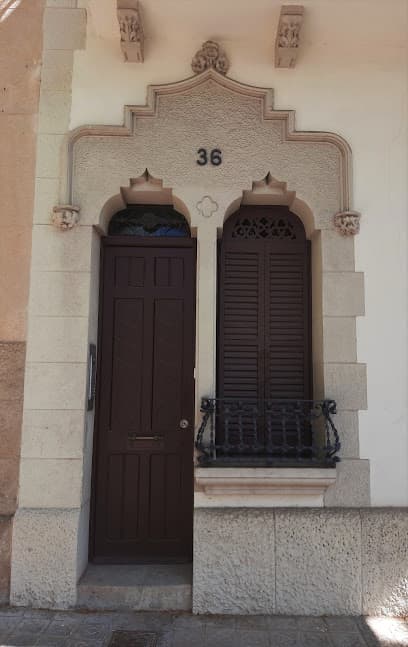
Casa Narcís Bosch
Sarrià-Sant Gervasi
A Modernista fever dream tucked away in Sarrià, where Salvador Valeri i Pupurull’s stone curves and ironwork prove that Gaudí wasn't the only genius in town.
0.0(0)
Tourist attraction
ATTRACTION
Plaça de Calvó
Sarrià-Sant Gervasi
A quiet, unpretentious slice of Sant Gervasi where the only drama is a toddler losing a shoe. No Gaudí, no crowds, just trees, benches, and the sound of real life in the Zona Alta.
0.0(0)
Park
ATTRACTION
Pipican Piscines i Esports
Sarrià-Sant Gervasi
A dirt-caked arena of canine chaos set against the polished backdrop of Sarrià-Sant Gervasi, where the neighborhood’s elite and their four-legged shadows come to settle scores.
0.0(0)
Park
Frequently Asked Questions
Is the Revolta de les Monges worth visiting?
Yes, if you enjoy hiking and local history. It offers a unique story of religious rebellion and some of the most unobstructed views of Barcelona without the crowds of Tibidabo.
How do I get to the Revolt of the Nuns?
Take the FGC train to Peu del Funicular, then the Vallvidrera Funicular to Vallvidrera Superior. From there, it is a roughly 30-40 minute hike along the PR-C 35 trail toward the Ctra. de l'Església.
What should I bring for the hike?
Wear sturdy walking shoes as the trails are dusty and uneven. Bring plenty of water and sun protection, as there are no facilities or shops once you leave the Vallvidrera village area.
Reviews
0 reviews for Revolt Of The Nuns
No reviews yet. Be the first to share your experience!