2.9
13 verified reviews
About
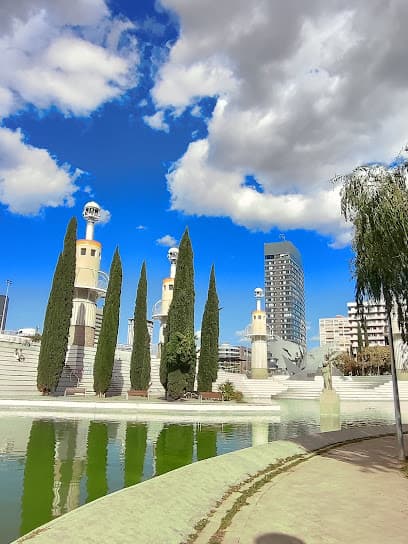
Montjuïc is a hill of contradictions. On one side, you’ve got the polished, museum-heavy spectacle of the MNAC and the Magic Fountain, where the tourist-industrial complex operates at peak efficiency. But keep climbing, past the bus tours and the selfie sticks, and you hit the Jardins de Joan Brossa. This is where things get interesting. This patch of land used to be the Parc d’Atraccions de Montjuïc, a place of screaming kids, greasy cotton candy, and the mechanical clatter of rollercoasters that ran from the mid-sixties until the late nineties. When the park died in 1998, the city did what cities do: they turned it into a park. They tore down the rides but, for some reason, they left a few of the statues behind.
Standing among the Mediterranean pines and the quiet, winding paths is Posidó—Poseidon, the god of the sea, rendered in bronze by Feliciano Hernández in 1972. This isn't the majestic, bearded deity you see in neoclassical fountains, surrounded by frolicking dolphins and marble nymphs. This Posidó is jagged, abstract, and looks like he’s been through a fight he didn't quite win. He’s rising out of the earth rather than the ocean, a dark, metallic figure that feels more like a survivor of a shipwreck than the ruler of the waves.
The current rating for this spot sits at a dismal 2.9, and honestly, that’s exactly why you should go. In a city that is increasingly being buffed and polished for mass consumption, a 2.9 rating is a badge of honor. It means there’s no gift shop. There’s no overpriced café selling lukewarm espresso. There’s no 'immersive experience' with VR goggles. It’s just a piece of art in a public garden that most people stumble upon by accident while looking for the cable car. It’s a place for the quiet, the contemplative, and those who find beauty in the slightly neglected corners of the world.
Walking through the Jardins de Joan Brossa feels like walking through a memory. You can still see the footprints of the old amusement park if you look closely enough—the way the paths are laid out, the sudden clearings where a carousel once spun. Posidó stands there as a sentinel of that transition. He’s a reminder that everything eventually gets reclaimed by the dirt or the rust. The sculpture itself is a masterclass in texture; the bronze is rough, catching the light in ways that make the god look almost organic, like a piece of driftwood that’s been charred and twisted.
Is it worth the hike? If you’re looking for a 'must-see' landmark to tick off your list, probably not. But if you want to understand the soul of Barcelona—the parts that aren't for sale—then yes. It’s one of the best things to do in Montjuïc if you value silence over spectacle. You stand there, looking at this bronze god, with the smell of pine needles in the air and the distant hum of the port below, and you realize that this is the real Barcelona. It’s a city that remembers its past, even the parts that have been decommissioned and turned into gardens. Grab a bottle of cheap red wine, find a bench near the god of the sea, and watch the sun dip behind the castle. It’s honest, it’s free, and it’s a hell of a lot better than standing in line for a church you’ve already seen on a postcard.
Type
Tourist attraction
Duration
30-45 minutes
Best Time
Late afternoon for the best light on the bronze and fewer crowds in the gardens.
Features
Tourist attraction
Categories
SculpturePublic ArtParkHistory
Ticket Prices
Free Admission
No tickets required
Opening Hours
- MondayOpen 24 hours
- TuesdayOpen 24 hours
- WednesdayOpen 24 hours
- ThursdayOpen 24 hours
- FridayOpen 24 hours
- SaturdayOpen 24 hours
- SundayOpen 24 hours
Must-See Highlights
The jagged texture of the bronze sculpture
The surrounding Jardins de Joan Brossa
Views of the industrial port of Barcelona from nearby clearings
Visitor Tips
Combine this with a visit to the Mirador de l'Alcalde for the best views.
Wear comfortable shoes as the terrain in the gardens can be uneven.
Look for the other 'surviving' statues from the old amusement park nearby, like the one of Carmen Amaya.
Good For
Solo travelersArt loversBudget travelersPhotography enthusiasts
Why Visit
Located on the site of a former 1960s amusement park
Abstract 1972 bronze work by renowned artist Feliciano Hernández
Quiet, non-touristy atmosphere with views of the Barcelona port
Nearby Landmarks
- Telefèric de Montjuïc (2-minute walk)
- Mirador de l'Alcalde (5-minute walk)
- Castell de Montjuïc (12-minute walk)
- Fundació Joan Miró (15-minute walk)
Accessibility
- Paved park paths
- Some steep inclines in the surrounding gardens
- Accessible via the Funicular and adapted buses
Location
Sants-Montjuïc, Barcelona
Nearby Hotels
Nearby Restaurants
In Sants-Montjuïc
ATTRACTION
Bolets1
Sants-Montjuïc
A gritty, earthy temple to the Catalan obsession with wild mushrooms, where the dirt is real, the fungi are seasonal gold, and the air smells like the damp floor of a Pyrenean forest.
0.0(0)
Tourist attraction
ATTRACTION
Montjuic aparca
Sants-Montjuïc
The unglamorous base camp for your Montjuïc assault. A tactical slab of asphalt where the city's chaos fades into the pine-scented ghosts of the 1992 Olympics.
0.0(0)
Tourist attraction
ATTRACTION
Паркінг Барселона
Sants-Montjuïc
A sprawling slab of industrial reality in the Zona Franca. No Gaudí here—just hot asphalt, diesel fumes, and the honest utility of a secure place to park your rig.
0.0(0)
Park
Frequently Asked Questions
Is Posidó worth visiting?
Only if you enjoy quiet, atmospheric walks and abstract art. It is not a major landmark, but it offers a unique glimpse into the history of Montjuïc's former amusement park.
How do I get to the Posidó sculpture?
Take the Funicular de Montjuïc from Paral·lel metro station, then walk about 10 minutes into the Jardins de Joan Brossa, near the Telefèric de Montjuïc base station.
Do I need tickets for Posidó?
No, the sculpture is located in a public park (Jardins de Joan Brossa) and is completely free to visit at any time during park hours.
Reviews
0 reviews for Posidó
No reviews yet. Be the first to share your experience!