4.2
36,366 verified reviews
About
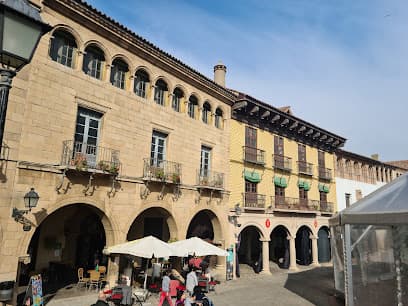
Let’s be honest: the idea of a 'Spanish Village' built for a 1929 World’s Fair sounds like the kind of sanitized, soul-crushing tourist trap I usually tell you to avoid like a cheap airport sandwich. It’s a curated hallucination, an architectural collage of 117 buildings meant to represent the 'essence' of Spain. But here’s the thing—Poble Espanyol is actually kind of fascinating, provided you look past the gift shops selling mass-produced fans and plastic bulls.
When you walk through the medieval gates of San Vicente, you aren’t just entering a museum; you’re stepping into a grand experiment in preservation. The architects, Reventós and Folguera, didn’t just wing it. They actually traveled the country, documenting real vernacular architecture before the 20th century could flatten it all into concrete blocks. You’ve got the white-washed alleys of Andalusia bleeding into the stone-heavy arches of Aragon and the rugged, slate-roofed houses of the Basque Country. It’s a physical map of a country that has spent centuries arguing with itself about what it actually is.
If you want the real pulse of the place, ignore the map and follow your nose. Somewhere in the back alleys, you’ll find the artisans. This isn’t 'heritage' for show; there are actual humans here—glassblowers, potters, leather workers—sweating over kilns and workbenches. Watching a master glassblower at the Gordiola furnace is a visceral reminder that craft is a messy, heat-soaked business. These people are the last line of defense against a world that wants everything delivered in a cardboard box by a drone. If you’re going to buy something, buy it from the person whose hands are covered in clay.
Then there’s the Fran Daurel Museum, which is the best-kept secret in the whole complex. Most tourists are too busy looking for a bathroom or a overpriced pitcher of sangria to notice that there’s a contemporary art collection here featuring Picasso, Miró, and Dalí. It’s a quiet, cool sanctuary of high art tucked inside what many dismiss as a theme park. The contrast is jarring, and that’s exactly why it works.
Is it 'real' Barcelona? No. But it is a window into how Spain wanted to be seen a century ago. It’s also home to the Tablao de Carmen, a flamenco spot named after the legendary Carmen Amaya, who supposedly danced for the King of Spain right here in 1929. If you’re going to do the flamenco thing, do it here, where the ghosts of the greats still linger in the floorboards.
Go in the morning before the school groups descend and the heat turns the stone plazas into an oven. Or better yet, go when there’s an event—a beer festival, a concert, or one of their massive Halloween parties. That’s when the 'village' stops being a museum and starts feeling like a living, breathing neighborhood again, albeit one with a very strange history. It’s a weird, beautiful, slightly confusing place that manages to be more than the sum of its replica parts. Just don't expect it to be anything other than what it is: a love letter to a Spain that was already disappearing when they laid the first stone.
Type
Museum, Tourist attraction
Duration
2-3 hours
Best Time
Weekday mornings at 10:00 AM to avoid crowds and see artisans at work.
Guided Tours
Available
Audio Guide
Available
What People Say
halloween(198)autonomous communities of spain(125)montjuic(116)flamenco(97)spanish culture(87)santa(73)1929(72)provinces of spain(61)
Features
Museum
Tourist attraction
Categories
ArchitectureArtisan CraftsSpanish CultureOpen-Air Museum
Ticket Prices
adult€16.00
child€9.00
senior€10.00
Opening Hours
- Monday10 AM to 8 PM
- Tuesday10 AM to 8 PM
- Wednesday10 AM to 8 PM
- Thursday10 AM to 8 PM
- Friday10 AM to 12 AM
- Saturday10 AM to 12 AM
- Sunday10 AM to 12 AM
Must-See Highlights
The Andalusian neighborhood with its white-washed walls
The live glassblowing demonstrations at the Gordiola furnace
The Fran Daurel Museum of contemporary art
The Monastery of Sant Miquel for its Romanesque architecture and views
Visitor Tips
Don't skip the Fran Daurel Museum; it's included in the ticket and houses world-class art.
The 'Fiesta' audiovisual experience provides a great overview of Spanish traditions if you're new to the culture.
Check the event schedule before visiting; the village often hosts beer festivals, puppet shows, and night markets.
Good For
Families with childrenArchitecture enthusiastsArt loversFirst-time visitors to Spain
Why Visit
117 full-scale replicas of buildings from every corner of Spain
Over 20 onsite artisan workshops where you can watch glassblowing and pottery
The Fran Daurel Museum featuring original works by Picasso, Dalí, and Miró
Nearby Landmarks
- 5-minute walk from the Magic Fountain of Montjuïc
- 10-minute walk from the Museu Nacional d'Art de Catalunya (MNAC)
- 5-minute walk from the Mies van der Rohe Pavilion
- 12-minute walk from Plaça d'Espanya Metro station
Accessibility
- Main routes are wheelchair accessible
- Accessible toilets available
- Some narrow or cobbled streets may be difficult for mobility devices
Location
Av. de Francesc Ferrer i Guàrdia, 13
Sants-Montjuïc, Barcelona
Nearby Hotels
Nearby Restaurants
In Sants-Montjuïc
ATTRACTION
Bolets1
Sants-Montjuïc
A gritty, earthy temple to the Catalan obsession with wild mushrooms, where the dirt is real, the fungi are seasonal gold, and the air smells like the damp floor of a Pyrenean forest.
0.0(0)
Tourist attraction
ATTRACTION
Montjuic aparca
Sants-Montjuïc
The unglamorous base camp for your Montjuïc assault. A tactical slab of asphalt where the city's chaos fades into the pine-scented ghosts of the 1992 Olympics.
0.0(0)
Tourist attraction
ATTRACTION
Паркінг Барселона
Sants-Montjuïc
A sprawling slab of industrial reality in the Zona Franca. No Gaudí here—just hot asphalt, diesel fumes, and the honest utility of a secure place to park your rig.
0.0(0)
Park
Frequently Asked Questions
Is Poble Espanyol worth visiting?
Yes, especially if you appreciate architecture and traditional crafts. It offers a unique chance to see diverse Spanish building styles and working artisans in one location, though it can feel touristy during peak hours.
How much time do you need at Poble Espanyol?
Allocate at least 2 to 3 hours. This gives you enough time to walk through the different regional areas, watch the artisans work, and visit the Fran Daurel contemporary art museum.
What is the best time to visit Poble Espanyol?
Arrive right at opening (10:00 AM) to avoid the largest crowds and school groups. Alternatively, check their calendar for evening concerts or cultural festivals when the atmosphere is more local.
Do I need to buy tickets for Poble Espanyol in advance?
It is recommended to buy tickets online via the official website as they are often cheaper than at the box office and allow you to skip the entry queue.
Reviews
0 reviews for Poble Espanyol
No reviews yet. Be the first to share your experience!