4.8
5 verified reviews
About
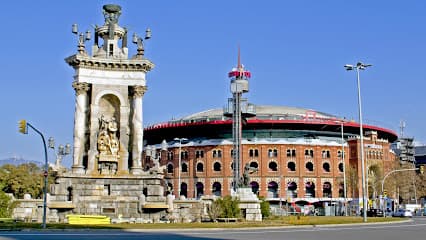
Plaça d’Espanya is a punch in the throat of urban planning. It is a massive, swirling vortex of traffic where the city’s ambition and its daily grind collide in a cacophony of scooter engines and screeching brakes. Built for the 1929 International Exhibition, this isn’t a place designed for quiet contemplation; it was built to impress, to intimidate, and to serve as a monumental front door for a Spain that was desperate to look modern while still clutching its imperial ghosts. It is the anchor of the Sants-Montjuïc district, and whether you like it or not, you will find yourself here.
Standing at the center is the fountain designed by Josep Maria Jujol, a collaborator of Gaudí. It’s a dense, symbolic heap of bronze and stone representing the seas that bathe the Spanish coast. But let’s be honest—you’re not looking at the fountain. You’re looking at the two massive Venetian Towers that frame the entrance to Avinguda de la Reina Maria Cristina. They are fake, of course—inspired by the campanile in Venice—but they possess a certain cinematic gravity that draws your eyes up toward the National Art Museum of Catalonia (MNAC) perched on the hill like a watchful deity.
To your right sits the Arenas de Barcelona. Once a theater of blood and sand where matadors faced down bulls, it has been hollowed out and turned into a temple of consumerism. It’s a shopping mall now, which might feel like a betrayal of history, but the architectural feat of suspending the original neo-Mudéjar facade is undeniably impressive. Take the glass elevator to the roof. It’ll cost you a couple of euros, or you can walk through the mall and take the escalators for free. From the top, the 360-degree view of the city is one of the few 'tourist' experiences that actually delivers. You see the grid of the Eixample, the sprawl of Sants, and the green lung of Montjuïc laid out like a map.
Then there is the Magic Fountain (Font Màgica). In a normal year, it’s a kitschy, glorious spectacle of water, light, and music that shouldn’t work but somehow does. However, reality has a way of intruding. In 2024 and 2025, drought restrictions have often left the pipes dry. Even without the water show, the walk from the square up the grand staircase toward the MNAC remains essential. It’s a masterclass in perspective. As you ascend the escalators, the city drops away, and the noise of the traffic circle fades into a hum.
This is the best area to stay in Barcelona if you want to be connected to everything but don't want the claustrophobia of the Gothic Quarter. It’s a transport hub, a cultural nexus, and a reminder that Barcelona is a city that constantly reinvents itself. It’s messy, it’s loud, and it’s occasionally overwhelming, but it is undeniably real. Don't just snap a photo and leave. Stand on the edge of the circle, smell the burnt coffee and diesel, and watch the city move. This is the gateway to the mountain, the entrance to the fairgrounds, and the frantic, diesel-soaked engine of a district that refuses to be just a postcard.
Type
Park
Duration
1-2 hours
Best Time
Sunset for the best lighting and views toward the National Palace.
Features
Park
Categories
ArchitecturePublic SquareHistoryViewpoint
Ticket Prices
Free Admission
No tickets required
Must-See Highlights
The Venetian Towers
The rooftop of the Arenas de Barcelona
The view from the steps of the MNAC
The Jujol-designed central fountain
Visitor Tips
Don't pay for the external glass elevator at the Arenas; walk inside and use the escalators for free.
Be wary of pickpockets in the crowded metro station and around the fountain area.
Check the drought status for the Magic Fountain before planning a night visit.
Good For
PhotographersHistory buffsBudget travelersFamilies
Why Visit
The 360-degree rooftop view from the converted Arenas bullring
The monumental 1929 International Exhibition architecture
The primary gateway to the museums and parks of Montjuïc
Nearby Landmarks
- 1-minute walk to Arenas de Barcelona
- 7-minute walk to Magic Fountain
- 15-minute walk to MNAC (National Art Museum of Catalonia)
- 12-minute walk to Poble Espanyol
Accessibility
- Fully wheelchair accessible square
- Elevators available in the nearby Arenas mall
- Escalators leading up to the MNAC
Location
Carrer dels Alts Forns, 40
Sants-Montjuïc, Barcelona
Nearby Hotels
Nearby Restaurants
In Sants-Montjuïc
ATTRACTION
Bolets1
Sants-Montjuïc
A gritty, earthy temple to the Catalan obsession with wild mushrooms, where the dirt is real, the fungi are seasonal gold, and the air smells like the damp floor of a Pyrenean forest.
0.0(0)
Tourist attraction
ATTRACTION
Montjuic aparca
Sants-Montjuïc
The unglamorous base camp for your Montjuïc assault. A tactical slab of asphalt where the city's chaos fades into the pine-scented ghosts of the 1992 Olympics.
0.0(0)
Tourist attraction
ATTRACTION
Паркінг Барселона
Sants-Montjuïc
A sprawling slab of industrial reality in the Zona Franca. No Gaudí here—just hot asphalt, diesel fumes, and the honest utility of a secure place to park your rig.
0.0(0)
Park
Frequently Asked Questions
Is Plaza de España worth visiting?
Yes, it is one of Barcelona's most iconic landmarks and serves as the gateway to Montjuïc hill, offering some of the best free views of the city from the MNAC steps.
Is the Magic Fountain currently working?
As of 2024-2025, the fountain's schedule is frequently affected by drought restrictions. Check the official Barcelona city council website for the most current 'Font Màgica' status before visiting.
How do I get to Plaza de España?
It is a major transit hub accessible via Metro lines L1 (Red) and L3 (Green), as well as the FGC train lines. Most airport buses (Aerobús) also make a primary stop here.
What is the best time to visit?
Sunset is the ideal time to visit, as the light hits the MNAC palace and the Venetian Towers perfectly, and the heat of the day begins to dissipate.
Reviews
0 reviews for Plaza de España, Barcelona
No reviews yet. Be the first to share your experience!