4.1
630 verified reviews
About
Sants is not the Barcelona they put on the postcards. It doesn’t have the Gothic Quarter’s brooding shadows or the Eixample’s grid-patterned ego. Sants is the belly of the beast—the place where the trains come to die and be reborn, where the city actually works for a living. And in the middle of this industrial-strength reality sits the Placeta de Ramon Torres Casanova, a small, unvarnished square that tells you more about the soul of this city than a three-hour tour of a cathedral ever could.
Named after a man who actually gave a damn—Ramon Torres Casanova, a local activist who spent his life fighting for the dignity of this neighborhood—this isn't a place for tourists to take selfies. It’s a place for people to exist. It sits right in the shadow of the 'Cajón de Sants,' that massive concrete sarcophagus that hides the train tracks. For years, the railway was a scar across the neighborhood, a loud, dirty divide. The city eventually covered it up with an elevated garden, and this placeta serves as one of the ground-level anchors for that massive urban experiment.
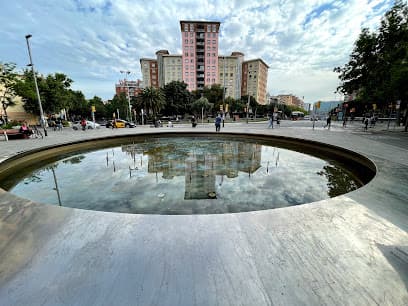
When you walk into this space, you aren't greeted by the smell of overpriced paella. You get the smell of damp concrete, the faint metallic tang of the nearby station, and the scent of rosemary from the planters. It’s a utilitarian beauty. There are benches where old men sit with the stillness of statues, watching the world go by with eyes that have seen the neighborhood change from a textile hub to a transit nexus. There’s a playground where kids scream in Catalan and Spanish, oblivious to the high-speed trains hurtling toward Madrid just a few meters beneath their sneakers.
This is a masterclass in 'reclaiming the street.' It’s part of a larger network of green spaces that grew out of neighborhood protests. The locals didn't want a monument; they wanted a place to breathe. The maintenance is honest—it’s clean, but it’s used. The tiles are worn by thousands of footsteps, and the trees are still fighting for their right to provide shade in a landscape of stone.
If you’re looking for a corner of the city that doesn't involve a ticket booth, this is it. You come here to sit. You come here to watch the light hit the apartment blocks that ring the square, laundry flapping like flags of surrender from the balconies. It’s a quiet defiance against the gentrification eating the rest of the city. Here, the coffee in the nearby bars is still cheap, the service is still brusque, and the tourists are few and far between.
Is it worth visiting? If you’re the kind of person who finds beauty in a well-placed park bench and the rhythmic hum of a city in motion, then yes. If you need gold leaf and gift shops, stay on the bus. This is the real Barcelona—the one that doesn't care if you like it or not. It’s a testament to the fact that even in a city defined by its past, the present is being built by the people who live here, one square at a time. It’s a place to watch the sun go down over the tracks, feeling the vibration of the earth as the world moves on, while you, for a moment, stay perfectly still.
Type
Park
Duration
30-45 minutes
Best Time
Late afternoon when the neighborhood comes alive with families and the sun hits the elevated gardens.
What People Say
strolling(48)maintenance(8)kids(8)train(6)exercise(6)scooter(5)bank(4)ideal(4)
Features
Park
Categories
Urban RenewalPlaygroundLocal History
Ticket Prices
Free Admission
No tickets required
Opening Hours
- MondayOpen 24 hours
- TuesdayOpen 24 hours
- WednesdayOpen 24 hours
- ThursdayOpen 24 hours
- FridayOpen 24 hours
- SaturdayOpen 24 hours
- SundayOpen 24 hours
Must-See Highlights
The playground area
The view of the 'Cajón de Sants' concrete architecture
The memorial plaque to Ramon Torres Casanova
The connection to the elevated Rambla de Sants promenade
Visitor Tips
Walk up to the elevated gardens (Jardins de la Rambla de Sants) for a great view of the trains entering the city.
Grab a coffee at one of the local bars on Carrer de Finlàndia to experience the true Sants vibe.
It's a great spot for a quiet break if you have a long layover at Sants Station.
Good For
FamiliesBudget travelersArchitecture enthusiastsLocals
Why Visit
Direct access to the 'Cajón de Sants' elevated gardens
Authentic neighborhood atmosphere away from the tourist crowds
Named after a legendary local activist, reflecting the area's social history
Nearby Landmarks
- Sants Estació (5-minute walk)
- Jardins de la Rambla de Sants (2-minute walk)
- Plaça de Sants (8-minute walk)
- Parc de l'Espanya Industrial (10-minute walk)
Accessibility
- Flat paved surfaces
- Ramp access to the elevated gardens nearby
- Accessible benches
Location
Carrer de Finlàndia, 24
Sants-Montjuïc, Barcelona
Nearby Hotels
Nearby Restaurants
In Sants-Montjuïc
ATTRACTION
Bolets1
Sants-Montjuïc
A gritty, earthy temple to the Catalan obsession with wild mushrooms, where the dirt is real, the fungi are seasonal gold, and the air smells like the damp floor of a Pyrenean forest.
0.0(0)
Tourist attraction
ATTRACTION
Montjuic aparca
Sants-Montjuïc
The unglamorous base camp for your Montjuïc assault. A tactical slab of asphalt where the city's chaos fades into the pine-scented ghosts of the 1992 Olympics.
0.0(0)
Tourist attraction
ATTRACTION
Паркінг Барселона
Sants-Montjuïc
A sprawling slab of industrial reality in the Zona Franca. No Gaudí here—just hot asphalt, diesel fumes, and the honest utility of a secure place to park your rig.
0.0(0)
Park
Frequently Asked Questions
Is Placeta de Ramon Torres Casanova worth visiting?
It is worth it if you want to see an authentic, non-touristy side of Barcelona or if you are exploring the Sants neighborhood. It offers a unique look at how the city has integrated its massive railway infrastructure with local green spaces.
What is the 'Cajón de Sants' near the park?
The 'Cajón' is a large concrete structure that covers the train tracks entering Sants Station. On top of it is an elevated garden promenade, and the Placeta de Ramon Torres Casanova sits at its base, providing access to this urban greenway.
Is this park good for children?
Yes, it features a well-maintained playground and plenty of open space for kids to run around, safely tucked away from the heavier traffic of the main Sants thoroughfares.
How do I get to Placeta de Ramon Torres Casanova?
The easiest way is to take the Metro (L1 or L5) to Plaça de Sants or walk five minutes from the Barcelona Sants train station. It is located on Carrer de Finlàndia.
Reviews
0 reviews for Placeta de Ramon Torres Casanova
No reviews yet. Be the first to share your experience!