3.8
48 verified reviews
About
Forget the Gaudí curves, the overpriced sangria, and the slow-motion shuffle of cruise ship crowds. If you want to see the real machinery of Barcelona—the parts that don’t get polished for the brochures—you head to places like Plaça del Taxi. It’s a small, unvarnished triangle of concrete and dirt wedged into the Sant Andreu district, right where the city’s grid starts to feel a little more lived-in and a little less like a museum. It’s not 'beautiful' in any conventional sense, but it is honest. And in a city increasingly sold off to the highest bidder, honesty is a rare commodity.
The name isn't some poetic metaphor. It’s literal. Back in the day, this was a primary staging ground for the city’s black-and-yellow taxi fleet, a place where drivers would kill time between fares, smoking, arguing about football, and drinking coffee that could strip paint. In 1950, the city officially named it in their honor. Today, the taxis are mostly gone, replaced by the rhythmic creak of swing sets and the clatter of beer glasses, but that working-class DNA is still baked into the pavement. It’s a transit point, a lung for the surrounding apartment blocks, and a theater of the mundane.
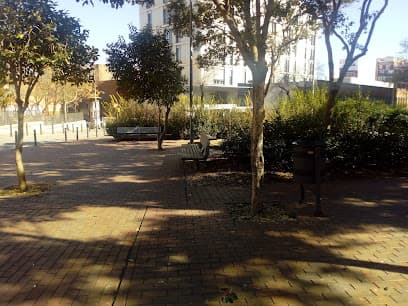
You come here for the atmosphere of indifference. The square doesn’t care if you’re there. It’s occupied by the people who actually keep this city running. On any given afternoon, you’ll find the 'bancs'—the benches—claimed by retirees who have been sitting in the exact same spots since the transition to democracy. They watch the world with a squint, presiding over a playground where kids scream with a ferocity that suggests the stakes are life and death. It’s an unfiltered blast of the everyday: the smell of diesel from the passing buses on Passeig de Maragall, the scent of frying oil from the nearby bars, and the constant, low-frequency hum of a neighborhood that is busy being itself.
There are a few bars bordering the plaza. Don’t expect a mixologist in a leather apron to craft you a botanical gin and tonic. These are 'bars' in the purest Spanish sense—fluorescent lighting, metal counters, and a television permanently tuned to a sports channel or a game show. They serve cold Estrellas, plates of salty olives, and maybe a decent tortilla if you’re lucky. Sitting on one of these terraces is the best way to soak in the neighborhood. You’re not a 'visitor' here; you’re just another body taking up space, and there’s something deeply liberating about that.
Is it worth the trek? If you’re looking for a 'must-see' landmark, absolutely not. There are no monuments here, no plaques that will change your worldview. But if you want to understand the rhythm of a Barcelona neighborhood—the way the light hits the trees in the late afternoon, the way the community congregates without an invitation, the way life happens in the gaps between the famous sights—then Plaça del Taxi is essential. It’s a reminder that the heart of the city isn't in the Gothic Quarter or the Eixample; it’s in these small, dusty squares where the only thing on the menu is reality. It’s raw, it’s loud, and it’s exactly what Barcelona should be when no one is looking.
Type
City park
Duration
30-45 minutes
Best Time
Late afternoon when the neighborhood comes alive and the terraces are full.
What People Say
trees(3)bank(3)bar(3)playground(2)
Features
City park
Categories
Urban SquarePlaygroundLocal Life
Ticket Prices
Free Admission
No tickets required
Opening Hours
- MondayOpen 24 hours
- TuesdayOpen 24 hours
- WednesdayOpen 24 hours
- ThursdayOpen 24 hours
- FridayOpen 24 hours
- SaturdayOpen 24 hours
- SundayOpen 24 hours
Must-See Highlights
The central playground where local life happens
The surrounding traditional neighborhood bars
The commemorative nameplate honoring taxi drivers
Visitor Tips
Grab a coffee at one of the perimeter bars to watch the neighborhood wake up.
Don't expect English menus; this is a locals-only zone.
Combine it with a walk through the wider Sant Andreu district for a full local experience.
Good For
Families with kidsBudget travelersPeople watchingLocal culture seekers
Why Visit
Authentic working-class atmosphere
Historical tribute to Barcelona's taxi drivers
Zero tourist crowds
Nearby Landmarks
- Metro Congrés (L5) - 3-minute walk
- Passeig de Maragall - 1-minute walk
- Mercat de Felip II - 5-minute walk
Accessibility
- Flat paved surface
- Street level access
Location
Plaça del Taxi
Sant Andreu, Barcelona
Nearby Hotels
Nearby Restaurants
In Sant Andreu
ATTRACTION
Camsbio,S.L
Sant Andreu
Not a park for picnics, but the workshop where Barcelona’s green future is built. Camsbio is the grit behind the city's vertical gardens and bio-construction.
0.0(0)
Park
ATTRACTION
Multan los Domingos
Sant Andreu
A defiant slice of Sant Andreu where industrial ruins meet community gardens. It’s the anti-tourist Barcelona: raw, brick-heavy, and smelling of vermut and rebellion.
0.0(0)
Garden
ATTRACTION
Plaça d'Albert Badia i Mur
Sant Andreu
A gritty, honest slice of Sant Andreu where the 'Cases Barates' history meets modern life. No Gaudí here—just real people, a playground, and the unvarnished soul of Bon Pastor.
0.0(0)
Park
Frequently Asked Questions
Is Plaça del Taxi worth visiting?
Only if you want to see a real, non-touristy Barcelona neighborhood. It's a functional local square with a playground and basic bars, not a major landmark.
Why is it called Plaça del Taxi?
It was named in 1950 to honor the city's taxi drivers, as the square historically served as a major taxi stand and gathering point for drivers.
How do I get to Plaça del Taxi?
The easiest way is taking the L5 Metro to the Congrés station; the plaza is just a 3-minute walk from the exit.
Reviews
0 reviews for Plaça del Taxi
No reviews yet. Be the first to share your experience!