4.0
321 verified reviews
About
The name alone should tell you everything you need to know: Plaça del Rom Cremat. Burnt Rum Square. It’s a name that tastes like smoke, sugar, and the sweat of a long voyage across the Atlantic. If you’re looking for the polished, limestone perfection of the Eixample or the gothic stage-sets of the old city, you’ve taken the wrong turn. This is Sant Andreu, specifically the Barri dels Indians, and it’s about as far from the tourist-clogged arteries of La Rambla as you can get without leaving the city limits.
To understand this place, you have to understand the 'Indianos'—the Spaniards who headed to the Americas in the 19th century to make their fortunes in sugar, tobacco, and slavery, then returned to Barcelona to build houses that looked like the ones they’d left behind in Havana. This square is the spiritual heart of that legacy, though today it’s less about colonial grandeur and more about the beautiful, messy reality of modern Catalan life. It’s a triangular wedge of public space carved out of a neighborhood that feels like a village that got swallowed by a city but refused to be digested.
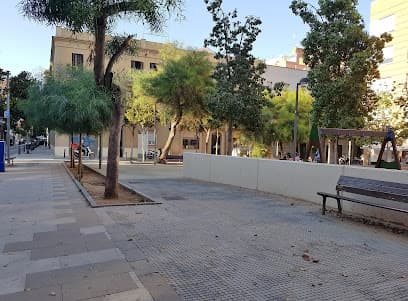
You arrive here and the first thing you notice isn't a monument; it's the noise. The high-pitched shriek of kids colonizing the playground, the rhythmic clack of dominoes from a corner table, and the hiss of a coffee machine from one of the terraces that line the perimeter. It’s a concrete lung for the neighborhood. People come here because they have to—to walk the dog, to exhaust the children, to argue about the latest FC Barcelona disaster over a glass of vermouth. It’s honest. It’s unfiltered. It’s exactly what the tourism board doesn't know how to sell.
The square was remodeled a couple of decades ago, but it hasn't lost its edge. The architecture surrounding it is a mix of the humble and the aspirational—low-rise buildings that speak to the social housing booms of the mid-20th century, interspersed with the occasional palm tree that nods to the Caribbean connection. The 'Rom Cremat' tradition itself—drinking rum set ablaze with coffee beans, cinnamon, and lemon peel while singing sea shanties—is a staple of local festivals here. If you’re lucky enough to be here during a 'festa major,' you’ll see the square transformed into a swirling, smoky party that feels more like a family reunion than a public event.
Don’t come here expecting a 'gastronomic adventure' in the way the magazines define it. You come here for the 'burger' mentioned in the local reviews—a solid, no-nonsense slab of meat eaten on a plastic chair while the sun hits the pavement. You come for the terrace culture. Sitting at one of the bars like Bar Rom Cremat, you aren't a 'visitor'; you’re an observer of a lifestyle that is increasingly under threat in the center of town. The service might be indifferent, the wine might be served in a glass that’s seen better days, but the atmosphere is 100% authentic.
Is it worth the trek? If you want to see the Barcelona that belongs to the Barcelonans, then yes. It’s a place where the history of migration and the mundane reality of the present collide. It’s a reminder that a city isn't just its cathedrals and its museums; it’s the small, paved corners where people live, drink, and remember where they came from. It’s a protein rush of reality in a city that’s increasingly becoming a theme park. Grab a seat, order a drink, and watch the world go by. Just don't expect anyone to roll out a red carpet.
Type
Park
Duration
1 hour
Best Time
Late afternoon when the terraces are full and the neighborhood comes alive.
What People Say
kids(13)ideal(4)burger(4)party(3)terrace(3)maintenance(2)strolling(2)games(2)
Features
Park
Categories
Public SquarePlaygroundLocal CultureHistory
Ticket Prices
Free Admission
No tickets required
Opening Hours
- MondayOpen 24 hours
- TuesdayOpen 24 hours
- WednesdayOpen 24 hours
- ThursdayOpen 24 hours
- FridayOpen 24 hours
- SaturdayOpen 24 hours
- SundayOpen 24 hours
Must-See Highlights
The children's playground (the neighborhood's social engine)
The surrounding 'Indianos' style houses in the nearby streets
A drink at one of the local bar terraces lining the square
Visitor Tips
Visit during the 'Festa Major del Barri dels Indians' in September for the real Rom Cremat experience.
Don't expect English menus; this is a local spot, so brush up on your basic Spanish or Catalan.
Combine this with a visit to the nearby Parc de la Pegaso for a full afternoon in Sant Andreu.
Good For
Families with childrenBudget travelersCulture seekersLocals
Why Visit
The 'Indianos' Heritage: A unique architectural and cultural connection to 19th-century Cuba.
Authentic Neighborhood Vibe: One of the few places left in Barcelona untouched by mass tourism.
Local Social Hub: A perfect spot to witness the traditional Catalan terrace culture and community life.
Nearby Landmarks
- Parc de la Pegaso (8-minute walk)
- Fabra i Coats Centre d'Art Contemporani (12-minute walk)
- Congrés Metro Station (5-minute walk)
- Hipercor Meridiana (6-minute walk)
Accessibility
- Flat paved surface
- Wheelchair accessible square
- Accessible by public transport
Location
Carrer de Pinar del Rio, 11
Sant Andreu, Barcelona
Nearby Hotels
Nearby Restaurants
In Sant Andreu
ATTRACTION
Camsbio,S.L
Sant Andreu
Not a park for picnics, but the workshop where Barcelona’s green future is built. Camsbio is the grit behind the city's vertical gardens and bio-construction.
0.0(0)
Park
ATTRACTION
Multan los Domingos
Sant Andreu
A defiant slice of Sant Andreu where industrial ruins meet community gardens. It’s the anti-tourist Barcelona: raw, brick-heavy, and smelling of vermut and rebellion.
0.0(0)
Garden
ATTRACTION
Plaça d'Albert Badia i Mur
Sant Andreu
A gritty, honest slice of Sant Andreu where the 'Cases Barates' history meets modern life. No Gaudí here—just real people, a playground, and the unvarnished soul of Bon Pastor.
0.0(0)
Park
Frequently Asked Questions
Is Plaça del Rom Cremat worth visiting?
Yes, if you want to experience a truly local, non-touristy side of Barcelona. It's the heart of the 'Indians' neighborhood and offers a glimpse into authentic daily life away from the crowds.
What is the history of the square's name?
The name refers to 'burnt rum,' a traditional drink associated with the 'Indianos'—locals who returned from Cuba in the 19th century. The neighborhood's street names and architecture reflect this Caribbean connection.
Is it good for families?
Absolutely. The square features a popular children's playground and several terraces where parents can have a drink while keeping an eye on their kids.
How do I get to Plaça del Rom Cremat?
The easiest way is via the Metro Line 5 (Blue Line), getting off at the 'Congrés' station. From there, it's a short 5-minute walk through the neighborhood.
Reviews
0 reviews for Plaça del Rom Cremat
No reviews yet. Be the first to share your experience!