4.1
8,529 verified reviews
About
Plaça de Tetuan isn't where you go to find the Barcelona of the glossy brochures. It’s not a sun-drenched terrace where you sip overpriced cava while a guy in a striped shirt plays 'Despacito' on an accordion. No, this is the real machinery of the city. It’s a massive, swirling vortex of internal combustion where the Gran Via de les Corts Catalanes slams into Passeig de Sant Joan. It’s loud, it’s diesel-scented, and it’s absolutely essential if you want to understand how this town actually breathes.
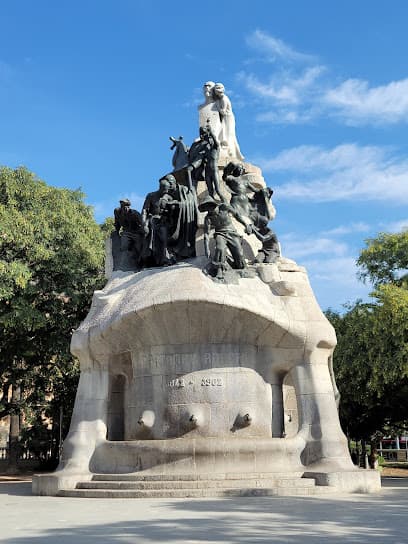
Most tourists blow right past it on their way to the Sagrada Família or the Arc de Triomf, seeing nothing but a glorified traffic circle. But if you’ve got the stomach for the noise, there’s something heavy and meaningful happening in the center of that island. You’re looking at the Monument to Doctor Robert, a massive, brooding pile of stone and bronze that has seen more drama than most of the city’s cathedrals.
Bartomeu Robert was a doctor, a mayor, and a symbol of Catalan identity. The monument, designed by the legendary Josep Llimona, is a masterpiece of Symbolism. It’s not just a statue of a guy in a suit; it’s a chaotic, beautiful heap of figures representing the people—workers, intellectuals, the sick, and the hopeful. It’s visceral. Llimona didn’t just carve stone; he captured the strain and the sweat of a culture trying to define itself.
The history of the monument is as gritty as the plaza itself. In 1940, the Franco regime—never fans of Catalan symbols—had the whole thing dismantled. They wanted it gone. But instead of being destroyed, the pieces were hidden away in a warehouse, gathering dust for decades like a secret waiting to be told. It wasn't until 1977, after the dictator finally kicked the bucket, that the city dragged the pieces back out and reassembled them here. When you look at those bronze figures, you’re looking at survivors.
Don't come here for a picnic. If you try to eat a sandwich in the middle of Plaça de Tetuan, you’ll be seasoning your ham with fine-particulate road dust. This is a place for observation, not relaxation. Sit on one of the stone benches and watch the choreography of the buses. Watch the locals—the real ones, not the ones in rental bikes—marching toward the Tetuan metro station with the grim determination of people who have places to be.
The greenery here is a bit of a lie—a few patches of grass and some hardy trees trying their best to survive the smog—but it provides a necessary frame for the art. It’s one of the few places in the Eixample where the rigid grid of Ildefons Cerdà’s urban plan feels like it’s actually under pressure. The traffic doesn't just pass through; it orbits the history of the city.
Is it one of the best things to do in Eixample? That depends on what you’re after. If you want the 'Disney' version of Barcelona, keep walking. But if you want to stand in the middle of the urban roar and see a monument that was literally buried to keep it from the hands of fascists, then yeah, it’s worth twenty minutes of your life. It’s a reminder that even in the middle of a traffic jam, there is room for something monumental, something stubborn, and something undeniably real. Just don't expect the pigeons to move out of your way; they own the place, and they’ve got the exhaust-blackened feathers to prove it.
Type
City park, Tourist attraction
Duration
20-30 minutes
Best Time
Late afternoon when the sun hits the bronze monument, though avoid peak rush hour if you hate heavy traffic noise.
What People Say
traffic(120)monument(101)roundabout(100)bus(35)sculpture(32)dogs(19)metro(14)emblem(9)
Features
City park
Tourist attraction
Categories
ArchitectureHistorySculptureUrban Park
Ticket Prices
Free Admission
No tickets required
Opening Hours
- MondayOpen 24 hours
- TuesdayOpen 24 hours
- WednesdayOpen 24 hours
- ThursdayOpen 24 hours
- FridayOpen 24 hours
- SaturdayOpen 24 hours
- SundayOpen 24 hours
Must-See Highlights
The intricate bronze figures at the base of the Doctor Robert monument representing different social classes.
The view looking down Passeig de Sant Joan toward the Arc de Triomf.
The modernist lampposts that line the surrounding streets.
Visitor Tips
Use the pedestrian crossings carefully; the traffic here is fast and constant.
Combine this with a walk down Passeig de Sant Joan, which is one of the city's best streets for cafes and bookstores.
Look closely at the monument to see the seams where it was reassembled after being hidden for decades.
Good For
History buffsArchitecture enthusiastsPhotographyBudget travelers
Why Visit
The Monument to Doctor Robert, a massive Symbolist sculpture with a history of political suppression and survival.
A rare 360-degree view of the intersection of Gran Via and Passeig de Sant Joan, two of Barcelona's grandest avenues.
An authentic, non-touristy glimpse into the daily transit pulse of the Eixample district.
Nearby Landmarks
- Arc de Triomf (8-minute walk)
- Parc de la Ciutadella (12-minute walk)
- Casa Calvet (10-minute walk)
- Palau de la Música Catalana (15-minute walk)
Accessibility
- Fully wheelchair accessible via street-level crossings
- Paved walkways throughout the central island
Location
Pça. Tetuan, s/n
Eixample, Barcelona
Nearby Hotels
Nearby Restaurants
In Eixample
ATTRACTION
Mural Margalef
Eixample
A towering splash of Mediterranean blue breaking the rigid geometry of Eixample, Joan Margalef’s mural is a visceral reminder that Barcelona’s soul isn't just in its museums.
0.0(0)
Tourist attraction
ATTRACTION
Mural Margalef
Eixample
A geometric middle finger to urban decay, this massive kinetic mural by Eduard Margalef turns a drab Eixample blind wall into a rhythmic, shifting explosion of optical art.
0.0(0)
Tourist attraction
ATTRACTION
Happy Foodies
Eixample
Forget the plastic-wrapped tourist traps; this is a deep dive into the grease, garlic, and soul of Catalan cooking where you actually learn to handle a knife and a porrón.
0.0(0)
Sightseeing tour agencyTour agency
Frequently Asked Questions
Is Plaça de Tetuan worth visiting?
It is worth a stop for fans of history and sculpture to see the Monument to Doctor Robert, but don't expect a quiet park experience; it is a major traffic hub.
What is the monument in the center of Plaça de Tetuan?
It is the Monument to Doctor Robert, a Symbolist masterpiece by Josep Llimona that was hidden during the Franco era and restored in 1977.
How do I get to Plaça de Tetuan?
The easiest way is via the Barcelona Metro; take Line 2 (Purple) to the Tetuan station, which exits directly onto the plaza.
Is there a fee to enter Plaça de Tetuan?
No, it is a public square and monument accessible to everyone for free at any time of day.
Reviews
0 reviews for Plaça de Tetuan
No reviews yet. Be the first to share your experience!