4.2
1,399 verified reviews
About
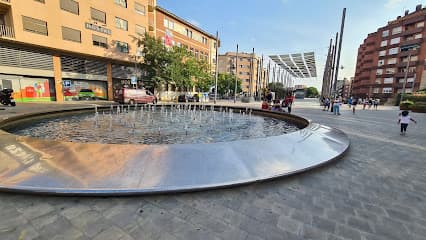
Forget the Gothic Quarter. Forget the meticulously manicured lawns of the upper city or the sun-drenched, tourist-choked boardwalks of Barceloneta. If you want to see where the gears of this city actually turn, you go to Plaça de Sants. This isn’t a place for postcards; it’s a place for people. It’s a sprawling, grey-toned junction where the ghosts of an industrial past collide head-on with the frantic energy of a modern transit hub.
Emerging from the Metro station—a subterranean labyrinth serving the L1 and L5 lines—you’re hit with the immediate, visceral reality of the barrio. Sants wasn’t always part of Barcelona. Until the late 19th century, it was an independent village, a gritty, hardworking town of textile mills and labor unions. You can still feel that stubborn independence in the air here. The square itself is dominated by the 'Ciclista' sculpture, a bronze tribute to the effort and sweat that defines this neighborhood. It’s not 'pretty' in the traditional sense, but it is honest.
The square serves as the gateway to Carrer de Sants, which locals will proudly tell you is the longest commercial street in Europe. It’s a relentless, mile-long artery of shoe shops, bakeries, hardware stores, and bars that have seen better days but still pour a mean carajillo. Standing in the center of the plaza, you’re surrounded by the low-frequency hum of the city: the hiss of bus brakes, the clatter of rolling shutters, and the rapid-fire Catalan of old men who have occupied the same benches since the transition to democracy.
This is a neighborhood of terraces. The bars flanking the square don’t offer artisanal avocado toast or deconstructed tapas. They offer cold beer, salty olives, and a front-row seat to the human comedy. You sit here to watch the commuters rushing toward the Sants Estació train station, their faces set in that universal mask of 'I’m late for work.' You watch the grandmothers navigating the crowds with the precision of fighter pilots. It’s a protein rush of pure, unadulterated urban life.
Is it worth visiting? That depends on what you’re looking for. If you need gold-leafed altars and souvenir shops selling plastic bulls, stay on the Rambla. But if you want to understand the friction that makes Barcelona move, if you want to see the city without its makeup on, Plaça de Sants is essential. It’s the kind of place where you can disappear into the crowd, a nameless observer in a neighborhood that doesn’t care if you’re there or not. And in a city increasingly designed for the pleasure of outsiders, that indifference is a rare and beautiful thing.
Come here in the late afternoon, when the sun starts to dip behind the apartment blocks and the neighborhood comes alive with the 'mercat' crowd. Grab a seat at a plastic table, order a vermouth, and just breathe it in. The smell of diesel, the scent of roasting coffee from a nearby café, and the feeling that you’ve finally found the real thing. It’s not a museum; it’s a living, breathing, slightly scarred heart of a barrio that refuses to be anything other than exactly what it is.
Type
Park, Tourist attraction
Duration
30-60 minutes
Best Time
Late afternoon (5 PM - 8 PM) to see the neighborhood at its most active during the 'passeig' and shopping hours.
What People Say
subway(17)trade(14)strolling(13)bar(10)station(8)party(6)square(6)font(5)
Features
Park
Tourist attraction
Categories
Public SquareLocal LifeArchitectureTransit Hub
Ticket Prices
Free Admission
No tickets required
Must-See Highlights
The 'Ciclista' (Cyclist) sculpture by Jorge Castillo
The entrance to Carrer de Sants for local shopping
The traditional 'granges' (cafes) on the surrounding corners
Visitor Tips
Avoid the generic cafes right on the main road; walk one block into the side streets for better coffee and lower prices.
Use this as your base for exploring the Sants neighborhood before heading to Montjuïc.
The Metro station here is a major transfer point; follow the signs carefully as it can be a long walk between lines.
Good For
Local culture seekersBudget travelersPeople watchingShoppers
Why Visit
Authentic Barrio Vibe: One of the few major squares in Barcelona that remains largely untouched by mass tourism.
Shopping Mecca: Gateway to Carrer de Sants, a massive commercial artery filled with local shops rather than international chains.
Major Transit Hub: Seamlessly connected to the entire city via two Metro lines and proximity to the main international train station.
Nearby Landmarks
- Sants Estació (Main Train Station) - 8-minute walk
- Carrer de Sants (Shopping Street) - 1-minute walk
- Parc de l'Espanya Industrial - 10-minute walk
- Mercat de Sants - 7-minute walk
Accessibility
- Elevator access to Metro
- Flat paved surfaces
- Accessible pedestrian crossings
Location
Carrer d'Antoni de Capmany, 72
Sants-Montjuïc, Barcelona
Nearby Hotels
Nearby Restaurants
In Sants-Montjuïc
ATTRACTION
Bolets1
Sants-Montjuïc
A gritty, earthy temple to the Catalan obsession with wild mushrooms, where the dirt is real, the fungi are seasonal gold, and the air smells like the damp floor of a Pyrenean forest.
0.0(0)
Tourist attraction
ATTRACTION
Montjuic aparca
Sants-Montjuïc
The unglamorous base camp for your Montjuïc assault. A tactical slab of asphalt where the city's chaos fades into the pine-scented ghosts of the 1992 Olympics.
0.0(0)
Tourist attraction
ATTRACTION
Паркінг Барселона
Sants-Montjuïc
A sprawling slab of industrial reality in the Zona Franca. No Gaudí here—just hot asphalt, diesel fumes, and the honest utility of a secure place to park your rig.
0.0(0)
Park
Frequently Asked Questions
Is Plaça de Sants worth visiting?
Yes, if you want to experience an authentic, non-touristy Barcelona neighborhood. It's the heart of the Sants district and offers a glimpse into local life, shopping, and history away from the main tourist centers.
How do I get to Plaça de Sants?
The square is a major transit hub. You can take the Metro Line 1 (Red) or Line 5 (Blue) directly to the 'Plaça de Sants' station. It is also a short 5-10 minute walk from the main Sants Estació train station.
What is there to do near Plaça de Sants?
You can shop along Carrer de Sants, visit the nearby Parc de l'Espanya Industrial, or explore the local bars and traditional Catalan restaurants in the surrounding streets of the Sants-Montjuïc district.
Is Plaça de Sants safe?
Yes, it is a busy, well-lit residential and commercial area. Like any major city square and transit hub, keep an eye on your belongings, but it is generally very safe and frequented by locals at all hours.
Reviews
0 reviews for Plaça de Sants
No reviews yet. Be the first to share your experience!