3.8
13 verified reviews
About
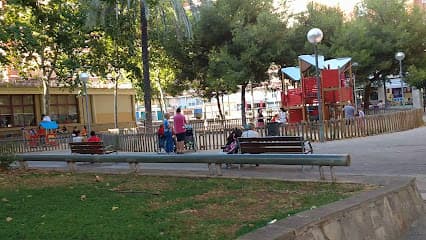
Sant Martí isn’t the Barcelona they sell you on the back of a bus tour. There are no gothic gargoyles here, no whimsical dragon-scaled roofs, and nobody is trying to sell you a plastic bull made in China. This is the engine room of the city. It’s a place of wide avenues, functional apartment blocks, and the lingering scent of an industrial past that refused to go quietly. At the heart of this unvarnished reality sits the Plaça de Ram de l'Aigua, a square that serves as a quiet testament to the sweat and steam that built this town.
For nearly a century, this patch of earth was occupied by the S.F. Vila textile factory. It was a place of dyes, finishes, and the relentless clatter of looms. The name itself, 'Ram de l'Aigua'—literally the 'Water Branch'—sounds like something out of a romantic poem, but its origins are purely utilitarian. It was the name given to the specific sector of the textile industry that handled the wet processes: the bleaching, the dyeing, and the finishing. It required massive amounts of water, and in the 18th and 19th centuries, Sant Martí had it in spades. When you walk across the square today, you aren't just walking on a park; you’re walking on the grave of a factory that once defined the lives of thousands of families in this barrio.
The square was officially named in 1991, but it underwent a significant face-lift in May 2022, turning it into the pedestrian-friendly space you see now. It’s a mix of hard concrete and soft greenery, a place where the city has tried to reconcile its gritty history with the needs of a modern neighborhood. You’ll see old men sitting on benches, their faces etched with the history of the district, watching pigeons with a sort of weary indifference. You’ll see kids kicking footballs against walls that might have once been part of a warehouse. It’s not 'charming' in the way a travel magazine uses the word. It’s honest. It’s a place where people actually live, breathe, and argue about the price of bread.
If you’re looking for a 'must-see' attraction, you’ve come to the wrong place. But if you want to understand the real Barcelona—the one that exists when the tourists go home—this is where you start. The square is a window into the Sant Martí de Provençals neighborhood, a former independent municipality that was swallowed by the expanding city but kept its working-class soul. It’s a place of transition. To the south, you have the stunning Biblioteca Gabriel García Márquez, a modern architectural marvel that looks like a stack of open books. To the north, the relentless flow of the Gran Via. And here, in the middle, a moment of stillness.
Is it worth the trek? That depends on what you’re hungry for. If you want the polished, curated version of Catalonia, stay in the Eixample. But if you want to sit in a place where the air feels a little heavier with history, where the 'Ram de l'Aigua' once flowed through the pipes of a factory that helped build the modern world, then take the L2 metro and get off at Sant Martí. Buy a cheap coffee at a nearby bar, find a bench, and just watch. The ghosts of the S.F. Vila factory are still there, if you know how to look for them. This is the real deal, unedited and unapologetic.
Type
Park
Features
Park
Categories
HistoryIndustrial HeritageLocal Life
Accessibility
- Fully wheelchair accessible
- Flat paved surfaces
- Accessible benches
Location
Carrer de Guipúscoa, 103
Sant Martí, Barcelona
Nearby
ATTRACTION
Plaça Llibertat Ródenas
250 m · Sant Martí
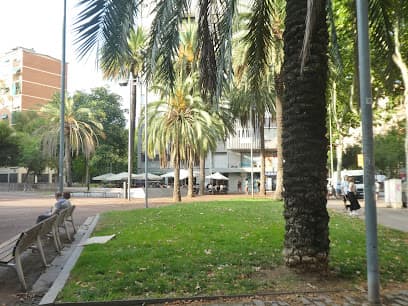
A gritty, concrete slab of real Barcelona named after an anarchist rebel. No Gaudí here—just strong coffee, screaming kids, and the smell of frying churros in Sant Martí.
4.0(212)
Park
ATTRACTION
Parc de Sant Martí
300 m · Sant Martí
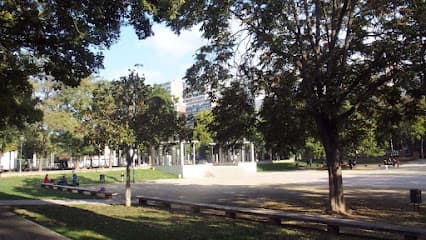
A sprawling, unpretentious slice of the real Barcelona where Gothic history meets high-speed rail, dog walkers, and the ghosts of the city's agricultural past.
4.0(2K)
ParkTourist attraction
RESTAURANT
Bar Restaurant La Verneda
€€150 m · Sant Martí
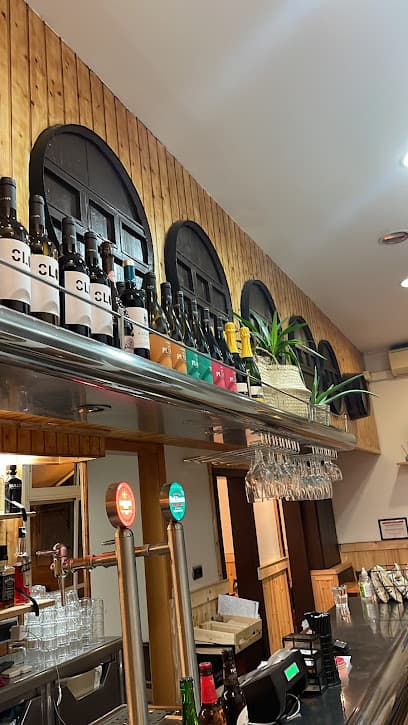
A gritty, glorious temple of the working class in Sant Martí where the bocadillos are massive, the wine flows freely, and the concept of a 'tourist trap' simply does not exist.
4.5(463)
Bar & grill
RESTAURANT
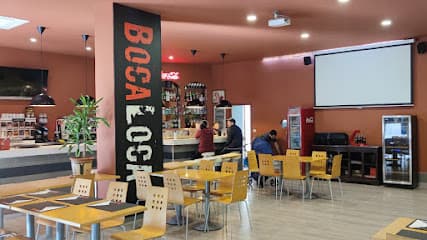
BocaLoca
€€250 m · Sant Martí
A gritty, honest Sant Martí neighborhood joint where the beer is cold, the terrace is loud, and the tapas are built for locals who actually work for a living. No frills, just soul.
4.0(676)
Spanish restaurantBar
HOTEL
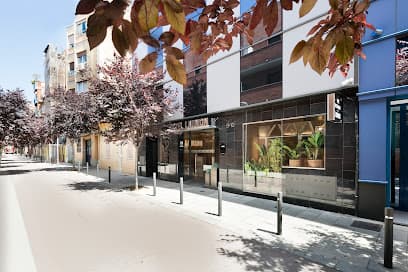
Acta Laumon
€950 m · Sant Andreu
A sharp, functional refuge in Sant Andreu for travelers smart enough to trade the chaos of the center for a real neighborhood and a direct metro line to the heart of the city.
4.0(658)
Hotel

HOTEL
Hotel Barcelona Condal Mar Affiliated by Meliá
€1.1 km · Sant Martí
A glass-and-steel cylinder in the tech-heavy Sant Martí, offering a rooftop escape from the Gothic Quarter’s claustrophobia and a cold drink with a view of the Mediterranean horizon.
4.1(1K)
Hotel
Frequently Asked Questions
Is Plaça de Ram de l'Aigua worth visiting?
Only if you are interested in Barcelona's industrial history or want to see a non-touristy, local neighborhood. It is a functional community square, not a major landmark.
What is the history of Plaça de Ram de l'Aigua?
The square sits on the site of the former S.F. Vila textile factory. Its name refers to the 'water branch' of the textile industry, which specialized in dyeing and finishing fabrics.
How do I get to Plaça de Ram de l'Aigua?
The easiest way is to take the L2 (Purple Line) of the Barcelona Metro to the Sant Martí station. The square is a short walk from the exit.
What else is near Plaça de Ram de l'Aigua?
The award-winning Biblioteca Gabriel García Márquez is just a 5-minute walk away, and the larger Parc de Sant Martí is also nearby.
Reviews
0 reviews for Plaça de Ram de l'Aigua
No reviews yet. Be the first to share your experience!