3.9
93 verified reviews
About
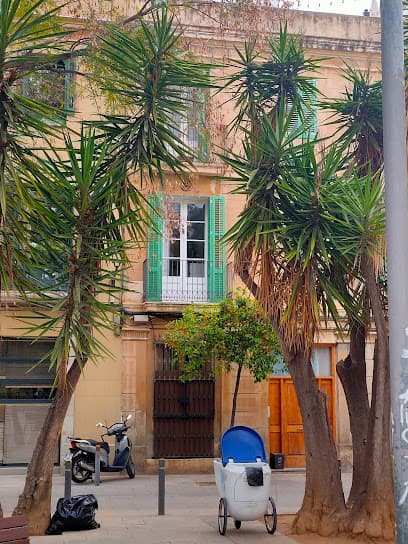
To understand Barcelona, you have to understand that it is a city of annexed villages, and Sarrià is the one that still carries its passport in its back pocket. You take the FGC train up the hill, leaving the sweat and the selfie sticks of the Rambla behind, and you emerge into a place that feels suspiciously like a different country. This is where you find Plaça de Pere Figuera i Serra. It isn't a checklist destination on any glossy map, and that is exactly why it matters. It’s a functional, unvarnished piece of the neighborhood fabric, a place where the city’s bourgeois heart beats at a much slower, more deliberate pace.
The square is named after a local priest, a man who spent decades tending to the spiritual and social needs of this barrio. It’s fitting, then, that the space feels like a sanctuary, though not the kind with incense and stained glass. This is a sanctuary of the mundane. It’s a paved rectangle framed by residential buildings, a few sturdy trees, and the kind of benches that have seen a thousand afternoon arguments about politics and football. There is a playground here, usually occupied by the children of families who have lived in these streets for three generations. The sound of a bouncing ball against stone is the primary soundtrack, occasionally interrupted by the hiss of an espresso machine from a nearby doorway.
If you’re looking for grand monuments or the 'best tapas in Barcelona,' you’re in the wrong place. But if you want to see how the other half lives—the quiet, affluent, fiercely local half—this is your window. The vibe is decidedly domestic. You’ll see the 'senyores' of Sarrià, impeccably dressed even for a walk to the pharmacy, stopping to chat in Catalan while their dogs sniff the base of a plane tree. There is no one here trying to sell you a plastic bull or a cheap sombrero. The air feels thinner, cleaner, and decidedly less desperate than it does down by the port.
Architecturally, it’s a study in restraint. It’s not the whimsical curves of the Eixample; it’s the sturdy, sensible bones of a village square. The surrounding architecture is a mix of the old and the functional, reflecting the neighborhood's evolution from a rural retreat for the 19th-century elite to a settled, high-end residential enclave. It’s a place to sit with a newspaper and a coffee, to watch the light change on the facades, and to realize that the real Barcelona isn't found in the queues for the Sagrada Familia, but in the quiet moments between the school run and the evening aperitif.
Is it worth the trek? That depends on what you’re hungry for. If you need a break from the relentless energy of the city center, if you want to breathe for a second without being bumped by a backpack, then yes. It’s a reminder that cities need these 'empty' spaces—places that don't demand your attention or your money, but simply offer a place to exist. It’s honest, it’s quiet, and it’s unapologetically Sarrià. Walk a few blocks over to the Major de Sarrià afterward for a glass of vermouth, and you’ll start to understand why the people who live up here rarely feel the need to go 'down' to Barcelona at all.
Type
Park
Duration
30-45 minutes
Best Time
Late afternoon when the neighborhood comes alive with locals and the light softens against the old buildings.
What People Say
square(3)
Features
Park
Categories
Urban SquarePlaygroundLocal Interest
Ticket Prices
Free Admission
No tickets required
Opening Hours
- MondayOpen 24 hours
- TuesdayOpen 24 hours
- WednesdayOpen 24 hours
- ThursdayOpen 24 hours
- FridayOpen 24 hours
- SaturdayOpen 24 hours
- SundayOpen 24 hours
Must-See Highlights
The local playground scene where Sarrià families congregate
The surrounding traditional architecture of the upper-class barrio
The nearby Foix de Sarrià pastry shop for a post-visit treat
Visitor Tips
Grab a coffee to go from a nearby cafe and sit on a bench to people-watch
Combine this with a walk down Carrer Major de Sarrià for the full neighborhood experience
Don't expect 'sights'—come for the silence and the atmosphere
Good For
Families with kidsSlow travelersPeace seekersLocal culture enthusiasts
Why Visit
Authentic village atmosphere in the heart of the upscale Sarrià district
Zero tourist crowds, offering a genuine look at local Catalan daily life
Proximity to the historic Major de Sarrià pedestrian street and traditional markets
Nearby Landmarks
- 5-minute walk from Mercat de Sarrià
- 3-minute walk from Carrer Major de Sarrià
- 6-minute walk from Sarrià FGC Station
- 4-minute walk from Parroquia de Sant Vicenç de Sarrià
Accessibility
- Flat paved surface
- Step-free access
- Public benches available
Location
Carrer de l'Hort de la Vila, 21I
Sarrià-Sant Gervasi, Barcelona
Nearby Hotels
Nearby Restaurants
In Sarrià-Sant Gervasi
ATTRACTION
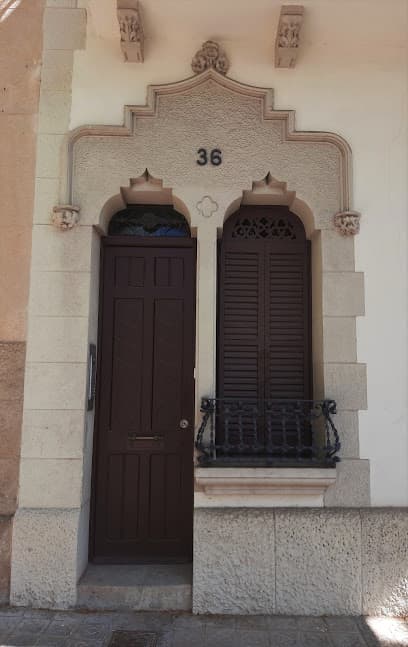
Casa Narcís Bosch
Sarrià-Sant Gervasi
A Modernista fever dream tucked away in Sarrià, where Salvador Valeri i Pupurull’s stone curves and ironwork prove that Gaudí wasn't the only genius in town.
0.0(0)
Tourist attraction
ATTRACTION
Plaça de Calvó
Sarrià-Sant Gervasi
A quiet, unpretentious slice of Sant Gervasi where the only drama is a toddler losing a shoe. No Gaudí, no crowds, just trees, benches, and the sound of real life in the Zona Alta.
0.0(0)
Park
ATTRACTION
Pipican Piscines i Esports
Sarrià-Sant Gervasi
A dirt-caked arena of canine chaos set against the polished backdrop of Sarrià-Sant Gervasi, where the neighborhood’s elite and their four-legged shadows come to settle scores.
0.0(0)
Park
Frequently Asked Questions
Is Plaça de Pere Figuera i Serra worth visiting?
Only if you are looking for a quiet, local experience away from tourists. It is a simple neighborhood square with a playground, well-suited for a peaceful break while exploring the village-like streets of Sarrià.
How do I get to Plaça de Pere Figuera i Serra?
Take the FGC (Ferrocarrils) line S1 or S2 to the Sarrià station. From there, it is a short 5-minute walk through the charming pedestrian streets of the neighborhood.
What is near Plaça de Pere Figuera i Serra?
The square is very close to the Mercat de Sarrià (local market) and the Carrer Major de Sarrià, which is famous for its traditional shops and bakeries like Foix de Sarrià.
Is this square good for children?
Yes, it features a small, safe playground and is a pedestrian-friendly area where local families often gather after school hours.
Reviews
0 reviews for Plaça de Pere Figuera i Serra
No reviews yet. Be the first to share your experience!