4.4
1,799 verified reviews
About
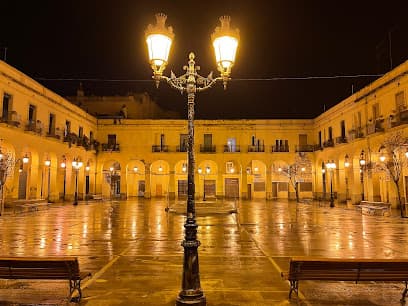
If you want to see where the real Barcelona went to hide, get on the L1 metro and head north until the tourists start to thin out. Get off at Sant Andreu. Walk past the chain stores and the noise until you stumble into Plaça de Masadas. It’s a punch to the gut for anyone who thinks the city begins and ends at the Gothic Quarter. This is a porticoed square, a mini-Plaça Reial without the overpriced frozen pizza, the pickpockets, or the guy dressed as a terrifying human statue trying to shake you down for a Euro.
Built in the late 19th century on what used to be the Masadas family farm, this place has the kind of weathered, yellow-ochre dignity that only comes from decades of actual use. For over a hundred years, a covered iron market sat right in the center, the lungs of the neighborhood. They tore it down in the nineties, which sounds like a tragedy until you see what’s left: a wide-open expanse of stone and sky, framed by elegant arches that provide just enough shade for the serious business of doing absolutely nothing.
This is the heart of Sant Andreu de Palomar, a village that was swallowed by Barcelona but never quite digested. You feel it in the air. The pace slows down. The sound of the city—the grinding gears of buses and the frantic clicking of heels—fades into the background, replaced by the rhythmic thud of a football against a stone pillar and the low hum of neighbors who actually know each other's names. It’s one of the best squares in Barcelona precisely because it isn't trying to be an attraction. It just is.
Sit down at one of the terraces under the porxos. Bar l’Arcada is a good place to start. Don't look for a QR code menu or a fusion brunch. You’re here for the ritual of the Sunday vermouth. It’s a simple, beautiful high: a glass of dark, herb-infused wine, a couple of fat olives, maybe some tinned cockles or a plate of salty chips. The sun hits the square, the kids run wild in the center, and for a moment, the world makes sense. It’s a sensory immersion into the Barcelona that the travel brochures usually miss—the smell of fried calamari hitting hot oil, the clink of ice against glass, and the sight of old men in flat caps arguing about the local football results with the intensity of a blood feud.
For years, this was the site of a legendary monthly toy and model market. While that specific circus has mostly migrated over to the nearby Can Fabra, the spirit of the collector remains. You’ll still see people trading stories and memories over coffee. It’s a place that rewards the slow traveler, the one who is willing to sit still long enough to see the light change on the facades.
Is it worth visiting? If you’re looking for a checklist of monuments, probably not. But if you want to understand the soul of a Barcelona neighborhood, if you want to eat tapas in Sant Andreu where the person at the next table isn't holding a map, then yes. It’s honest. It’s lived-in. It’s the kind of place that reminds you why we travel in the first place—not to see things, but to feel the pulse of a place that would exist exactly like this whether you showed up or not.
Type
Park
Duration
1-2 hours
Best Time
Sunday morning for the lively vermouth atmosphere or late afternoon for golden hour photography.
What People Say
bars(77)terrace(32)tapas(27)vermouth(21)market(20)traffic(17)ideal(14)town(13)
Features
Park
Categories
ArchitecturePublic SquareLocal CultureHistory
Ticket Prices
Free Admission
No tickets required
Opening Hours
- MondayOpen 24 hours
- TuesdayOpen 24 hours
- WednesdayOpen 24 hours
- ThursdayOpen 24 hours
- FridayOpen 24 hours
- SaturdayOpen 24 hours
- SundayOpen 24 hours
Must-See Highlights
The 19th-century stone arches (porxos) surrounding the square
The central open space where the old market once stood
The traditional vermouth siphons on the bar terraces
The surrounding narrow streets of the old Sant Andreu village
Visitor Tips
Grab a table at Bar l'Arcada for the most iconic view of the square.
Don't expect English menus; brush up on your basic Spanish or Catalan food terms.
Combine a visit here with a walk down Carrer Gran de Sant Andreu for a full neighborhood experience.
Good For
Families with kidsArchitecture enthusiastsBudget travelersPhotographyLocal culture seekers
Why Visit
One of the few remaining 19th-century arcaded squares in Barcelona
A completely authentic, tourist-free atmosphere in the heart of Sant Andreu
The perfect spot for the traditional Sunday morning vermouth ritual
Nearby Landmarks
- Fabra i Coats Cultural Center (8-minute walk)
- Carrer Gran de Sant Andreu (5-minute walk)
- Paròquia de Sant Andreu de Palomar (7-minute walk)
- Parc de la Pegaso (10-minute walk)
Accessibility
- Level ground throughout the square
- Pedestrianized zone with no car traffic
- Accessible terraces at most bars
Location
Plaça de Masadas
Sant Andreu, Barcelona
Nearby Hotels
Nearby Restaurants
In Sant Andreu
ATTRACTION
Camsbio,S.L
Sant Andreu
Not a park for picnics, but the workshop where Barcelona’s green future is built. Camsbio is the grit behind the city's vertical gardens and bio-construction.
0.0(0)
Park
ATTRACTION
Multan los Domingos
Sant Andreu
A defiant slice of Sant Andreu where industrial ruins meet community gardens. It’s the anti-tourist Barcelona: raw, brick-heavy, and smelling of vermut and rebellion.
0.0(0)
Garden
ATTRACTION
Plaça d'Albert Badia i Mur
Sant Andreu
A gritty, honest slice of Sant Andreu where the 'Cases Barates' history meets modern life. No Gaudí here—just real people, a playground, and the unvarnished soul of Bon Pastor.
0.0(0)
Park
Frequently Asked Questions
Is Plaça de Masadas worth visiting?
Yes, if you want an authentic, non-touristy experience. It is one of the few remaining arcaded squares in Barcelona and offers a genuine glimpse into neighborhood life in Sant Andreu.
What is the best time to visit Plaça de Masadas?
Sunday mornings are peak time for the 'vermut' ritual, when the terraces are full of locals. Weekday afternoons are much quieter if you prefer a peaceful atmosphere.
How do I get to Plaça de Masadas?
Take the L1 Metro (Red Line) to the Sant Andreu station or the L9N/L10N to Onze de Setembre. From either, it is a short 5-10 minute walk through the neighborhood.
Is the toy market still at Plaça de Masadas?
The famous monthly collectors' and toy market moved to the nearby Can Fabra (Fabra i Coats) area a few years ago, but the square still hosts occasional local fairs and events.
Reviews
0 reviews for Plaça de Masadas
No reviews yet. Be the first to share your experience!