4.0
6 verified reviews
About
If you’re looking for the Barcelona of the postcards—the one with the dancing fountains, the overpriced sangria, and the human statues sweating through their silver paint—you’ve come to the wrong place. Plaça de l'Orient isn’t a destination; it’s a stubborn refusal to change. Tucked away in the upper reaches of the Sarrià-Sant Gervasi district, this isn't a 'park' in the sense of sprawling lawns and frisbees. It’s a Mediterranean plaza in its purest, most unvarnished form: a widening of the street, a few benches, some weathered stone, and a profound sense of indifference to your presence.
To understand this square, you have to understand Sarrià. Until 1921, this was an independent village, a wealthy mountain retreat for the city’s elite who wanted to escape the grime of the industrial port. Even now, a century after being swallowed by the urban sprawl, the locals still talk about 'going down to Barcelona' as if they’re crossing a border. Plaça de l'Orient sits in the heart of this psychological fortress. It’s a place where the architecture is low-slung and intimate, where the wrought iron balconies sag under the weight of potted geraniums, and where the air feels five degrees cooler and ten times cleaner than it does on La Rambla.
Arrival here is a sensory reset. The roar of the city fades into a muffled hum, replaced by the rhythmic click-clack of a local’s heels on the pavement or the distant tolling of the bells from the Church of Sant Vicenç. There is no grand monument here to demand your awe. Instead, you get the architecture of daily life—the kind of quiet, dignified beauty that doesn't need a filter. The square is framed by buildings that have seen the transition from horse-drawn carriages to electric scooters without losing their composure. It’s a liminal space, a spot where neighbors stop to argue about the local football scores or where an old man might sit for three hours with nothing but a folded newspaper and his thoughts.
Is it worth visiting? That depends on what you’re hungry for. If you need a checklist of 'top things to do in Sarrià,' this square won't provide much to tick off. But if you want to see the real Barcelona—the one that exists when the cruise ships leave and the tour buses stop running—then yes, it’s essential. It’s a reminder that a city is more than its landmarks; it’s a collection of small, quiet moments. You come here to sit. You come here to breathe. You come here to realize that the most interesting thing in a city is often just the way the light hits a centuries-old wall at four in the afternoon.
Don't expect a gift shop. Don't expect a plaque explaining why this patch of ground matters. It matters because it’s still here, functioning exactly as it was intended: as a communal living room for a neighborhood that remembers who it is. Grab a coffee from a nearby 'granja,' find a spot on a bench, and just watch. The theater of the mundane is the best show in town, and in Plaça de l'Orient, you’ve got a front-row seat. It’s honest, it’s quiet, and it’s entirely unimpressed by you. And that, in this day and age, is a beautiful thing.
Type
Park
Duration
15-30 minutes
Best Time
Late afternoon when the neighborhood wakes up from siesta and the golden light hits the old stone buildings.
Features
Park
Categories
Public SquareArchitectureLocal Culture
Ticket Prices
Free Admission
No tickets required
Opening Hours
- MondayOpen 24 hours
- TuesdayOpen 24 hours
- WednesdayOpen 24 hours
- ThursdayOpen 24 hours
- FridayOpen 24 hours
- SaturdayOpen 24 hours
- SundayOpen 24 hours
Must-See Highlights
The surrounding 19th-century residential architecture
The nearby Church of Sant Vicenç de Sarrià
The narrow pedestrian streets leading into the square like Carrer de l'Orient
Visitor Tips
Combine a visit here with a stop at Foix de Sarrià for their famous 'petús' or 'pastissets'.
Don't look for a park with grass; this is a traditional stone plaza.
Visit on a weekday morning to see the local life centered around the nearby market.
Good For
Solo travelersArchitecture enthusiastsPeace seekersLocal culture seekers
Why Visit
Preserved village atmosphere of the former independent municipality of Sarrià
Zero tourist commercialization, offering a truly local experience
Exceptional example of traditional Catalan small-scale urban architecture
Nearby Landmarks
- 3-minute walk from Church of Sant Vicenç de Sarrià
- 4-minute walk from Mercat de Sarrià
- 3-minute walk from Foix de Sarrià pastry shop
- 8-minute walk from Sarrià FGC Station
Accessibility
- Flat paved surface
- Pedestrianized area
- Public benches available
Location
Sarrià-Sant Gervasi, Barcelona
Nearby Hotels
Nearby Restaurants
In Sarrià-Sant Gervasi
ATTRACTION
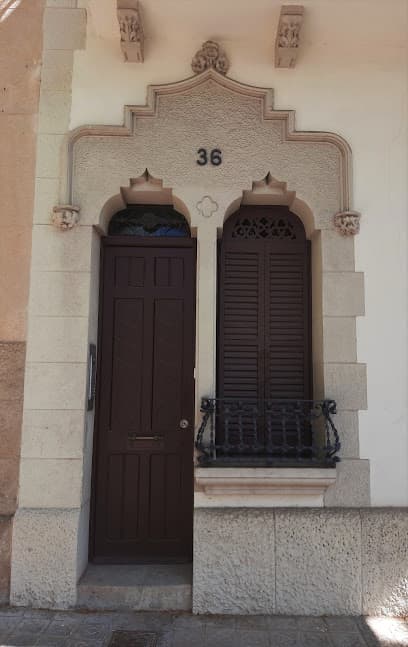
Casa Narcís Bosch
Sarrià-Sant Gervasi
A Modernista fever dream tucked away in Sarrià, where Salvador Valeri i Pupurull’s stone curves and ironwork prove that Gaudí wasn't the only genius in town.
0.0(0)
Tourist attraction
ATTRACTION
Plaça de Calvó
Sarrià-Sant Gervasi
A quiet, unpretentious slice of Sant Gervasi where the only drama is a toddler losing a shoe. No Gaudí, no crowds, just trees, benches, and the sound of real life in the Zona Alta.
0.0(0)
Park
ATTRACTION
Pipican Piscines i Esports
Sarrià-Sant Gervasi
A dirt-caked arena of canine chaos set against the polished backdrop of Sarrià-Sant Gervasi, where the neighborhood’s elite and their four-legged shadows come to settle scores.
0.0(0)
Park
Frequently Asked Questions
Is Plaça de l'Orient worth visiting?
Yes, if you want to experience the authentic, village-like atmosphere of old Sarrià away from the tourist crowds. It is a quiet, local square that offers a glimpse into the daily life of one of Barcelona's most traditional neighborhoods.
How do I get to Plaça de l'Orient?
The easiest way is to take the FGC train (Line L6) to the Reina Elisenda station or the Sarrià station. From there, it is a short 5-10 minute walk through the charming pedestrian streets of the old town.
What is near Plaça de l'Orient?
It is located just steps away from the Church of Sant Vicenç de Sarrià and the famous Foix de Sarrià pastry shop. The Mercat de Sarrià, a traditional local market, is also within a 5-minute walk.
Reviews
0 reviews for Plaça de l'Orient
No reviews yet. Be the first to share your experience!