3.7
826 verified reviews
About
If you’re looking for the Barcelona of the postcards—the one with the fluttering lace curtains and the polished marble—you’ve taken the wrong turn. Get back on the L1 and head toward the center with the rest of the herd. But if you want to see where the city actually breathes, where it sweats, and where it occasionally yells at its kids, you get off at Sant Andreu. You walk past the old shops and the narrow streets until you hit the Plaça de les Palmeres. It is not 'pretty' in any conventional sense. It is a 'hard square,' a product of that 1980s urban fever dream where Barcelona decided to monumentalize its outskirts before the world showed up for the Olympics.
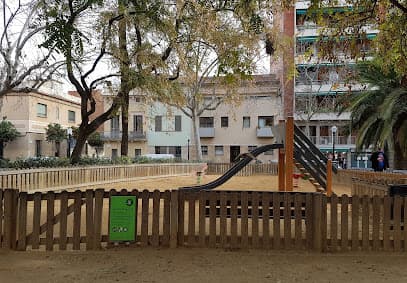
Designed by architects Ricard Fontana and Pedro Barragán in 1984, the square is dominated by a massive, 150-meter curved concrete wall. It’s a brutal, beautiful spine that slices the space in two. On one side, you have the 'soft' area—the palms that give the place its name, standing tall and slightly bedraggled like aging rockers who refused to retire. On the other side, the 'hard' area: a vast expanse of pavement that serves as a theater for the daily drama of neighborhood life. This isn't a place for quiet contemplation; it’s a place for living.
The first thing that hits you isn't the architecture, though. It’s the noise. The high-pitched shriek of children who have clearly had too much sugar, the rhythmic thud of a football against the concrete wall, and the low, gravelly rumble of old men debating the merits of the local football club. This is the heart of Sant Andreu, a district that still considers itself a village independent of the sprawling metropolis to the south. The people here aren't performers in a tourist play; they are residents who have been sitting on these same benches since the wall was poured.
At the center of it all is the bar. Every great Spanish square needs an anchor, and here it’s a modest structure with a terrace that is perpetually full. This is where you should head. Don't look for a wine list with adjectives like 'flinty' or 'oaky.' Order a vermut or a cold beer, grab a bowl of salty olives, and just watch. You’ll see the social fabric of Barcelona being woven in real-time. You’ll see the grandmothers in their Sunday best keeping a hawk-like eye on the toddlers, the teenagers trying to look bored while secretly checking their reflections in the shop windows, and the dogs—so many dogs—navigating the forest of table legs.
The 3.7 rating you see online? Ignore it. That’s the sound of people who wanted a botanical garden and found a neighborhood instead. They complain about the graffiti, the lack of grass, or the fact that the waiter didn't speak English. To them, I say: good. Stay away. The graffiti is the city’s diary; the concrete is built to withstand the weight of a thousand Sunday afternoons. The Plaça de les Palmeres is honest. It doesn't put on a costume for you. It’s a place where the shadows of the palms grow long over the pavement, and for a moment, you realize that this—the noise, the heat, the cheap beer, and the towering concrete—is the most authentic thing you’ve seen all week. It’s not a destination; it’s a realization that the best parts of a city are often the ones that don't care if you like them or not.
Type
Park
Duration
1 hour
Best Time
Late afternoon (17:00 - 19:00) when the neighborhood comes alive and the bar terrace is buzzing.
What People Say
kids(32)games(12)bar(10)bank(8)dogs(7)shadow(7)cement(6)square(6)
Features
Park
Categories
ArchitectureCommunityUrban Design
Ticket Prices
Free Admission
No tickets required
Opening Hours
- MondayOpen 24 hours
- TuesdayOpen 24 hours
- WednesdayOpen 24 hours
- ThursdayOpen 24 hours
- FridayOpen 24 hours
- SaturdayOpen 24 hours
- SundayOpen 24 hours
Must-See Highlights
The massive curved concrete wall dividing the square
The tall, iconic palm trees that give the square its name
The lively children's play area on the 'hard' side of the wall
The local bar terrace for a mid-afternoon vermut
Visitor Tips
Don't expect a green park; this is a 'hard square' designed for community activities.
Visit on a Sunday morning to see the square at its most traditional.
Combine your visit with a walk down Carrer Gran de Sant Andreu for independent shops that haven't been sanitized by global chains.
Good For
Families with childrenArchitecture enthusiastsBudget travelersLocal culture seekers
Why Visit
The 'Wall of the Palms', a 150-meter curved concrete architectural landmark
A genuine, non-touristy atmosphere in the historic Sant Andreu district
The central terrace bar, ideal for experiencing local 'vermut' culture among neighbors
Nearby Landmarks
- Parroquia de Sant Andreu de Palomar (4-minute walk)
- Fabra i Coats - Centre d'Art Contemporani (8-minute walk)
- Carrer Gran de Sant Andreu (5-minute walk)
Accessibility
- Fully wheelchair accessible
- Flat paved surfaces
- Accessible public transport nearby
Location
Plaça de les Palmeres
Sant Andreu, Barcelona
Nearby Hotels
Nearby Restaurants
In Sant Andreu
ATTRACTION
Camsbio,S.L
Sant Andreu
Not a park for picnics, but the workshop where Barcelona’s green future is built. Camsbio is the grit behind the city's vertical gardens and bio-construction.
0.0(0)
Park
ATTRACTION
Multan los Domingos
Sant Andreu
A defiant slice of Sant Andreu where industrial ruins meet community gardens. It’s the anti-tourist Barcelona: raw, brick-heavy, and smelling of vermut and rebellion.
0.0(0)
Garden
ATTRACTION
Plaça d'Albert Badia i Mur
Sant Andreu
A gritty, honest slice of Sant Andreu where the 'Cases Barates' history meets modern life. No Gaudí here—just real people, a playground, and the unvarnished soul of Bon Pastor.
0.0(0)
Park
Frequently Asked Questions
Is Plaça de les Palmeres worth visiting?
Yes, if you want to escape the tourist crowds and see an authentic Barcelona neighborhood. It's a prime destination for architecture fans and those who enjoy people-watching at a local bar.
What is the famous wall in Plaça de les Palmeres?
The square features a 150-meter curved concrete wall designed by Ricard Fontana and Pedro Barragán in 1984, which serves as a striking example of modern urban design in the Sant Andreu district.
How do I get to Plaça de les Palmeres?
Take the Metro Line 1 (Red Line) to the Sant Andreu station. From there, it's a short 5-10 minute walk through the narrow lanes of the old village center.
Is there food and drink at the square?
Yes, there is a central bar with a large outdoor terrace that serves classic tapas, vermut, and cold drinks. It is the social hub of the square.
Reviews
0 reviews for Plaça de les Palmeres
No reviews yet. Be the first to share your experience!