4.5
148 verified reviews
About
Most people head to Montjuïc for the castle or the choreographed waterworks of the Magic Fountain. They want the postcard. But if you want the truth—the big, sprawling, industrial truth of Barcelona—you stop halfway up the hill at Plaça de l'Armada. It’s a massive, sun-bleached terrace that feels less like a park and more like a grand, slightly forgotten stage looking out over the Mediterranean. It’s where the city’s ambition meets the hard reality of its maritime commerce.
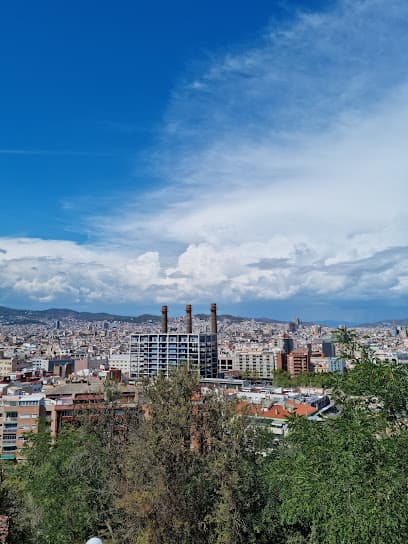
When you stand at the stone balustrade, you aren’t looking at the Sagrada Família or the Gothic Quarter. You’re looking at the port. You’re looking at the massive cranes of the container terminal, the ferries chugging toward Mallorca, and the cruise ships that look like floating apartment blocks. It’s an industrial ballet, and from this height, it’s mesmerizing. There’s a honesty to it that the tourist-clogged streets of the center can’t provide. You can smell the salt air mixed with the faint, metallic tang of the docks, filtered through the shade of the surrounding pines and palms.
The plaza itself is dominated by the Font de l'Armada, a fountain that looks like it belongs in a much older, more formal Europe. Behind you sits the Hotel Miramar, a building that has lived several lives—first as a palace for the 1929 International Exposition, then as the headquarters for Spanish state television, and now as a luxury hotel where people pay a lot of money for the same view you’re getting for free. The architecture is a reminder of a time when Barcelona was desperate to prove itself to the world, building grand monuments on a hill that used to be nothing but scrubland and quarries.
Designed by Jean-Claude Nicolas Forestier for the '29 Expo, the surrounding Jardins de Miramar are a masterclass in Mediterranean landscaping. It’s all about levels, stone stairs, and strategically placed greenery that frames the sea. It’s a place to breathe. While the rest of the city is a frantic scramble of scooters and selfie sticks, Plaça de l'Armada is often strangely quiet. You’ll find a few locals walking dogs, a couple of weary hikers catching their breath, and maybe a guest from the hotel nursing a gin and tonic on the far terrace.
This isn't a place for 'activities.' There are no gift shops here, no one trying to sell you a plastic bull or a cheap mojito. It’s a place for contemplation, or perhaps for realizing how small you are in the face of the horizon. If you’re looking for the best views in Barcelona without the elbow-to-elbow crowds of Park Güell, this is your spot. It’s raw, it’s beautiful in a way that doesn't try too hard, and it reminds you that Barcelona is, at its heart, a working port city that just happens to have some very nice architecture.
Is it worth the climb? Absolutely. But don't just tick it off a list. Bring a bottle of something cold, find a spot on the stone wall, and watch the sun start to dip. When the lights of the port start to flicker on and the Mediterranean turns that deep, bruised purple, you’ll understand why this hill has been fought over for centuries. It’s not just a park; it’s a front-row seat to the engine room of the city. It’s one of the few places left where you can feel the scale of the place without a filter.
Type
Park
Duration
30-60 minutes
Best Time
Late afternoon or sunset for the best lighting over the sea and port.
What People Say
hotel(5)montjuïc(4)trees(3)
Features
Park
Categories
ParkViewpointArchitectureGardens
Ticket Prices
Free Admission
No tickets required
Opening Hours
- MondayOpen 24 hours
- TuesdayOpen 24 hours
- WednesdayOpen 24 hours
- ThursdayOpen 24 hours
- FridayOpen 24 hours
- SaturdayOpen 24 hours
- SundayOpen 24 hours
Must-See Highlights
The Font de l'Armada central fountain
The panoramic view of the container port and cruise terminals
The facade of the historic Hotel Miramar
The stone balustrades of the Miramar Terrace
Visitor Tips
Bring your own water or snacks as there are few kiosks directly on the plaza.
Combine this with a walk through the Jardins de Mossèn Costa i Llobera (cactus gardens) nearby.
It can get very windy on the terrace, so bring a light jacket even in spring.
Good For
PhotographersBudget travelersCouplesSolo travelers
Why Visit
Unobstructed industrial views of the Port of Barcelona and the Mediterranean
Historic 1929 International Exposition architecture and landscaping
A peaceful alternative to the more crowded tourist hubs on Montjuïc
Nearby Landmarks
- 1-minute walk from Hotel Miramar
- 3-minute walk from the Port Cable Car (Transbordador Aeri del Port)
- 5-minute walk from Jardins de Joan Brossa
- 12-minute walk from the Montjuïc Funicular station
Accessibility
- Paved flat surfaces
- Accessible by bus and funicular (with elevator)
- Some stairs in the surrounding gardens, but the main plaza is level
Location
Ctra. de Miramar, 38
Sants-Montjuïc, Barcelona
Nearby Hotels
Nearby Restaurants
In Sants-Montjuïc
ATTRACTION
Bolets1
Sants-Montjuïc
A gritty, earthy temple to the Catalan obsession with wild mushrooms, where the dirt is real, the fungi are seasonal gold, and the air smells like the damp floor of a Pyrenean forest.
0.0(0)
Tourist attraction
ATTRACTION
Montjuic aparca
Sants-Montjuïc
The unglamorous base camp for your Montjuïc assault. A tactical slab of asphalt where the city's chaos fades into the pine-scented ghosts of the 1992 Olympics.
0.0(0)
Tourist attraction
ATTRACTION
Паркінг Барселона
Sants-Montjuïc
A sprawling slab of industrial reality in the Zona Franca. No Gaudí here—just hot asphalt, diesel fumes, and the honest utility of a secure place to park your rig.
0.0(0)
Park
Frequently Asked Questions
Is Plaça de l'Armada worth visiting?
Yes, especially if you want an unfiltered look at the port’s industrial sprawl and the Mediterranean horizon without the crushing crowds of the castle or Park Güell.
How do I get to Plaça de l'Armada?
You can take the Funicular de Montjuïc from Paral·lel metro and walk 10 minutes, or take the 150 bus from Plaça d'Espanya. The Transbordador Aeri del Port (cable car) also lands nearby.
Is there an entrance fee for Plaça de l'Armada?
No, the plaza and the surrounding Miramar gardens are public spaces and completely free to enter 24 hours a day.
What is the best time to visit?
Sunset is the prime time, as the light hits the port and the Mediterranean beautifully, and the industrial lights of the docks begin to glow.
Reviews
0 reviews for Plaça de l'Armada
No reviews yet. Be the first to share your experience!