4.6
5 verified reviews
About
Look, most people come to Barcelona to get drunk on cheap cava and stare at a cathedral that’s been under construction since the invention of the lightbulb. There’s nothing wrong with that. But if you want to see where the city actually thinks, you have to head north. You climb. You leave the sweat and the pickpockets of the Gothic Quarter behind and head into Sarrià-Sant Gervasi, where the air gets thinner and the bank accounts get thicker. This is where you’ll find Plaça de la Ciència.
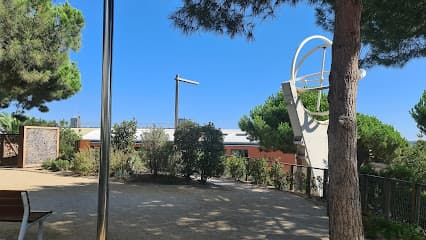
It’s not a 'park' in the way most people think of them. There are no manicured lawns for your picnic or frisbee-throwing hipsters. This is a 5,000-square-meter plateau of intellectual inquiry, a massive open-air annex to the CosmoCaixa science museum. It’s a place where the 1904 Modernist brickwork of the original asylum building—designed by Josep Domènech i Estapà—collides head-on with the glass-and-steel futurism of the 21st century. It’s beautiful in a way that feels intentional, not accidental.
The first thing that hits you isn't the architecture, though; it’s the silence, punctuated by the weirdest sounds you’ve ever heard in a public square. That’s because the place is littered with interactive physics experiments. The stars of the show are the parabolic dishes. You stand at one, your friend stands at another fifty yards away, and you whisper. Your voice travels across the void with the precision of a sniper rifle, landing right in their ear. It’s a simple trick of acoustics, but in a world of digital noise, there’s something profoundly satisfying about a low-tech miracle.
Then there’s the Mediterranean Garden. It’s a curated slice of the local ecosystem that manages to feel both wild and deeply studied. You’ve got the sundial, the Archimedes screw, and a massive telescope that looks like it’s waiting for a signal from a distant, smarter civilization. It’s the kind of place where you can actually feel the rotation of the earth if you sit still long enough.
Is it a tourist trap? No. The tourists are all at Park Güell fighting for a photo with a ceramic lizard. Plaça de la Ciència is for the locals—the families from the neighborhood, the students from the nearby universities, and the occasional wanderer who took the wrong turn at Tibidabo and realized they found something better. It’s a palate cleanser for the soul. You stand at the edge of the plaza, looking out over the sprawl of Barcelona toward the Mediterranean, and you realize that the city is more than just a collection of tapas bars and beach clubs. It’s a living, breathing machine.
The honest truth? If you hate kids, you might find the weekends a bit much. It’s a magnet for school groups and families who want their children to learn something without realizing they’re being taught. But if you come on a Tuesday morning, when the sun is hitting the glass and the only sound is the hum of the city below, it’s one of the most peaceful spots in the entire province. It’s a reminder that science isn't just for people in white coats; it’s for anyone who hasn't had their sense of wonder crushed by the weight of the world yet. Go for the physics, stay for the view, and leave feeling just a little bit smarter than when you arrived.
Type
Park
Duration
1-2 hours
Best Time
Weekday mornings for peace and quiet, or sunset for the best views over the city.
Features
Park
Categories
ScienceEducationArchitectureModernism
Ticket Prices
Free Admission
No tickets required
Must-See Highlights
The Parabolic Dishes
The Mediterranean Garden
The Archimedes Screw
The view of the original 1904 Modernist building facade
Visitor Tips
The square is free, but the museum inside is worth the small entry fee if you have time.
Bring water as the square can get quite hot in the direct afternoon sun.
Use the 196 bus to save your legs from the uphill climb from the metro station.
Good For
Families with childrenScience enthusiastsBudget travelersArchitecture fans
Why Visit
Interactive acoustic parabolic dishes for long-distance whispering
Sweeping, unvarnished views of the Barcelona sprawl from the high-altitude silence of Tibidabo's foothills
A unique Mediterranean Garden showcasing local flora and scientific principles
Nearby Landmarks
- 1-minute walk from CosmoCaixa Science Museum
- 15-minute walk from Torre Bellesguard (Gaudí)
- 20-minute walk from Tibidabo Funicular lower station
Accessibility
- Fully wheelchair accessible
- Elevators available from street level
- Wide, flat paved surfaces
Location
Carrer de Teodor Roviralta, 47
Sarrià-Sant Gervasi, Barcelona
Nearby Hotels
Nearby Restaurants
In Sarrià-Sant Gervasi
ATTRACTION
Casa Narcís Bosch
Sarrià-Sant Gervasi
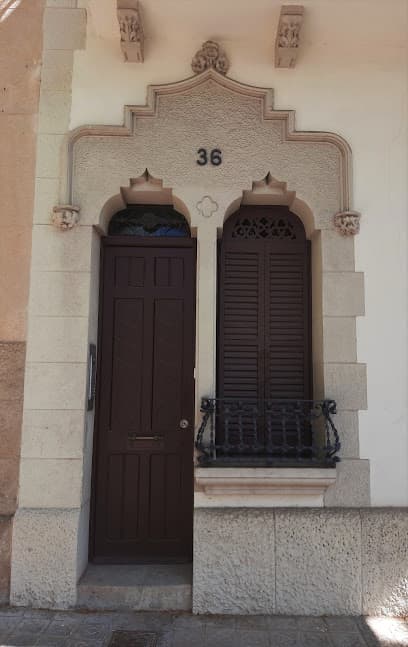
A Modernista fever dream tucked away in Sarrià, where Salvador Valeri i Pupurull’s stone curves and ironwork prove that Gaudí wasn't the only genius in town.
0.0(0)
Tourist attraction
ATTRACTION
Plaça de Calvó
Sarrià-Sant Gervasi
A quiet, unpretentious slice of Sant Gervasi where the only drama is a toddler losing a shoe. No Gaudí, no crowds, just trees, benches, and the sound of real life in the Zona Alta.
0.0(0)
Park
ATTRACTION
Pipican Piscines i Esports
Sarrià-Sant Gervasi
A dirt-caked arena of canine chaos set against the polished backdrop of Sarrià-Sant Gervasi, where the neighborhood’s elite and their four-legged shadows come to settle scores.
0.0(0)
Park
Frequently Asked Questions
Is Plaça de la Ciència worth visiting?
Absolutely, especially if you enjoy interactive exhibits and great city views without the crowds of the city center. It's a rare collision of science and public space that feels very different from Barcelona's more famous parks.
Do I need a ticket for Plaça de la Ciència?
The square itself is a public space and is generally free to access, though it is part of the CosmoCaixa complex. If you want to enter the museum's interior exhibits, like the Flooded Forest, you will need to purchase a ticket.
How do I get to Plaça de la Ciència?
Take the FGC L7 train to the Av. Tibidabo station. From there, it's a bit of an uphill walk, or you can take the 196 bus which drops you right near the entrance of CosmoCaixa.
What should I see at Plaça de la Ciència?
Don't miss the parabolic acoustic dishes that allow you to whisper to someone across the square. The Mediterranean Garden and the large-scale sundial are also highlights that offer great photo opportunities with the city in the background.
Reviews
0 reviews for Plaça de la Ciència
No reviews yet. Be the first to share your experience!