3.9
30 verified reviews
About
Barcelona has a way of canonizing its rebels in the most quiet, unassuming ways. You’re in Sarrià-Sant Gervasi, a neighborhood that smells like old money and jasmine, far from the sweat-soaked chaos of La Rambla. Here, tucked away on Carrer d'Eduardo Conde, is the Plaça de Carmen Tórtola Valencia. It isn’t a grand architectural statement. It isn’t a 'must-see' on some glossy bucket list. It’s a small, paved square with a few benches and a bust of a woman who once set the world on fire.
If you don’t know who Carmen Tórtola Valencia was, you’re missing out on one of the great stories of the early 20th century. They called her the 'Mata Hari of Spain.' She was a dancer, a choreographer, and a polyglot who spoke five languages and collected art like other people collect receipts. She was a muse for intellectuals and a scandal for the conservative elite, performing 'exotic' dances that were as much about liberation as they were about art. She lived right here in Sarrià, and this square is the city’s nod to a woman who refused to be boring.
When you walk into the square, don’t expect a botanical garden. This is a neighborhood park in the truest sense. There are Mediterranean trees providing patches of shade, some gravel that’s probably seen better days, and the kind of silence you only find in residential Barcelona. It’s the sort of place where an old man might sit for three hours with a newspaper and a cigarette, or where a local kid might kick a ball against a wall while their mother scrolls through her phone. It’s honest. It’s unpretentious. It’s the antidote to the hyper-curated 'Barcelona experience' sold to tourists.
The bust of Carmen stands there, looking out over the quiet. It’s a reminder that even in this buttoned-up, bourgeois part of town, there’s a history of fire and defiance. The square itself is a window into the soul of Sarrià—a village that was independent until 1921 and still feels like it’s holding onto its own secrets. If you’re looking for things to do in Sarrià that don’t involve shopping for expensive pastries, this is it. You come here to breathe. You come here to escape the humidity of the coast and the noise of the city center.
Is it worth the trek? If you’re a fan of dance history or if you’re just tired of being elbowed by people with selfie sticks, then yes. It’s one of those quiet parks in Barcelona where you can actually feel the weight of the neighborhood’s history. It’s near the more famous Jardins de la Vil·la Cecília and Parc de Santa Amèlia, so you can make a morning of it, drifting from one green space to the next like a local with nowhere to be.
Don’t come here expecting a show. The show ended decades ago when Carmen took her last bow. Come here for the stillness. Sit on a bench, look at the stone face of a woman who lived a hundred lives, and appreciate the fact that for fifteen minutes, nobody is trying to sell you a souvenir. It’s just you, the trees, and the ghost of a dancer who knew that the best way to live was to make people talk. In a city that often feels like it’s becoming a theme park, the Plaça de Carmen Tórtola Valencia is a stubborn, quiet piece of reality.
Type
Park
Duration
15-30 minutes
Best Time
Late afternoon when the sun filters through the trees and the neighborhood locals come out for a stroll.
Features
Park
Categories
HistoryLocal CultureUrban Park
Ticket Prices
Free Admission
No tickets required
Opening Hours
- MondayOpen 24 hours
- TuesdayOpen 24 hours
- WednesdayOpen 24 hours
- ThursdayOpen 24 hours
- FridayOpen 24 hours
- SaturdayOpen 24 hours
- SundayOpen 24 hours
Must-See Highlights
The bronze bust of Carmen Tórtola Valencia
The surrounding residential architecture of Sarrià
The peaceful shade of the Mediterranean trees
Visitor Tips
Combine this with a visit to the nearby Vil·la Cecília gardens for a full morning of quiet exploration.
Grab a coffee or a pastry in the center of Sarrià before walking up here to enjoy it in the peace of the square.
Look for the small plaque that explains the dancer's connection to the neighborhood.
Good For
Solo travelersHistory buffsLocalsThose seeking peace and quiet
Why Visit
Dedicated to the 'Mata Hari of Spain', a legendary dancer and feminist icon
Located in the heart of residential Sarrià, offering a truly local, non-touristy atmosphere
A perfect quiet retreat for reading or reflection away from the city's noise
Nearby Landmarks
- Parc de Santa Amèlia (4-minute walk)
- Jardins de la Vil·la Cecília (3-minute walk)
- Sarrià FGC Station (10-minute walk)
- Plaça de Sarrià (12-minute walk)
Accessibility
- Flat paved surface
- Accessible from street level
- Public benches available
Location
Carrer d'Eduardo Conde, 37
Sarrià-Sant Gervasi, Barcelona
Nearby Hotels
Nearby Restaurants
In Sarrià-Sant Gervasi
ATTRACTION
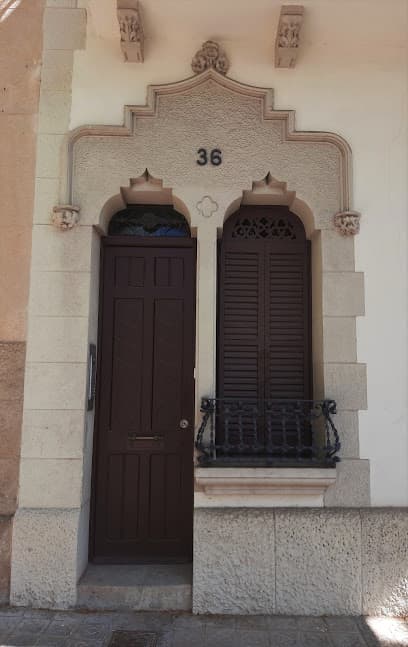
Casa Narcís Bosch
Sarrià-Sant Gervasi
A Modernista fever dream tucked away in Sarrià, where Salvador Valeri i Pupurull’s stone curves and ironwork prove that Gaudí wasn't the only genius in town.
0.0(0)
Tourist attraction
ATTRACTION
Plaça de Calvó
Sarrià-Sant Gervasi
A quiet, unpretentious slice of Sant Gervasi where the only drama is a toddler losing a shoe. No Gaudí, no crowds, just trees, benches, and the sound of real life in the Zona Alta.
0.0(0)
Park
ATTRACTION
Pipican Piscines i Esports
Sarrià-Sant Gervasi
A dirt-caked arena of canine chaos set against the polished backdrop of Sarrià-Sant Gervasi, where the neighborhood’s elite and their four-legged shadows come to settle scores.
0.0(0)
Park
Frequently Asked Questions
Is Plaça de Carmen Tórtola Valencia worth visiting?
It is worth it if you are looking for a quiet, local spot away from the tourist crowds or if you have an interest in Spanish dance history. It is a small, residential square rather than a major landmark.
Who was Carmen Tórtola Valencia?
She was a famous Spanish dancer and choreographer (1882–1955) known for her 'exotic' and modern dance styles. She was a major cultural figure in Barcelona and lived in the Sarrià neighborhood.
How do I get to Plaça de Carmen Tórtola Valencia?
The easiest way is to take the FGC train (Lines S1 or S2) to the Sarrià station. From there, it is about a 10-minute walk through the residential streets of the neighborhood.
What is near the square?
The square is very close to the Jardins de la Vil·la Cecília and the Parc de Santa Amèlia, two of the most beautiful and peaceful green spaces in the Sarrià district.
Reviews
0 reviews for Plaça de Carmen Tórtola Valencia
No reviews yet. Be the first to share your experience!