4.2
106 verified reviews
About
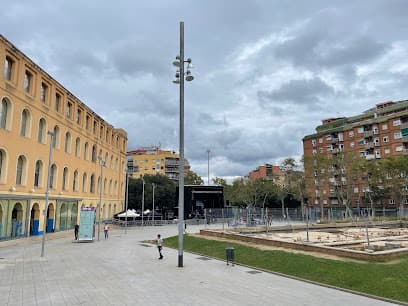
If you’re looking for the Barcelona of the postcards—the one with the glittering mosaics and the overpriced sangria—you’ve taken the wrong metro line. Sant Andreu doesn’t care about your selfie stick. This is a neighborhood that was its own village until the city swallowed it whole in 1897, and it still carries that fierce, independent streak like a chip on its shoulder. At the heart of this unvarnished reality sits Plaça de Can Fabra, a sprawling public square that serves as a monument to the city’s industrial soul and its refusal to become a theme park.
This place used to be the Fabra i Coats textile factory, a massive complex that was once the 'Manchester of Catalonia.' For over a century, thousands of workers—mostly women—toiled here, spinning the thread that clothed half of Spain. When the looms finally went silent in the 70s, the neighborhood didn’t let the developers turn it into luxury lofts. They fought for it. They wanted a space that belonged to the people, and Plaça de Can Fabra is the result. It’s a massive, open-air living room built on the bones of industrial sweat.
The anchor of the square is the Biblioteca Ignasi Iglésias-Can Fabra. It’s housed in one of the original brick factory buildings, and it’s a masterclass in adaptive reuse. Inside, the soaring ceilings and iron columns remain, but instead of thread, the shelves are packed with one of the most impressive comic book collections in Europe. It’s called the 'Comicoteca,' and it’s where the local subculture thrives. You’ll see teenagers hunched over manga next to old men reading the daily papers, all of them sheltered by the same bricks that once housed heavy machinery.
Then there’s the fountain. The Font de Can Fabra is a 'cybernetic' fountain, a piece of 90s tech that still manages to charm. When it’s fully operational, it’s a choreographed dance of water, light, and music. It’s not the Bellagio, and thank God for that. It’s a local spectacle, something for the kids to chase and for the grandparents to watch from the shade of the trees. It feels honest. It feels like a city taking care of its own.
Walking through the square, you’ll notice the lack of English on the menus of the surrounding cafes. You’ll hear the clatter of dominoes and the rhythmic thud of a football hitting a stone wall. There’s a playground that’s always swarming, and plenty of benches where the neighborhood’s elders sit in judgment of the passing world. It’s a place of transition—where the grit of the industrial past meets the mundane, beautiful reality of modern Catalan life.
Is it 'beautiful' in the traditional sense? Maybe not. It’s brick, stone, and water. But it’s authentic. It’s one of the best things to do in Sant Andreu if you want to understand how Barcelona actually breathes when the tourists aren't looking. It’s a reminder that a city’s greatest landmarks aren’t always its cathedrals; sometimes, they’re the places where the people simply exist together. If you’re tired of the crowds at Park Güell, take the L1 to Sant Andreu, walk a few blocks, and sit here for an hour. You might actually learn something about this city.
Type
Park
Duration
1-2 hours
Best Time
Late afternoon when the library is active and the square fills with local families and neighborhood life.
What People Say
library(5)kids(5)games(4)shadow(2)strolling(2)trees(2)
Features
Park
Categories
Industrial HeritageLibraryPublic SquareFamily Friendly
Ticket Prices
Free Admission
No tickets required
Opening Hours
- MondayOpen 24 hours
- TuesdayOpen 24 hours
- WednesdayOpen 24 hours
- ThursdayOpen 24 hours
- FridayOpen 24 hours
- SaturdayOpen 24 hours
- SundayOpen 24 hours
Must-See Highlights
The 'Comicoteca' inside the library for graphic novel enthusiasts
The preserved brickwork and industrial architecture of the Fabra i Coats complex
The cybernetic fountain show (check local weekend schedules for music/lights)
The nearby contemporary art center housed in the same factory grounds
Visitor Tips
Don't expect English-speaking staff in the surrounding bars; brush up on basic Catalan or Spanish.
The library is a great quiet spot to work or escape the summer heat.
Combine this with a walk down Carrer Gran de Sant Andreu for the full 'village' experience.
Check the Fabra i Coats Art Centre next door for cutting-edge contemporary exhibitions.
Good For
FamiliesBudget travelersArchitecture buffsComic book fansLocals
Why Visit
Industrial heritage site of the former Fabra i Coats textile empire
Home to the 'Comicoteca', one of Europe's premier comic book library collections
Cybernetic musical fountain that provides a local alternative to the Magic Fountain
Nearby Landmarks
- Fabra i Coats Centre d'Art Contemporani (2-minute walk)
- Carrer Gran de Sant Andreu (4-minute walk)
- Church of Sant Andreu de Palomar (6-minute walk)
- Mercat de Sant Andreu (7-minute walk)
Accessibility
- Fully wheelchair accessible open square
- Library has elevator access
- Flat paved surfaces
Location
Carrer del Segre, 30
Sant Andreu, Barcelona
Nearby Hotels
Nearby Restaurants
In Sant Andreu
ATTRACTION
Camsbio,S.L
Sant Andreu
Not a park for picnics, but the workshop where Barcelona’s green future is built. Camsbio is the grit behind the city's vertical gardens and bio-construction.
0.0(0)
Park
ATTRACTION
Multan los Domingos
Sant Andreu
A defiant slice of Sant Andreu where industrial ruins meet community gardens. It’s the anti-tourist Barcelona: raw, brick-heavy, and smelling of vermut and rebellion.
0.0(0)
Garden
ATTRACTION
Plaça d'Albert Badia i Mur
Sant Andreu
A gritty, honest slice of Sant Andreu where the 'Cases Barates' history meets modern life. No Gaudí here—just real people, a playground, and the unvarnished soul of Bon Pastor.
0.0(0)
Park
Frequently Asked Questions
Is Plaça de Can Fabra worth visiting?
Yes, if you want to see a non-touristy, authentic side of Barcelona. It appeals to anyone interested in industrial history, local culture, or visiting one of the city's best libraries.
What is special about the library at Can Fabra?
The Biblioteca Ignasi Iglésias-Can Fabra is famous for its 'Comicoteca,' an extensive collection of comics and graphic novels, housed in a beautifully renovated former textile factory.
When does the cybernetic fountain run?
The fountain usually has light and music shows on weekend evenings, though schedules can vary by season. During the day, it often operates as a standard ornamental fountain.
How do I get to Plaça de Can Fabra?
Take the Metro L1 (Red Line) to the Sant Andreu station. The square is a short 5-minute walk from the station through the narrow, pedestrian streets of the old village center.
Reviews
0 reviews for Plaça de Can Fabra
No reviews yet. Be the first to share your experience!