3.5
2 verified reviews
About
If you’re looking for the polished, sun-drenched fantasy of Barcelona sold in airline magazines, you’ve taken the wrong turn. Plaça Can Galtacremat isn’t a 'must-see.' It isn’t 'breathtaking.' It’s a small, unvarnished square in the heart of Sant Andreu, a neighborhood that still feels more like the independent village it once was than a district of a global metropolis. The name itself—Can Galtacremat—translates to 'The House of the Burnt Cheek.' It’s a name that carries the weight of local lore, referring to an old farmhouse, a masia, that stood here long before the concrete jungle moved in. Legend has it the owner had a distinctive burn on his face, and in this part of town, nicknames stick longer than the buildings do.
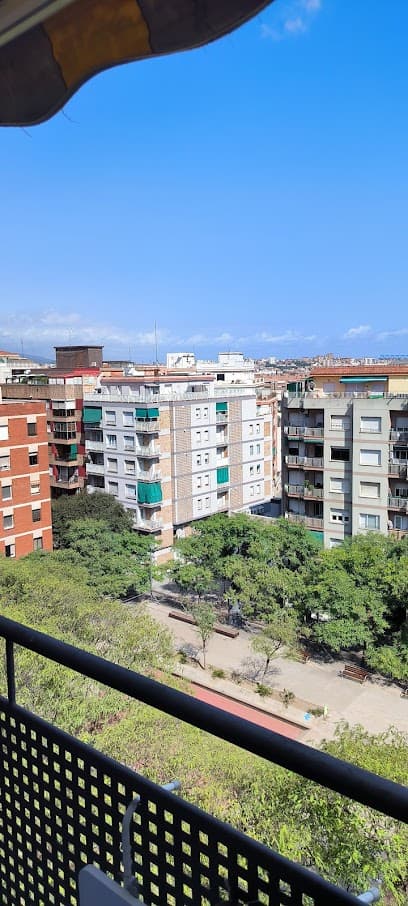
Arriving here feels like stepping behind the curtain. You aren’t surrounded by tourists clutching maps and overpriced gelato. Instead, you’re in the thick of it. The square is a functional lung for the neighborhood. It’s dominated by a playground where the local kids scream with a visceral intensity that puts the quiet desperation of the city center to shame. There are benches occupied by retirees who have likely lived within a three-block radius since the days when Sant Andreu was still dominated by textile mills. The architecture surrounding the square is a jumble of mid-century apartment blocks and the lingering shadows of industrial heritage. It’s not 'pretty' in any conventional sense, but it is profoundly real.
This is the best area to stay in Barcelona if you actually want to understand how the city breathes. Sant Andreu is a place of resistance and identity. Walking through Plaça Can Galtacremat, you see the 'trencadís' of daily life—not the fancy Gaudí kind, but the literal fragments of a community. The sound of a nearby 'persiana' metal shutter slamming shut, the smell of toasted bread from a corner bakery, the rhythmic thud of a football against a stone wall. It’s a sensory experience that doesn't cost a dime and doesn't require a reservation.
The square was urbanized in the early 2010s, a move to bring some green and open space to a densely packed corner of the district. They kept the name, a nod to the agricultural past that the city tried to pave over. It serves as a reminder that beneath every slab of Barcelona concrete is a layer of dirt that once grew grapes and wheat. If you’re visiting the nearby Fabra i Coats—a massive former thread factory turned cultural powerhouse—this square is the perfect palate cleanser. It’s where the art ends and the actual living begins.
Is it worth visiting? That depends on what you’re hungry for. If you need a 'gastronomic adventure' or a 'picture-perfect' sunset, keep moving. But if you want to sit on a hard bench, watch the pigeons dodge toddlers, and feel the pulse of a neighborhood that doesn't give a damn if you're there or not, then yes. It’s a place to witness the quiet excellence of a life lived without pretense. It’s a reminder that the most interesting parts of a city are often the ones that weren't built for you. It’s honest. It’s a little rough around the edges. It’s exactly what a neighborhood square should be.
Type
Park
Duration
30-45 minutes
Best Time
Late afternoon when the neighborhood comes alive with families and locals.
Features
Park
Categories
PlaygroundLocal HistoryUrban Space
Ticket Prices
Free Admission
No tickets required
Must-See Highlights
The playground area where local life happens
The surrounding traditional Sant Andreu architecture
Proximity to the Fabra i Coats cultural center
Visitor Tips
Combine this with a visit to the Fabra i Coats art center nearby.
Grab a coffee at a local 'granja' on Carrer d'Arquímedes and sit on a bench to people-watch.
Don't expect tourist facilities; this is a pure neighborhood spot.
Good For
Families with childrenBudget travelersLocal culture enthusiasts
Why Visit
Authentic local Sant Andreu atmosphere
Historical connection to the area's agricultural past
Quiet escape from the tourist-heavy city center
Nearby Landmarks
- Fabra i Coats - Fàbrica de Creació (5-minute walk)
- Church of Sant Andreu de Palomar (8-minute walk)
- Carrer Gran de Sant Andreu shopping street (6-minute walk)
Accessibility
- Flat paved surfaces
- Wheelchair accessible entrances
- Accessible benches
Location
Carrer d'Arquímedes, 30
Sant Andreu, Barcelona
Nearby Hotels
Nearby Restaurants
In Sant Andreu
ATTRACTION
Camsbio,S.L
Sant Andreu
Not a park for picnics, but the workshop where Barcelona’s green future is built. Camsbio is the grit behind the city's vertical gardens and bio-construction.
0.0(0)
Park
ATTRACTION
Multan los Domingos
Sant Andreu
A defiant slice of Sant Andreu where industrial ruins meet community gardens. It’s the anti-tourist Barcelona: raw, brick-heavy, and smelling of vermut and rebellion.
0.0(0)
Garden
ATTRACTION
Plaça d'Albert Badia i Mur
Sant Andreu
A gritty, honest slice of Sant Andreu where the 'Cases Barates' history meets modern life. No Gaudí here—just real people, a playground, and the unvarnished soul of Bon Pastor.
0.0(0)
Park
Frequently Asked Questions
Is Plaça Can Galtacremat worth visiting?
Only if you are interested in seeing an authentic, non-touristy neighborhood square in Sant Andreu. It is a local park with a playground and benches, not a major landmark.
What does the name Can Galtacremat mean?
It means 'House of the Burnt Cheek' in Catalan, named after an old farmhouse (masia) that previously occupied the site, whose owner supposedly had a facial burn.
How do I get to Plaça Can Galtacremat?
The easiest way is to take the L1 Metro to the Sant Andreu station. From there, it is a 5-10 minute walk through the residential streets of the neighborhood.
Reviews
0 reviews for Plaça Can Galtacremat
No reviews yet. Be the first to share your experience!