About
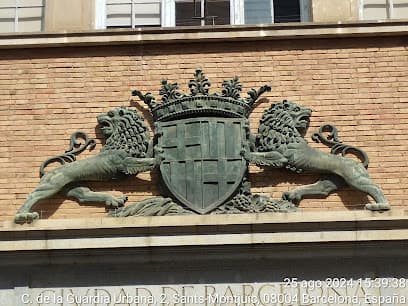
If you’re looking for the glittering, postcard-perfect Barcelona of Gaudí, keep walking. Head back toward the gift shops and the overpriced sangria. But if you want to see the bones of the city—the actual, unvarnished machinery that turned Barcelona from a grey, post-Franco port town into a global powerhouse—you stop here, at the Pavelló de la Ciutat de Barcelona. Located on Carrer de la Guàrdia Urbana, just a stone's throw from the tourist-choked Magic Fountain, this building doesn't shout for your attention. It’s a survivor, a piece of the 1929 International Exposition infrastructure that refused to be torn down or turned into a boutique hotel.
Designed originally by Adolf Florensa in 1923, this isn’t a brutalist slab like its cousins in Sants. It’s a classicist, stately structure that feels more like a palace than a gym. It doesn’t care if you like it; it has work to do. This was a crucial stage for the 1992 Summer Olympics, serving as the venue for rhythmic gymnastics—a sport that requires a level of precision, flexibility, and twitch-fiber intensity that stood in stark contrast to the building's own solid, unmoving stone lines. There is a strange, beautiful irony in watching the most delicate of Olympic disciplines take place inside a building designed with such heavy, traditional gravity.
Walking up to the entrance near the base of Montjuïc, you feel the weight of the 1992 legacy. That year changed everything. It was the moment Barcelona stopped looking at its feet and started looking at the world. The pavilion stands as a testament to that transition, proving that the city didn't just build new things, but repurposed its history for a modern era. It’s not a museum frozen in amber; it’s a living, breathing municipal sports center. You won’t find tour guides with umbrellas here. Instead, you’ll find local kids from Poble-sec and Sants-Montjuïc, bags slung over their shoulders, arguing about referee calls or dreaming of being the next hoop legend on the very floors where Olympic medals were decided.
Inside, the air carries that universal smell of exertion: a mix of floor wax, old stone, and local ambition. The architecture is all about the light and the span—huge, sweeping lines that allow for a massive, unobstructed playing surface beneath a historic roof. When a game is on, the acoustics are sharp. The screech of rubber on the polished floor, the rhythmic thud of a ball, the echoing shouts of coaches in Catalan—it’s a reminder that sport, at its core, is about friction and effort. It is a cathedral of the mundane, where the ghosts of 1992 mingle with the Monday night industrial league.
Is it 'beautiful' in the traditional sense? In its own way, yes. There is a profound honesty in its design. It serves the neighborhood. On any given Tuesday, you might see a local volleyball team duking it out under the same roof where world-class athletes once competed for glory. That’s the real legacy—not just the fancy hotels or the renovated harbor, but the fact that the city maintained spaces that the people actually use decades later. It is the quiet workhorse of the mountain.
Most tourists walk right past this place on their way to the MNAC or the Poble Espanyol, and that’s fine. Let them. But if you stand by the stone facade for a moment, away from the tour buses, you can feel the pulse of the neighborhood. The Pavelló is a place for people who actually live here. Don’t come here expecting a gift shop or an audio guide. It’s a gym, for Christ’s sake. But it’s a gym with the soul of a city that decided to become great. In a city increasingly curated for visitors, this place remains stubbornly, refreshingly itself.
Type
Tourist attraction
Duration
15-20 minutes
Best Time
Late afternoon when the light hits the historic facade and local sports clubs begin their training sessions.
Features
Tourist attraction
Categories
SportsArchitectureOlympic History
Ticket Prices
Free Admission
No tickets required
Must-See Highlights
The 1923 classicist facade
The Olympic commemorative plaques
The view of the MNAC from the street level
Visitor Tips
Check the local schedule for evening basketball or volleyball games to see the venue in action.
Combine this with a walk up to the MNAC for a contrast between the city's monumental and functional architecture.
It is very close to the Magic Fountain, making it a great quick detour from the main tourist trail.
Good For
Sports fansArchitecture studentsOlympic history enthusiasts
Why Visit
Original 1992 Olympic rhythmic gymnastics venue
Authentic 1923 historic architecture by Adolf Florensa
A working-class sports hub in the heart of tourist Montjuïc
Nearby Landmarks
- Magic Fountain of Montjuïc (3-minute walk)
- Poble Espanyol (5-minute walk)
- Museu Nacional d'Art de Catalunya - MNAC (8-minute walk)
- Plaça d'Espanya (10-minute walk)
Accessibility
- Wheelchair accessible entrance
- Accessible restrooms
Location
Carrer de la Guàrdia Urbana, 2
Sants-Montjuïc, Barcelona
Nearby Hotels
Nearby Restaurants
In Sants-Montjuïc
ATTRACTION
Bolets1
Sants-Montjuïc
A gritty, earthy temple to the Catalan obsession with wild mushrooms, where the dirt is real, the fungi are seasonal gold, and the air smells like the damp floor of a Pyrenean forest.
0.0(0)
Tourist attraction
ATTRACTION
Montjuic aparca
Sants-Montjuïc
The unglamorous base camp for your Montjuïc assault. A tactical slab of asphalt where the city's chaos fades into the pine-scented ghosts of the 1992 Olympics.
0.0(0)
Tourist attraction
ATTRACTION
Паркінг Барселона
Sants-Montjuïc
A sprawling slab of industrial reality in the Zona Franca. No Gaudí here—just hot asphalt, diesel fumes, and the honest utility of a secure place to park your rig.
0.0(0)
Park
Frequently Asked Questions
Is Pavelló de la Ciutat de Barcelona worth visiting?
It is worth a stop for sports history buffs and fans of historic architecture. It is a functional municipal gym (CEM Pavelló de la Ciutat), so don't expect a traditional tourist attraction with exhibits.
Can you go inside the pavilion?
Access is generally for members of the sports center or those attending scheduled matches. However, the historic exterior is easily viewed from the street near the Magic Fountain.
How do I get to Pavelló de la Ciutat de Barcelona?
Take the Metro (L1 or L3) to Plaça d'Espanya. The pavilion is a 5-10 minute walk toward the mountain, located on Carrer de la Guàrdia Urbana, 2.
Reviews
0 reviews for Pavelló de la Ciutat de Barcelona
No reviews yet. Be the first to share your experience!