4.5
17 verified reviews
About
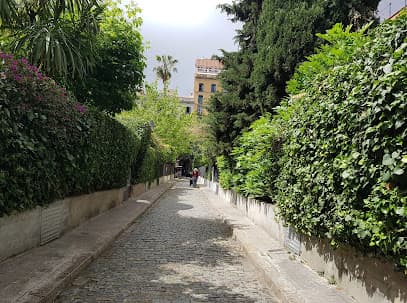
Step off the Carrer de Roger de Llúria and the first thing that hits you isn’t the sight—it’s the sudden, jarring absence of sound. One moment you’re dodging delivery drivers and breathing in the diesel-heavy exhaust of the Eixample, and the next, the volume is turned down to zero. You’ve just walked into Passatge Permanyer, and if you didn’t know better, you’d think you’d been drugged and dumped in a Victorian London mews.
This is one of the oldest passages in the Eixample, dating back to 1864, and it is a beautiful, stubborn anomaly. While Ildefons Cerdà was busy dreaming up his grand, egalitarian grid of octagonal blocks and soaring apartment buildings, an architect named Jeroni Granell i Mundet decided he wanted something else. He wanted low-slung houses, front gardens, and a sense of privacy that the rest of this sprawling city usually denies you. The result is a single, narrow stretch of cobblestones lined with small, two-story houses that look like they belong in Chelsea, not five minutes away from the madness of Passeig de Gràcia.
Walking through here feels like trespassing, even though it’s technically a public thoroughfare. The houses are painted in muted creams and ochres, draped in climbing jasmine and bougainvillea that smells sweet enough to make you forget the city’s grime for a second. There are no neon signs here. No souvenir shops selling plastic bulls. No kiosks hawking overpriced water. It’s just the sound of your own boots on the stones and maybe the distant clinking of a coffee cup from behind a shuttered window. It is a street for people who hate streets.
The architecture is what the experts call 'English style,' but let’s be real: it’s a time capsule. In a city that has spent the last century trying to build higher and louder, Passatge Permanyer stayed small. It’s a reminder that even in the middle of a massive urban experiment like the Eixample, there were always people carving out their own weird, quiet corners. The houses were originally meant for the upper-middle class who wanted to escape the density of the old city without giving up their gardens. Today, they mostly house high-end offices, architects, and the kind of lucky residents who probably don't want you loitering outside their front door.
Is it worth the detour? If you’re looking for a 'best thing to do in Eixample' that involves a gift shop and a guided tour, then no, keep walking. But if you want to see the cracks in the city’s facade—the places where the plan didn't quite take hold—then this is essential. It’s a five-minute walk that resets your brain. You enter on Roger de Llúria, walk the length of the cobblestones, and emerge on Pau Claris feeling like you’ve just woken up from a very specific, very quiet dream.
Don't come here to do anything. There is nothing to 'do.' Come here to breathe. Come here to see how the light hits the iron gates and the way the shadows stretch across the stones in the late afternoon. It’s a rare piece of honest, un-curated silence in a city that usually never shuts up. Just do everyone a favor: keep your voice down. The magic of this place is the quiet, and once that’s gone, it’s just another alleyway.
Type
Tourist attraction
Duration
15-30 minutes
Best Time
Late afternoon for the best lighting and quietest atmosphere.
Features
Tourist attraction
Categories
ArchitectureHistoryUrban Planning
Ticket Prices
Free Admission
No tickets required
Opening Hours
- MondayOpen 24 hours
- TuesdayOpen 24 hours
- WednesdayOpen 24 hours
- ThursdayOpen 24 hours
- FridayOpen 24 hours
- SaturdayOpen 24 hours
- SundayOpen 24 hours
Must-See Highlights
The English-style front gardens
The original 19th-century cobblestones
The contrast between the passage and the surrounding Eixample blocks
Visitor Tips
Keep your voice down as this is a residential and professional area
Enter from Roger de Llúria for the best visual reveal
Look up at the ornate ironwork on the gates and balconies
Good For
Architecture loversPhotographersPeace seekersHistory buffs
Why Visit
Oldest passage in the Eixample district
Unique London-inspired English mews architecture
Complete silence in the heart of a bustling city
Nearby Landmarks
- 5-minute walk from Passeig de Gràcia
- 8-minute walk from Casa Batlló
- 10-minute walk from Casa Milà (La Pedrera)
- 7-minute walk from El Nacional
Accessibility
- Cobblestone street may be difficult for wheelchairs
- Flat terrain but uneven surfaces
Location
Carrer de Roger de Llúria, 52
Eixample, Barcelona
Nearby Hotels
Nearby Restaurants
In Eixample
ATTRACTION
Mural Margalef
Eixample
A towering splash of Mediterranean blue breaking the rigid geometry of Eixample, Joan Margalef’s mural is a visceral reminder that Barcelona’s soul isn't just in its museums.
0.0(0)
Tourist attraction
ATTRACTION
Mural Margalef
Eixample
A geometric middle finger to urban decay, this massive kinetic mural by Eduard Margalef turns a drab Eixample blind wall into a rhythmic, shifting explosion of optical art.
0.0(0)
Tourist attraction
ATTRACTION
Happy Foodies
Eixample
Forget the plastic-wrapped tourist traps; this is a deep dive into the grease, garlic, and soul of Catalan cooking where you actually learn to handle a knife and a porrón.
0.0(0)
Sightseeing tour agencyTour agency
Frequently Asked Questions
Is Passatge Permanyer worth visiting?
Yes, if you appreciate architecture and silence. It offers a unique 19th-century English-style contrast to the surrounding modern Eixample grid.
How do I get to Passatge Permanyer?
The passage is located between Carrer de Roger de Llúria and Carrer de Pau Claris. The nearest metro station is Passeig de Gràcia (L2, L3, L4).
Is there an entrance fee for Passatge Permanyer?
No, it is a public passage and free to walk through, though the houses themselves are private residences and offices.
What is the best time to visit Passatge Permanyer?
Late afternoon provides the best light for photography and the quietest atmosphere, but note that the gates may be closed at night.
Reviews
0 reviews for Passatge Permanyer
No reviews yet. Be the first to share your experience!