4.8
25 verified reviews
About
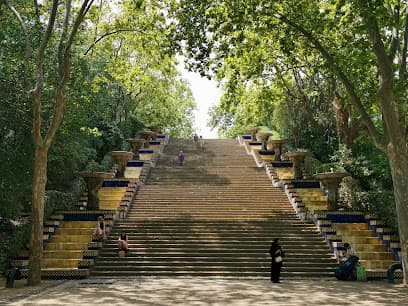
Most people get off the bus at Plaça d'Espanya, look up at the Palau Nacional, and think they’ve seen the best of Montjuïc. They join the sweaty masses trudging up the escalators, dodging selfie sticks and guys selling glowing plastic toys that fly into the air. They’re wrong. If you want the real soul of this hill—the part that doesn’t feel like a theme park for the culturally curious—you keep walking. You head behind the museum, past the tour buses, to Carrer del Mirador del Palau Nacional. There, you’ll find the Jardins de Joan Maragall, a place that feels less like a public park and more like the private estate of a disgraced aristocrat who’s gone into hiding.
This is the site of the Palauet Albéniz, the official residence of the Spanish Royal Family when they deign to visit Barcelona. Since they’re rarely here, the gardens are left to the rest of us, but only on weekends and holidays. It’s a bizarre, beautiful slice of forced elegance. We’re talking manicured lawns that look like they’ve been trimmed with nail scissors, ornamental fountains that gurgle with a sort of polite indifference, and enough marble statues to populate a small Roman village. It’s one of the best parks in Barcelona because it’s one of the few places where you can actually hear yourself think.
Walking through here is a sensory reset. The air is different—cooler, smelling of damp earth, pine needles, and the faint, metallic tang of fountain water. The gravel crunches under your boots with a satisfying, rhythmic snap. There are no kiosks selling overpriced water, no street performers, and mercifully, very few people. It’s the kind of place where you sit on a stone bench and realize that the city below—the sprawling, chaotic, beautiful mess of Eixample and the Gothic Quarter—is actually quite far away. You’re looking at it from a position of temporary, unearned privilege.
Is it worth visiting? If you’re looking for a playground or a place to kick a football, no. This is a place for quiet contemplation or a slow, hungover stroll after a long night in Poble Sec. It’s a testament to the 1929 International Exposition, a moment when Barcelona decided to dress itself up in its Sunday best and never quite took the outfit off. The Palauet itself is a neo-classical fever dream, all symmetry and silent windows. You can’t go inside most of the time, but that’s fine. The magic is in the perimeter, in the shaded paths where the light filters through the leaves in dusty shafts.
The catch, of course, is the schedule. The city keeps this place under lock and key during the week, which only adds to its 'secret' allure. It’s a reminder that in a city as popular as Barcelona, the best things aren't always available on demand. You have to wait for them. You have to time it right. But when you’re standing by the central pond, watching the water lilies drift while the sun hits the yellow stone of the palace, you’ll realize that the wait was the whole point. It’s a palate cleanser for the soul, a quiet corner of Sants-Montjuïc that refuses to scream for your attention.
Type
Park
Duration
1-2 hours
Best Time
Saturday morning at 10:00 AM to beat the few people who actually know about it.
Features
Park
Categories
GardensArchitectureRoyal SitesViewpoints
Ticket Prices
Free Admission
No tickets required
Opening Hours
- MondayOpen 24 hours
- TuesdayOpen 24 hours
- WednesdayOpen 24 hours
- ThursdayOpen 24 hours
- FridayOpen 24 hours
- SaturdayOpen 24 hours
- SundayOpen 24 hours
Must-See Highlights
The central pond with its ornamental fountains
The statues of 'Dona amb nen' and other classical figures
The view of the city framed by the palace's neo-classical arches
Visitor Tips
Check the calendar before going; if it's not a weekend or a holiday, the gates will be locked.
Combine this with a visit to the nearby Laribal Gardens for a full 'secret garden' afternoon.
Bring water; there are no cafes or vendors inside this specific enclosure.
Good For
CouplesPhotography enthusiastsSolo travelers seeking peaceArchitecture buffs
Why Visit
Official Royal Residence grounds offering a level of manicured beauty rarely seen in public parks.
Extreme quiet and low crowd density compared to the nearby Magic Fountain and MNAC areas.
Limited weekend-only access makes it feel like an exclusive, local secret.
Nearby Landmarks
- 5-minute walk from Museu Nacional d'Art de Catalunya (MNAC)
- 10-minute walk from the Estadi Olímpic Lluís Companys
- 12-minute walk from Fundació Joan Miró
Accessibility
- Main paths are gravel but relatively flat
- Accessible from the street level
- Some stairs near the palace area
Location
Carrer del Mirador del Palau Nacional, 2
Sants-Montjuïc, Barcelona
Nearby Hotels
Nearby Restaurants
In Sants-Montjuïc
ATTRACTION
Bolets1
Sants-Montjuïc
A gritty, earthy temple to the Catalan obsession with wild mushrooms, where the dirt is real, the fungi are seasonal gold, and the air smells like the damp floor of a Pyrenean forest.
0.0(0)
Tourist attraction
ATTRACTION
Montjuic aparca
Sants-Montjuïc
The unglamorous base camp for your Montjuïc assault. A tactical slab of asphalt where the city's chaos fades into the pine-scented ghosts of the 1992 Olympics.
0.0(0)
Tourist attraction
ATTRACTION
Паркінг Барселона
Sants-Montjuïc
A sprawling slab of industrial reality in the Zona Franca. No Gaudí here—just hot asphalt, diesel fumes, and the honest utility of a secure place to park your rig.
0.0(0)
Park
Frequently Asked Questions
Is Jardins de Joan Maragall free to enter?
Yes, admission to the gardens is free, though they are only open to the public on Saturdays, Sundays, and public holidays from 10:00 AM to 3:00 PM.
Can you visit the inside of Palauet Albéniz?
The interior of the palace is generally closed to the public as it remains an official royal residence, though it occasionally opens for special events like the Mercè festival in September.
How do I get to this park on Montjuïc?
The easiest way is to take the Metro to Espanya (L1/L3) and walk up past the MNAC museum, or take the 150 bus which drops you closer to the Olympic Stadium, a short walk from the entrance.
Is the park good for families?
It's great for a quiet family walk, but it is a formal garden with many statues and fountains, so it's not the best place for loud games or sports.
Reviews
0 reviews for Parc
No reviews yet. Be the first to share your experience!