4.1
9,079 verified reviews
About
If you’re looking for the manicured lawns and floral arrangements of a Victorian garden, do yourself a favor and keep walking. Parc de l'Espanya Industrial doesn’t care about your aesthetic sensibilities. It’s a concrete-heavy, unapologetic slab of urban reclamation sitting right in the shadow of Sants Estació, the city’s main transport artery. This isn't the Barcelona of the postcards; this is the Barcelona that works, sweats, and occasionally smells like a subway platform on a Tuesday afternoon.
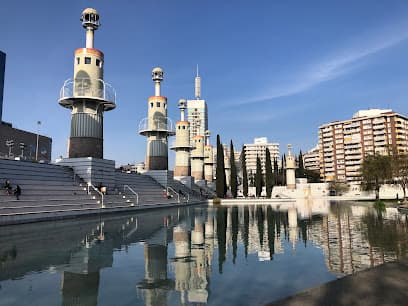
Built in the mid-80s on the bones of what was once Spain’s most significant textile factory, the park is a masterclass in post-modernist architectural bravado. It’s a 'hard park,' a landscape of stone, iron, and water designed by Luis Peña Ganchegui. You enter via a series of massive, stepped bleachers that look like they were built for a Roman circus, overlooking a large, often murky lake. It’s the kind of place where you expect to see a skate video being filmed or a clandestine hand-off happening behind a pillar.
The undisputed king of this concrete jungle is the 'Drac de Sants.' It’s a thirty-ton iron dragon, a jagged, rusted beast designed by Andrés Nagel. It’s not there for decoration; it’s a slide. Watching kids disappear into the gullet of a heavy-metal monster while their parents smoke cigarettes and check their watches is a quintessential Sants experience. It’s visceral, it’s slightly dangerous, and it’s entirely devoid of the padded-cell safety of modern playgrounds.
Then there are the towers. Nine lighthouse-like structures line the perimeter, looking like sentinels from a dystopian sci-fi flick. They were meant to illuminate the park, but today they mostly serve as landmarks for commuters trying to find their way to the high-speed AVE trains. The park is a transition zone. It’s where people wait for their departures, where local dog owners let their hounds run wild, and where the neighborhood’s grit is on full display.
Let’s be honest: the park has seen better days. The water in the lake can be questionable, and the scent of canine relief is a recurring theme in the local reviews. But that’s the point. It’s a real place for real people. It’s one of the best things to do near Sants Station if you have an hour to kill and want to see how the city actually breathes. You won't find many tour groups here, and the ones you do find look lost.
Is it beautiful? In a jagged, industrial, 'I-might-get-tetanus' kind of way, yes. It represents a moment in Barcelona’s history when the city decided to stop hiding its industrial scars and instead turned them into something functional. It’s a place of contrasts—the stillness of the statues (like the Neptune rising from the water) against the constant rumble of the nearby tracks. If you want to understand the soul of the Sants-Montjuïc district, you have to sit on these concrete steps, watch the pigeons fight over a crust of bread, and appreciate the raw, unvarnished reality of a park that refuses to put on a show for you. It’s honest, it’s ugly-beautiful, and it’s exactly what a city park should be: a place for the people who actually live there.
Type
Park, Tourist attraction
Duration
45-60 minutes
Best Time
Late afternoon when the sun hits the iron dragon and the neighborhood families emerge.
What People Say
dogs(149)train station(110)slide(94)dragon(89)urine(65)artificial lake(36)ping pong tables(33)font(22)
Features
Park
Tourist attraction
Categories
ArchitectureFamily-friendlyUrban ArtIndustrial History
Ticket Prices
Free Admission
No tickets required
Opening Hours
- Monday10 AM to 12 AM
- Tuesday10 AM to 12 AM
- Wednesday10 AM to 12 AM
- Thursday10 AM to 12 AM
- Friday10 AM to 12 AM
- Saturday10 AM to 11 PM
- Sunday10 AM to 11 PM
Must-See Highlights
The Drac de Sants iron slide
The nine lighthouse towers (Torres-far)
The Neptune sculpture by Manuel Fuxà in the boating lake
The massive stone bleachers overlooking the park
Visitor Tips
The dragon slide is made of iron and gets incredibly hot in the summer sun—check the temperature before letting kids slide.
It's a prime spot for dog watching, as it's one of the most popular canine hangouts in Sants.
Don't expect a quiet picnic; the proximity to the train station means there's a constant urban hum.
Good For
Families with kidsArchitecture enthusiastsDog ownersTravelers with a layover at Sants Station
Why Visit
The Drac de Sants: A massive 32-ton iron dragon that doubles as a functional slide.
Industrial Heritage: Built on the site of a 19th-century textile factory, preserving the neighborhood's working-class soul.
Brutalist Architecture: A unique landscape of concrete bleachers, lighthouse towers, and modern sculpture.
Nearby Landmarks
- 2-minute walk from Barcelona Sants Station
- 12-minute walk from Plaça d'Espanya
- 15-minute walk from Arenas de Barcelona Shopping Centre
- 20-minute walk from Magic Fountain of Montjuïc
Accessibility
- Wheelchair accessible paths
- Ramped access to main levels
- Flat paved areas
Location
Carrer de Muntadas, 1
Sants-Montjuïc, Barcelona
Nearby Hotels
Nearby Restaurants
In Sants-Montjuïc
ATTRACTION
Bolets1
Sants-Montjuïc
A gritty, earthy temple to the Catalan obsession with wild mushrooms, where the dirt is real, the fungi are seasonal gold, and the air smells like the damp floor of a Pyrenean forest.
0.0(0)
Tourist attraction
ATTRACTION
Montjuic aparca
Sants-Montjuïc
The unglamorous base camp for your Montjuïc assault. A tactical slab of asphalt where the city's chaos fades into the pine-scented ghosts of the 1992 Olympics.
0.0(0)
Tourist attraction
ATTRACTION
Паркінг Барселона
Sants-Montjuïc
A sprawling slab of industrial reality in the Zona Franca. No Gaudí here—just hot asphalt, diesel fumes, and the honest utility of a secure place to park your rig.
0.0(0)
Park
Frequently Asked Questions
Is Parc de l'Espanya Industrial worth visiting?
Yes, especially if you are a fan of brutalist architecture or have time to kill near Sants Station. It's not a traditional green park, but the giant iron dragon slide is a unique sight you won't find elsewhere.
What is the giant dragon in the park?
It is the 'Drac de Sants,' a 32-ton iron sculpture by Andrés Nagel that functions as a children's slide. It's an iconic piece of 1980s urban art.
Is the park safe at night?
Like many areas near major train stations, it can feel a bit desolate and sketchy after dark. It's best visited during daylight hours when locals and families are present.
How do I get to Parc de l'Espanya Industrial?
It's located immediately adjacent to the Barcelona Sants train station. You can take the L3 or L5 Metro to Sants Estació and walk out the side exit.
Reviews
0 reviews for Parc de l'Espanya Industrial
No reviews yet. Be the first to share your experience!