4.0
269 verified reviews
About
Forget the Gothic Quarter. Forget the polished marble of Passeig de Gràcia and the relentless, soul-crushing tide of selfie sticks at the Sagrada Família. If you want to see where the city actually exhales—where the ink-stained reality of Barcelona lives and breathes—you find yourself at a place like Plaça Maragall. It isn’t a 'park' in the sense of rolling meadows or manicured botanical gardens. It’s an urban island, a concrete and gravel lungs-of-the-neighborhood sitting at the chaotic intersection of Sant Andreu and Horta-Guinardó.
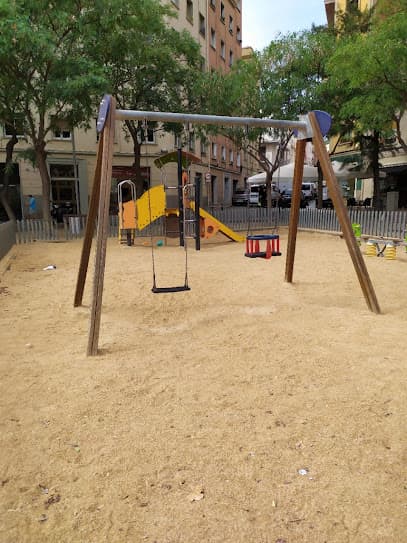
When you step into the square, the first thing that hits you isn't the smell of jasmine; it’s the sound of life. It’s the rhythmic thwack of a football against a stone wall, the high-pitched negotiations of kids at the playground, and the low-frequency rumble of traffic circling the plaza like a pack of hungry wolves. This is a place of transit and pause. It’s where the neighborhood’s elderly residents sit on green wooden benches, watching the world go by with the kind of practiced indifference that only comes from living through seven decades of Spanish history.
The square is named after Joan Maragall, the titan of Catalan poetry, and his presence is literally cast in stone here. There’s a monument—a bust of the man himself, sculpted by his own son, Ernest Maragall. It stands there, stoic and slightly weathered, watching over the kiosks and the dog walkers. It’s a reminder that even in the middle of a working-class crossroads, there is room for the sublime. But let’s be honest: most people aren't here for the poetry. They’re here for the terraces.
The kiosks in Plaça Maragall are the true cathedrals of the neighborhood. These aren't the overpriced tourist traps of La Rambla. These are functional, honest outposts of caffeine and alcohol. You sit at a metal table that’s probably a little bit wobbly, order a 'café solo' or a 'caña,' and you watch the theater of the everyday. You’ll see the 'abuelos' arguing over the latest Barça score, the young parents trying to caffeinate themselves into a state of functionality while their toddlers attempt to defy gravity on the slides, and the local dog owners forming an impromptu social club on the gravel patches.
The 2011 renovation stripped away some of the old-school grime, adding more green space and better accessibility, but it couldn't sanitize the soul of the place. It’s still a bit rough around the edges, and that’s exactly why it matters. The shade here is real—provided by mature trees that have seen the neighborhood change from a quiet periphery to a bustling urban hub. In the heat of a Barcelona July, that canopy is a godsend, a cool sanctuary where the air feels five degrees lighter than the surrounding asphalt.
Is it 'beautiful' in the traditional sense? Maybe not. It’s dusty. It’s noisy. The service at the kiosks can be brusque if they don't recognize your face. But it is authentic. It is a place where the city doesn't put on a show for anyone. If you’re looking for a 'hidden gem' to put on a postcard, keep walking. But if you want to sit in the dirt, drink a cheap beer, and feel the actual pulse of a Barcelona neighborhood that couldn't care less about your travel itinerary, then Plaça Maragall is exactly where you need to be. It’s a reminder that the best parts of travel aren't always the monuments; they’re the spaces in between, where life actually happens.
Type
City park
Duration
1 hour
Best Time
Late afternoon when the neighborhood comes alive with families and the terraces are full.
What People Say
playground(8)dog(5)shadow(4)terrace(3)bar(3)maintenance(2)smell(2)bank(2)
Features
City park
Categories
Urban SquarePlaygroundLocal Culture
Ticket Prices
Free Admission
No tickets required
Opening Hours
- MondayOpen 24 hours
- TuesdayOpen 24 hours
- WednesdayOpen 24 hours
- ThursdayOpen 24 hours
- FridayOpen 24 hours
- SaturdayOpen 24 hours
- SundayOpen 24 hours
Must-See Highlights
The Joan Maragall monument
The central playground area
The outdoor terrace kiosks
Visitor Tips
Grab a coffee at one of the kiosks to truly soak in the local vibe.
It gets very busy around 5:00 PM when schools let out.
Don't expect English menus at the kiosks; a little Spanish or Catalan goes a long way.
Good For
Families with childrenDog ownersSlow travelersBudget travelers
Why Visit
Authentic neighborhood atmosphere away from the tourist center
Historic monument to Catalan poet Joan Maragall by his son Ernest
Vibrant kiosk culture with honest, local-priced terraces
Nearby Landmarks
- 10-minute walk from Hospital de Sant Pau
- 12-minute walk from Meridiana Dog Park
- 15-minute walk from Torre de la Sagrera
Accessibility
- Flat terrain
- Ramped access to central areas
- Accessible public benches
Location
Unnamed Road 08041
Sant Andreu, Barcelona
Nearby Hotels
Nearby Restaurants
In Sant Andreu
ATTRACTION
Camsbio,S.L
Sant Andreu
Not a park for picnics, but the workshop where Barcelona’s green future is built. Camsbio is the grit behind the city's vertical gardens and bio-construction.
0.0(0)
Park
ATTRACTION
Multan los Domingos
Sant Andreu
A defiant slice of Sant Andreu where industrial ruins meet community gardens. It’s the anti-tourist Barcelona: raw, brick-heavy, and smelling of vermut and rebellion.
0.0(0)
Garden
ATTRACTION
Plaça d'Albert Badia i Mur
Sant Andreu
A gritty, honest slice of Sant Andreu where the 'Cases Barates' history meets modern life. No Gaudí here—just real people, a playground, and the unvarnished soul of Bon Pastor.
0.0(0)
Park
Frequently Asked Questions
Is Parc de la plaça Maragall worth visiting?
It is worth it if you want to experience a non-touristy, local Barcelona atmosphere. It's great for a coffee at a terrace or letting kids play, but don't expect major tourist sights.
What is there to see at Plaça Maragall?
The main highlights are the monument to the poet Joan Maragall, the central playground, and the several outdoor kiosks with terraces that serve as local meeting points.
How do I get to Plaça Maragall?
The easiest way is via the Barcelona Metro. Take the L1 (Red Line) or L5 (Blue Line) to the Sagrera or Congrés stations, which are a short walk away.
Reviews
0 reviews for Parc de la plaça Maragall
No reviews yet. Be the first to share your experience!