4.4
53 verified reviews
About
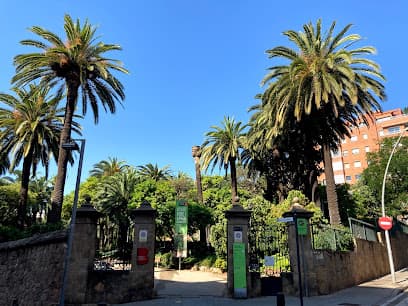
Most people come to Barcelona to get punched in the face by Gaudí. They want the spectacle, the towering spires, the hallucinogenic mosaics, and the crushing weight of ten thousand other tourists all trying to take the same photo. But if you want to see where the city actually breathes—where it exhales the stress of the day—you have to leave the Gothic Quarter behind and head uphill to Sarrià-Sant Gervasi. This isn't the Barcelona of the postcards; it’s the Barcelona of the people who actually live here, pay taxes here, and die here. Parc de Can Castelló is the physical manifestation of that reality.
This place is a walled-off slice of 19th-century sanity tucked away from the frantic energy of the Diagonal. It used to be the private playground of the Galve family, a summer estate where the wealthy could escape the heat of the old city. The house, a handsome, dignified villa built in the 1800s, still stands at the center, though it’s been repurposed into a civic center. It’s no longer a monument to private wealth; it’s a place where locals take pottery classes and argue about neighborhood politics. That’s a win in my book.
When you walk through the gates, the first thing you notice is the silence. Or rather, the lack of city noise. The roar of scooters and the hiss of buses are replaced by the rhythmic, metallic 'clack' of petanque balls hitting each other. This is the heartbeat of the park. You’ll see the local 'senyors'—men who have likely lived in these apartments for seventy years—standing over the gravel pits with the intensity of diamond cutters. They don’t care about your Instagram feed. They care about the trajectory of a steel ball. It’s honest, it’s skilled, and it’s entirely devoid of pretension.
The vegetation here is thick and unapologetic. We’re talking about massive Himalayan cedars, horse chestnuts that cast deep, bruised shadows, and palms that look like they’ve seen a few wars. It’s a romantic garden in the truest sense—not 'romantic' like a cheap Valentine’s card, but romantic like a moody, overgrown set piece from a nineteenth-century novel. The shade here is heavy and humid, a godsend during those July afternoons when the Barcelona sun feels like a personal insult.
Is Parc de Can Castelló worth it? If you’re looking for a thrill, no. Go to PortAventura. But if you want to sit on a worn wooden bench and watch the light filter through leaves that were here before you were born, then yes. It’s one of the best parks in Barcelona for anyone who actually likes parks. There’s a small play area for kids that isn't an eyesore, and enough space for dogs to sniff around without causing a diplomatic incident. It’s a neighborhood park that knows exactly what it is: a place to exist without being sold something.
You won't find a gift shop here. You won't find a guy selling overpriced mojitos in a plastic cup. You’ll find a water fountain that actually works, a few gravel paths that have been smoothed by decades of Sunday strolls, and a sense of peace that is increasingly hard to find in this city. It’s the kind of place that reminds you that Barcelona isn't just a museum or a theme park—it’s a home. And sometimes, the best thing to do in Barcelona is to just sit down, shut up, and watch the petanque balls fly.
Type
Park
Duration
1 hour
Best Time
Late afternoon (around 5:00 PM) to see the local petanque games and enjoy the golden hour light through the trees.
What People Say
petanque(2)shadow(2)kids(2)
Features
Park
Categories
GardensHistoric SitesFamily Friendly
Ticket Prices
Free Admission
No tickets required
Opening Hours
- MondayOpen 24 hours
- TuesdayOpen 24 hours
- WednesdayOpen 24 hours
- ThursdayOpen 24 hours
- FridayOpen 24 hours
- SaturdayOpen 24 hours
- SundayOpen 24 hours
Must-See Highlights
The central 19th-century villa
The petanque courts near the entrance
The massive Himalayan cedar trees
The romantic-style winding gravel paths
Visitor Tips
Pick up some local cheese and ham at the nearby Mercat de Galvany for a quiet picnic
The civic center inside the villa often has free local art exhibitions
Don't expect a cafe inside the park; bring your own water or use the public fountain
Good For
Families with young childrenCouples seeking a quiet spotSolo travelers with a bookDog owners
Why Visit
Authentic local petanque culture with dedicated courts and regular players
Historic 19th-century villa (Can Castelló) serving as a neighborhood cultural hub
Exceptional shade canopy provided by ancient Himalayan cedars and horse chestnut trees
Nearby Landmarks
- Mercat de Galvany (5-minute walk)
- Turó Park (10-minute walk)
- Avinguda Diagonal (8-minute walk)
Accessibility
- Flat gravel paths
- Accessible entrance
- Benches throughout
Location
Sarrià-Sant Gervasi, Barcelona
Nearby Hotels
Nearby Restaurants
In Sarrià-Sant Gervasi
ATTRACTION
Casa Narcís Bosch
Sarrià-Sant Gervasi
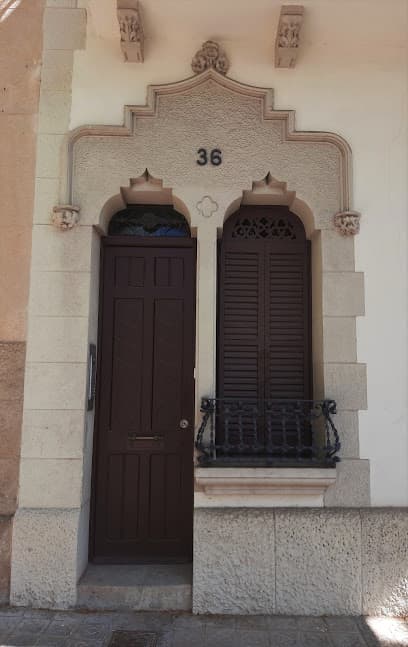
A Modernista fever dream tucked away in Sarrià, where Salvador Valeri i Pupurull’s stone curves and ironwork prove that Gaudí wasn't the only genius in town.
0.0(0)
Tourist attraction
ATTRACTION
Plaça de Calvó
Sarrià-Sant Gervasi
A quiet, unpretentious slice of Sant Gervasi where the only drama is a toddler losing a shoe. No Gaudí, no crowds, just trees, benches, and the sound of real life in the Zona Alta.
0.0(0)
Park
ATTRACTION
Pipican Piscines i Esports
Sarrià-Sant Gervasi
A dirt-caked arena of canine chaos set against the polished backdrop of Sarrià-Sant Gervasi, where the neighborhood’s elite and their four-legged shadows come to settle scores.
0.0(0)
Park
Frequently Asked Questions
Is Parc de Can Castelló worth visiting?
Yes, if you want to avoid the high-traffic tourist zones and experience a genuine local neighborhood park. It’s a great spot for a quiet stroll, a picnic in the shade, or watching local petanque matches.
What is the history of Parc de Can Castelló?
It was originally the private garden of the Galve family's 19th-century summer estate. The central villa, built in 1889, now serves as a municipal civic center for the Sant Gervasi neighborhood.
Is there an entrance fee for the park?
No, Parc de Can Castelló is a public municipal park and entry is completely free for all visitors.
How do I get to Parc de Can Castelló?
The easiest way is via the FGC (Ferrocarrils) train to the Muntaner or Sant Gervasi stations, followed by a 5-minute walk. Several bus lines also stop nearby on Carrer de Muntaner.
Reviews
0 reviews for Parc de Can Castelló
No reviews yet. Be the first to share your experience!