3.0
2 verified reviews
About
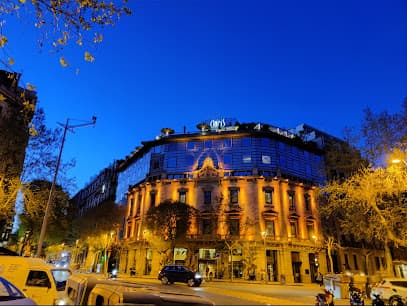
The Palacio Vedruna is a bit of a liar. From the sidewalk of Carrer de Pau Claris, it looks like exactly what you’d expect from the Eixample district’s golden age: a dignified, neoclassical facade built in 1883 for the Vedruna family, all stately stone and rhythmic balconies. It’s the kind of architectural respectability that suggests old money, quiet afternoons, and a complete lack of surprises. But step through those doors and the 19th century gets a sharp, modernist elbow to the ribs. This is the skin of a palace stretched over the skeleton of one of the city’s most ambitious luxury hotels, the Hotel Claris.
In 1992, while the rest of Barcelona was frantically scrubbing its streets for the Olympic spotlight, this place underwent a radical transformation. They gutted the interior, leaving only the historic shell, and dropped in a core of glass, steel, and high-concept design. It was a move that could have been a disaster—a soulless corporate takeover of a heritage site—but instead, it created something weirder and far more interesting. It’s a place where the air smells of expensive wood smoke and ambition, and where the ghosts of the Catalan bourgeoisie have to share space with business travelers and art collectors.
The real reason to walk in, even if you aren’t dropping half a month’s rent on a suite, is the art. The owner, Jordi Clos, is a man with a serious, high-stakes obsession with ancient Egypt. We’re not talking about a few dusty replicas in the lobby. The first floor houses a legitimate, museum-grade collection of over 400 pieces—funerary masks, statues of gods, and artifacts that have seen more millennia than you’ve seen hot dinners. It is the largest private collection of its kind in Spain, and finding it tucked away in a luxury hotel in the middle of Barcelona is the kind of jarring, beautiful non-sequitur that makes travel worth the hassle. It’s an archaeological flex of the highest order.
Then there’s the rooftop. In a city obsessed with 'terrazas,' the one atop the Palau Vedruna—La Terraza del Claris—is a different beast. It’s glass-enclosed, meaning you can watch the rain lash the Eixample rooftops while you sip something expensive and cold. It’s a place for the 'beautiful people,' sure, but it’s also one of the few spots where you can actually feel the scale of the neighborhood’s grid without being trampled by the crowds on Passeig de Gràcia. The service can be as chilly as the marble floors if you don't look the part, but that’s the price of admission for this kind of high-altitude theater.
Is it a tourist trap? No. It’s too strange for that. A tourist trap is predictable; the Palacio Vedruna is a neoclassical mask hiding a museum of the dead and a playground for the living. It’s an honest reflection of modern Barcelona: a city that respects its history enough to preserve the facade, but is far too restless to actually live in the past. If you’re looking for a dusty, quiet monument, keep walking. But if you want to see how the city’s elite blend high-culture archaeology with high-end hedonism, this is the spot. Just don't expect the mummies to tell you any secrets.
Type
Tourist attraction
Duration
1-2 hours
Best Time
Late afternoon to catch the museum before heading to the rooftop for sunset drinks.
Features
Tourist attraction
Categories
ArchitectureMuseumHistoryLuxury
Ticket Prices
Free Admission
No tickets required
Must-See Highlights
The Egyptian funerary masks on the first floor
The original 1883 neoclassical facade on Pau Claris
The glass-enclosed rooftop pool and terrace
The Roman mosaics found in the hotel's common areas
Visitor Tips
You don't need to be a hotel guest to visit the museum; just walk in and ask the concierge.
The rooftop is one of the few in Eixample that is fully enclosed in glass, making it perfect for rainy days.
Dress up a bit if you're heading to the terrace; the staff can be selective during peak hours.
Good For
Art loversHistory buffsArchitecture enthusiastsLuxury travelers
Why Visit
Spain's largest private collection of Egyptian antiquities housed on-site
A seamless fusion of an 1883 neoclassical facade with a 1992 modernist interior
The 'Terraza del Claris' rooftop, offering year-round glass-enclosed views of Eixample
Nearby Landmarks
- 3-minute walk from Passeig de Gràcia
- 6-minute walk from Casa Batlló
- 9-minute walk from Casa Milà (La Pedrera)
- 12-minute walk from Plaça de Catalunya
Accessibility
- Fully wheelchair accessible via hotel elevators
- Accessible restrooms available
Location
Carrer de Pau Claris, 150
Eixample, Barcelona
Nearby Hotels
Nearby Restaurants
In Eixample
ATTRACTION
Mural Margalef
Eixample
A towering splash of Mediterranean blue breaking the rigid geometry of Eixample, Joan Margalef’s mural is a visceral reminder that Barcelona’s soul isn't just in its museums.
0.0(0)
Tourist attraction
ATTRACTION
Mural Margalef
Eixample
A geometric middle finger to urban decay, this massive kinetic mural by Eduard Margalef turns a drab Eixample blind wall into a rhythmic, shifting explosion of optical art.
0.0(0)
Tourist attraction
ATTRACTION
Happy Foodies
Eixample
Forget the plastic-wrapped tourist traps; this is a deep dive into the grease, garlic, and soul of Catalan cooking where you actually learn to handle a knife and a porrón.
0.0(0)
Sightseeing tour agencyTour agency
Frequently Asked Questions
Is Palau Vedruna worth visiting?
Yes, especially for the Egyptian Museum on the first floor, which is free for guests and accessible to visitors. It offers a unique blend of 19th-century architecture and ancient history that you won't find elsewhere in Eixample.
Can you visit the Egyptian Museum at Hotel Claris?
Yes, the museum is located within the hotel that occupies the Palacio Vedruna. It houses over 400 ancient artifacts and is one of the most significant private collections in Europe.
What is the history of Palacio Vedruna?
Built in 1883 as a private residence for the Vedruna family, it was transformed in 1992 into the Hotel Claris, preserving only the neoclassical facade while modernizing the entire interior.
How do I get to Palau Vedruna?
It is located at Carrer de Pau Claris, 150. The nearest metro stations are Passeig de Gràcia (L2, L3, L4) and Girona (L4), both within a 5-minute walk.
Reviews
0 reviews for Palacio Vedruna
No reviews yet. Be the first to share your experience!