4.4
2,461 verified reviews
About
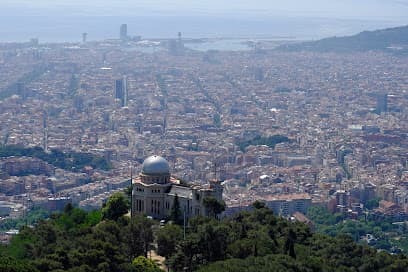
To get to Observatori Fabra, you have to leave the humid, chaotic sprawl of the city behind and climb. You head up Tibidabo, past the mansions of the ultra-wealthy and the screeching gears of the amusement park, until you reach a place where the air gets thinner and the silence gets heavier. This isn't some shiny, glass-and-steel NASA outpost. This is a stone-and-iron beast from 1904, a monument to a time when looking at the stars was a romantic, grueling, and deeply manual labor. It’s the fourth oldest observatory in the world that still keeps its eyes open, and it looks every bit the part.
The building itself, designed by Josep Domènech i Estapà, doesn't bother with the whimsical curves of Gaudí that define the rest of Barcelona. It’s stern. It’s functional. It’s built to house a massive Mailhat refractor telescope that’s been tracking comets and asteroids since before your grandfather was born. When you walk inside, you smell it—the scent of old grease, cold stone, and the quiet, obsessive dedication of the people who spend their nights in the dark. This is one of the best things to do in Barcelona if you’re tired of the beach and the bars and want to feel, for a moment, very small.
Most people come here for the 'Sopar amb Estrelles'—the Dinner with Stars. On paper, it sounds like a tourist trap: a catered dinner on a terrace overlooking the city. And yeah, the food is catering—it’s fine, it’s professional, it’s a protein-and-starch affair—but you aren't really paying for the sea bass. You’re paying for the view. From this height, Barcelona looks like a glowing circuit board, a mess of orange lights and dark Mediterranean water. It is, without hyperbole, one of the most staggering vistas in Europe. You sit there, drinking a decent Penedès white, watching the sun dip behind the Collserola hills, and you realize that the city's noise can't reach you up here.
After the plates are cleared, the real show starts. They lead you into the dome. This is the highlight of any Observatori Fabra tour. The floor is wood, the walls are lined with brass instruments that look like they belong in a Jules Verne novel, and the telescope itself is a magnificent, terrifying piece of engineering. They crank open the shutters of the dome—a mechanical groan that feels like the building is waking up—and you get to put your eye to the glass. Depending on the night, you might see the craters of the moon, the rings of Saturn, or just the deep, terrifying void of space. It’s a visceral reminder that while we’re down there arguing about tapas and traffic, the universe is doing its own thing.
Is it worth it? If you’re looking for a rowdy night out, absolutely not. If you’re looking for a Michelin-starred culinary revelation, go elsewhere. But if you want to understand the soul of Barcelona’s scientific history, or if you just want to stand on the edge of a mountain and look at the stars through a 120-year-old lens, then yes. It’s honest, it’s old-school, and it’s one of the few places left in the city that hasn't been polished into a generic tourist product. It’s a place for dreamers, nerds, and anyone who needs a break from the gravity of the streets below. Just bring a jacket; even in the summer, the mountain has a way of reminding you who’s in charge.
Type
Observatory, Tourist attraction
Duration
2-4 hours
Best Time
Sunset for the 'Dinner with Stars' experience to see the city lights come on.
Guided Tours
Available
What People Say
supper(196)history(95)muy interesante(88)explanation(88)catering(34)conference(33)the moon(24)meteorology(18)
Features
Observatory
Tourist attraction
Categories
ScienceHistoryArchitectureFine Dining
Ticket Prices
adult€15.00 (Tour only)
child€7.50 (Tour only)
senior€10.00 (Tour only)
Opening Hours
- MondayClosed
- TuesdayClosed
- WednesdayClosed
- ThursdayClosed
- FridayClosed
- SaturdayClosed
- Sunday11 AM to 12:30 PM
Must-See Highlights
The 1904 Mailhat Telescope
The Meridian Room
The outdoor terrace during sunset
The rotating astronomical dome
Visitor Tips
Book the 'Sopar amb Estrelles' months in advance for summer dates.
The road up is winding; if you get motion sickness, take precautions.
Check the lunar calendar before booking if you want to see specific celestial bodies.
The tour is available in Catalan, Spanish, and English—check the schedule.
Good For
CouplesAstronomy enthusiastsHistory buffsPhotography lovers
Why Visit
1904 Mailhat refractor telescope still in scientific use
Sopar amb Estrelles (Dinner with Stars) outdoor dining experience
Unrivaled 360-degree views of Barcelona and the Mediterranean
Nearby Landmarks
- Tibidabo Amusement Park (12-minute walk)
- Temple Expiatori del Sagrat Cor (15-minute walk)
- Torre de Collserola (20-minute walk)
Accessibility
- Partial accessibility; the terrace is accessible, but the telescope dome requires climbing stairs.
Location
Camí de l'Observatori, s/n
Sarrià-Sant Gervasi, Barcelona
Nearby Hotels
Nearby Restaurants
In Sarrià-Sant Gervasi
ATTRACTION
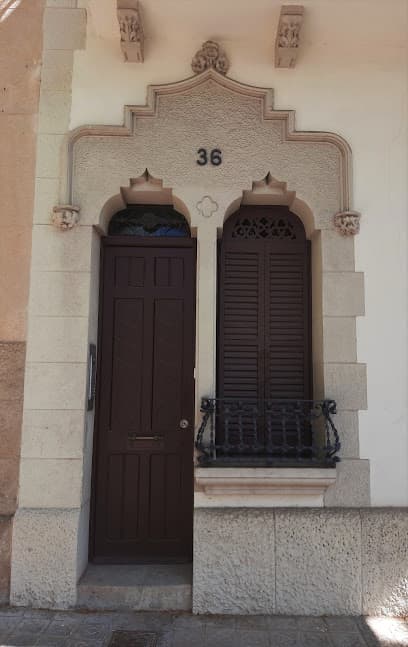
Casa Narcís Bosch
Sarrià-Sant Gervasi
A Modernista fever dream tucked away in Sarrià, where Salvador Valeri i Pupurull’s stone curves and ironwork prove that Gaudí wasn't the only genius in town.
0.0(0)
Tourist attraction
ATTRACTION
Plaça de Calvó
Sarrià-Sant Gervasi
A quiet, unpretentious slice of Sant Gervasi where the only drama is a toddler losing a shoe. No Gaudí, no crowds, just trees, benches, and the sound of real life in the Zona Alta.
0.0(0)
Park
ATTRACTION
Pipican Piscines i Esports
Sarrià-Sant Gervasi
A dirt-caked arena of canine chaos set against the polished backdrop of Sarrià-Sant Gervasi, where the neighborhood’s elite and their four-legged shadows come to settle scores.
0.0(0)
Park
Frequently Asked Questions
Is Observatori Fabra worth visiting?
Yes, especially for the 'Dinner with Stars' experience. It offers the best panoramic views of Barcelona and the rare chance to use a functional 1904 telescope.
How do I get to Observatori Fabra?
It's best reached by car or taxi. You can take the Funicular de Tibidabo to the top and walk about 15-20 minutes, but the path is dark at night, so a taxi from the city center is recommended.
What should I wear to Observatori Fabra?
Even in summer, bring a light jacket or sweater. The observatory is located on a mountain and the telescope dome is not heated, so it gets significantly cooler than the city center.
Do I need to book tickets in advance?
Absolutely. The 'Dinner with Stars' (Sopar amb Estrelles) sessions and guided night tours sell out weeks in advance, particularly during the summer months.
Reviews
0 reviews for Observatori Fabra
No reviews yet. Be the first to share your experience!