4.7
33,071 verified reviews
About
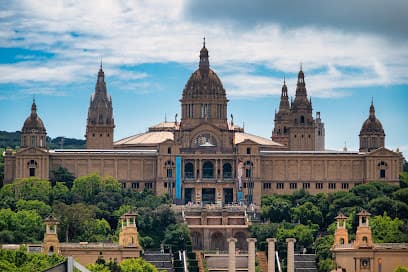
Perched on the side of Montjuïc like a stone king overlooking his kingdom, the Museu Nacional d’Art de Catalunya (MNAC) is a massive, unapologetic statement of Catalan pride. Built for the 1929 International Exhibition, the Palau Nacional is a behemoth of neo-Baroque architectural ego. It’s the kind of place that looks like it should house a royal family or a Bond villain, but instead, it holds the very soul of this region. If you’re looking for the best art museum in Barcelona, this is the heavyweight champion, and it doesn't care if your feet ache from the climb.
Getting here is a pilgrimage of sorts. You start at Plaça d'Espanya, walking past the twin Venetian towers, and then you see it—the grand staircase, the cascading fountains, and the series of outdoor escalators that feel like a stairway to a secular heaven. By the time you reach the top, you’re slightly breathless, partly from the altitude and partly from the view. Looking back toward the city, you see the grid of the Eixample stretching out like a map of human ambition. It’s the best view in the city, and you haven't even stepped inside yet.
Once you cross the threshold, the air changes. It’s cooler, quieter, and smells faintly of old stone and wax. The headline act here—the thing that makes this place globally essential—is the Romanesque collection. In the early 20th century, a group of obsessed preservationists realized that ancient frescoes in crumbling Pyrenean churches were being sold off to foreign collectors. They staged a daring rescue mission, literally peeling the paint off the walls of remote mountain chapels and transporting them here.
Walking through these rooms is a gut-punch of medieval intensity. These aren't the soft, glowing Madonnas of the Renaissance. These are the wide-eyed, terrifyingly stern saints of the 11th century. The Christ in Majesty from Sant Climent de Taüll stares at you with a gaze that has survived a thousand years of solitude. It’s raw, it’s psychedelic, and it’s deeply human. You can almost feel the cold mountain air and the smell of woodsmoke that originally surrounded these images. It is, without hyperbole, one of the most significant collections of medieval art on the planet.
But the MNAC isn't just a tomb for the ancient. Move forward in time and you hit the Gothic rooms, filled with gold-leafed altarpieces that scream of wealth and devotion. Then, you find the Modernisme section. This is where you see the DNA of the Barcelona you see outside. It’s not just Gaudí—though his twisted, organic furniture is here—it’s the paintings of Ramon Casas and Santiago Rusiñol. It’s the art of a city finding its modern identity, full of decadence, smoke-filled cafes, and social upheaval.
Is it worth visiting? If you have even a passing interest in how a culture defines itself through beauty and grit, then yes. It’s a massive undertaking, and you will likely get lost in the labyrinthine corridors. The Great Hall, with its massive pipe organ and soaring dome, feels like a cathedral to human creativity. When you’ve had enough of the staring saints and the gilded frames, head to the rooftop terrace. Grab a drink, look out over the rooftops toward the Sagrada Família, and realize that everything you just saw inside is what built the city you see outside. It’s not just a museum; it’s the blueprint of Catalonia.
Type
Art museum, Tourist attraction
Duration
2-3 hours
Best Time
Saturday after 3 PM for free entry, or weekday mornings to avoid the school groups and crowds.
Guided Tours
Available
Audio Guide
Available
What People Say
romanesque art(604)gothic art(197)escalators(169)medieval art(90)gaudi(89)1929(49)spanish civil war(43)modernisme(33)
Features
Art museum
Tourist attraction
Categories
RomanesqueGothicModernismeFine ArtsArchitecture
Ticket Prices
adult€12
childFree (under 16)
senior€8.40 (over 65)
Opening Hours
- MondayClosed
- Tuesday10 AM to 6 PM
- Wednesday10 AM to 6 PM
- Thursday10 AM to 6 PM
- Friday10 AM to 6 PM
- Saturday10 AM to 6 PM
- Sunday10 AM to 3 PM
Must-See Highlights
The Apse of Sant Climent de Taüll (Romanesque masterpiece)
The Modernisme collection featuring Gaudí and Casas
The Great Hall (Sala Oval)
The Rooftop Viewpoint
The Gothic altarpieces
Visitor Tips
The ticket is valid for two days, so you don't have to cram everything into one visit.
Don't miss the rooftop; it requires a separate small fee if you don't have a general ticket, but it's included in the main entry.
The museum is closed on Mondays, so plan accordingly.
Check the Magic Fountain schedule to time your exit with the light show in the evening.
Good For
Art loversHistory buffsPhotographersFamiliesArchitecture enthusiasts
Why Visit
World-renowned Romanesque frescoes rescued from remote Pyrenean churches
The Palau Nacional building, a masterpiece of 1929 International Exhibition architecture
360-degree rooftop terrace views overlooking the entire Barcelona skyline
Nearby Landmarks
- 2-minute walk from the Magic Fountain of Montjuïc
- 10-minute walk from Poble Espanyol
- 15-minute walk from Fundació Joan Miró
- 12-minute walk from Plaça d'Espanya
Accessibility
- Wheelchair accessible
- Elevators to all floors
- Accessible restrooms
- Wheelchair rental available at the desk
Location
Palau Nacional, Parc de Montjuïc, s/n
Sants-Montjuïc, Barcelona
Nearby Hotels
Nearby Restaurants
In Sants-Montjuïc
ATTRACTION
Bolets1
Sants-Montjuïc
A gritty, earthy temple to the Catalan obsession with wild mushrooms, where the dirt is real, the fungi are seasonal gold, and the air smells like the damp floor of a Pyrenean forest.
0.0(0)
Tourist attraction
ATTRACTION
Montjuic aparca
Sants-Montjuïc
The unglamorous base camp for your Montjuïc assault. A tactical slab of asphalt where the city's chaos fades into the pine-scented ghosts of the 1992 Olympics.
0.0(0)
Tourist attraction
ATTRACTION
Паркінг Барселона
Sants-Montjuïc
A sprawling slab of industrial reality in the Zona Franca. No Gaudí here—just hot asphalt, diesel fumes, and the honest utility of a secure place to park your rig.
0.0(0)
Park
Frequently Asked Questions
Is the Museu Nacional d'Art de Catalunya worth visiting?
Absolutely. It houses the world's most important collection of Romanesque mural paintings, which are hauntingly beautiful and unique to this region. Even if you aren't an art buff, the building itself and the panoramic rooftop views are worth the entry price.
How long do you need at MNAC?
To do it justice, allocate at least 2 to 3 hours. The collection is vast, spanning from the 11th century to the mid-20th century, and the building is large enough that you'll want time to wander without rushing.
When is MNAC free to enter?
The museum offers free admission every Saturday from 3:00 PM onwards and on the first Sunday of every month. It is also free on certain holidays like September 11th (National Day of Catalonia).
What is the best way to get to MNAC?
Take the Metro (L1 or L3) to Plaça d'Espanya. From there, it's a 10-15 minute walk uphill. Use the outdoor escalators on Avinguda de la Reina Maria Cristina to save your legs—they lead you right to the front door.
Reviews
0 reviews for Museu Nacional d'Art de Catalunya
No reviews yet. Be the first to share your experience!