4.8
75 verified reviews
About
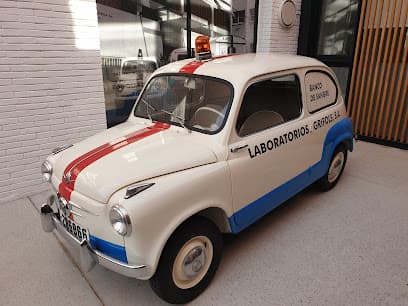
Blood. It is the ultimate currency of life, the stuff of visceral horror, and for the Grifols family, it has been the family business for over a century. If you are looking for the sun-drenched whimsy of Gaudí or the greasy charm of a Barceloneta tapas crawl, you are in the wrong neighborhood. The Museu Grífols, located in the affluent, quiet hills of Sarrià-Sant Gervasi, is a different kind of animal. It is a monument to the cold, hard, and often heroic logic of medical science. This isn't a place that tries to sell you a souvenir t-shirt; it’s a place that explains how humanity learned to stop people from bleeding out on the operating table.
Walking into the museum, which occupies the original laboratory where Josep Antoni Grifols i Roig started his work, feels like stepping into a sanctuary of clinical progress. The air is different here—still, respectful, and devoid of the frantic energy of the city center. You aren't just looking at old glass tubes and brass instruments; you are looking at the birth of modern hematology in Spain. This is where the first private blood bank in the country was established in the 1940s, a time when the world was tearing itself apart and the need for stable blood supplies was a matter of survival, not just science.
The heart of the experience is the story of lyophilization—the freeze-drying of blood plasma. It sounds dry, sure, but when you see the original machinery, the clunky, heavy-duty precursors to the tech that now saves lives in every ER on the planet, it hits you. This was the breakthrough that allowed plasma to be transported across oceans without spoiling. It’s a story of obsession, of a family of scientists who looked at a pint of red liquid and saw a puzzle that needed solving. The museum displays are meticulously curated, showing the evolution from primitive centrifuges to the sophisticated global operation Grifols is today. It’s a narrative of grit, showing how a small family lab in Barcelona grew into a titan of the pharmaceutical world.
The atmosphere is decidedly intellectual. You won't find interactive touchscreens designed to distract toddlers. Instead, you find the quiet dignity of historical documents, original laboratory notebooks filled with precise, handwritten observations, and the specialized tools of a trade that demands absolute perfection. It’s a window into the Sarrià of old—a neighborhood of thinkers, doctors, and the upper-middle class who preferred the cool air of the hills to the humidity of the port. The museum itself is housed in a building that reflects this: understated, elegant, and functional.
Let’s be honest: this is a niche destination. If the history of medicine doesn't make your pulse quicken, you might find it a bit sterile. But for the curious, the science nerds, and those who want to understand the industrial and scientific backbone of Barcelona, it is essential. It’s a reminder that this city isn't just a playground for tourists; it’s a place where serious people did serious work that changed the world. You leave with a profound respect for the invisible systems that keep us alive, and a realization that sometimes the most interesting stories in Barcelona aren't found in the plazas, but behind the closed doors of a laboratory.
Is it worth the trek up to Sarrià? If you value substance over spectacle, absolutely. It’s one of the best science museums in Barcelona precisely because it doesn't try to be anything other than what it is: a honest, detailed account of a scientific revolution. Just make sure to book ahead; this isn't the kind of place where you just wander in off the street. It demands a bit of planning, much like the science it celebrates.
Type
Museum, Tourist attraction
Duration
1-1.5 hours
Best Time
Weekday mornings when the neighborhood is quiet and the museum is less likely to have group tours.
Guided Tours
Available
What People Say
muy interesante(7)family(4)
Features
Museum
Tourist attraction
Categories
ScienceHistory of MedicineCorporate Museum
Ticket Prices
Free Admission
No tickets required
Must-See Highlights
The first lyophilization machine used in Spain
The original office of Josep Antoni Grifols i Roig
Historical blood transfusion kits from the mid-20th century
The archive of scientific publications and patents
Visitor Tips
Visits are strictly by appointment, so email well in advance.
Combine this with a walk through the old town of Sarrià for a glimpse of 'real' Barcelona.
The museum is small and specialized; it's better for adults and older students than young children.
Good For
Science enthusiastsHistory buffsMedical professionalsOff-the-beaten-path travelers
Why Visit
Original 1940s laboratory setting where modern Spanish hematology was born
Exclusive focus on the history of blood plasma and life-saving medical technology
Located in the authentic, non-touristy residential hills of Sarrià
Nearby Landmarks
- 10-minute walk from Sarrià Market
- 15-minute walk from Monestir de Pedralbes
- 20-minute walk from CosmoCaixa Science Museum
Accessibility
- Wheelchair accessible
- Elevator available
Location
Carrer de Sant Liguori, 3
Sarrià-Sant Gervasi, Barcelona
Nearby Hotels
Nearby Restaurants
In Sarrià-Sant Gervasi
ATTRACTION
Casa Narcís Bosch
Sarrià-Sant Gervasi
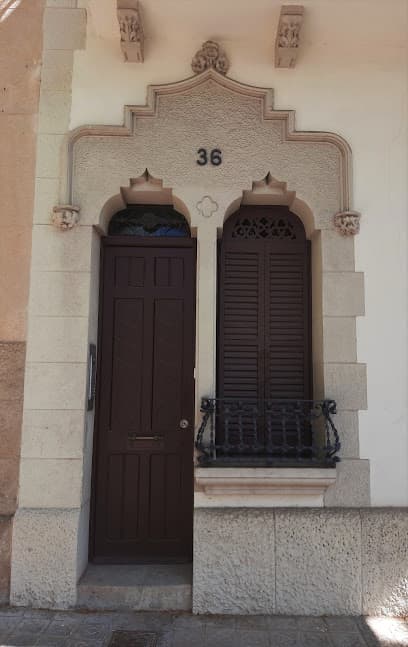
A Modernista fever dream tucked away in Sarrià, where Salvador Valeri i Pupurull’s stone curves and ironwork prove that Gaudí wasn't the only genius in town.
0.0(0)
Tourist attraction
ATTRACTION
Plaça de Calvó
Sarrià-Sant Gervasi
A quiet, unpretentious slice of Sant Gervasi where the only drama is a toddler losing a shoe. No Gaudí, no crowds, just trees, benches, and the sound of real life in the Zona Alta.
0.0(0)
Park
ATTRACTION
Pipican Piscines i Esports
Sarrià-Sant Gervasi
A dirt-caked arena of canine chaos set against the polished backdrop of Sarrià-Sant Gervasi, where the neighborhood’s elite and their four-legged shadows come to settle scores.
0.0(0)
Park
Frequently Asked Questions
What kind of experience does Museu Grífols offer?
It offers a clinical, deep-dive into medical history, showcasing how a local family laboratory became a global leader in hematology. It is a non-touristy look at the scientific community through the lens of the Grifols family.
Do I need a reservation for the Grifols Museum?
Yes, visits are typically by appointment or organized in small groups. You should contact the museum or the Grifols Foundation via their website to schedule a visit.
What should I see at Museu Grífols?
Don't miss the original lyophilization (freeze-drying) equipment and the historical laboratory notebooks that document the early days of blood plasma research in Spain.
How do I get to Museu Grífols?
The easiest way is to take the FGC train (Line L6) to the Sarrià station and walk about 10 minutes uphill through the quiet residential streets of the Sarrià neighborhood.
Reviews
0 reviews for Museu Grífols
No reviews yet. Be the first to share your experience!