4.4
360 verified reviews
About
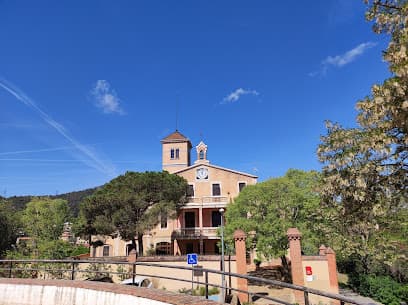
If you want to understand the soul of Barcelona, you have to leave the city. You have to get out of the humid, diesel-choked labyrinth of the Ciutat Vella and head up. Way up. Past the fancy apartments of Sarrià, past the funicular tracks, and into the green, pine-scented lungs of the Serra de Collserola. Here, tucked away like a secret the city isn't quite ready to share, sits MUHBA Vil·la Joana. It’s a 19th-century masia—a traditional Catalan farmhouse—that feels less like a museum and more like a sanctuary for the ghosts of a lost era.
This isn't one of those high-gloss, interactive tourist traps where you’re ushered through a gift shop every twenty minutes. This is the House of Literature. It’s where Jacint Verdaguer, the priest-poet who basically reinvented the Catalan language with his epic verses, spent his final days in 1902. He came here sick, looking for the mountain air to save him. It didn’t, but the house remains a testament to the man and the culture he helped define. If you’re looking for things to do in Sarrià-Sant Gervasi that don't involve shopping or overpriced gin-and-tonics, this is your spot.
The experience starts with the journey. You take the Funicular de Vallvidrera, which feels like a slow-motion ascent into another dimension. From the top, it’s a fifteen-minute walk through the woods. The air changes. It gets cooler, sharper. You see the yellow facade of the villa rising out of the trees, and suddenly the noise of the Eixample feels like a bad dream. Inside, the MUHBA (Museum of the History of Barcelona) has done something rare: they’ve kept the dignity of the place intact. You walk through rooms that track the history of the house from its 16th-century roots to its time as a pioneering school for the deaf and blind, but the heart of the place is Verdaguer’s bedroom. It’s sparse. A bed, a desk, a view of the trees. It’s a reminder that the greatest works of art usually come from a place of quiet and struggle, not from a committee-approved branding exercise.
Is MUHBA Vil·la Joana worth it? If you’re the kind of person who needs a thrill ride or a celebrity chef, probably not. But if you want to see the intersection of nature and narrative, it’s essential. The permanent exhibition, 'Verdaguer, Barcelona and the City of Literature,' isn't just about one guy; it’s about how a city finds its voice. You’ll see old manuscripts, artifacts from the rural life of the Collserola, and a perspective on Catalan identity that you won't find in the guidebooks handed out at the airport. It’s one of the best museums in Barcelona for people who actually like to read.
The beauty of Vil·la Joana is that it’s honest. It doesn't pretend the history was always pretty. It acknowledges the poverty of the rural past and the isolation of the poet. But then you step out onto the terrace and look at the rolling hills of the natural park, and you get it. You understand why he came here. You understand why the locals keep this place quiet. It’s a palate cleanser for the soul. Bring a book, wear some decent shoes, and leave your ego at the funicular station. This is a place for listening to the wind in the pines and the echoes of a poet who knew that, in the end, the land is the only thing that lasts.
Don't expect a cafeteria with artisanal avocado toast. There’s a small area to rest, but you’re better off packing a sandwich or heading back to the village of Vallvidrera for a vermut. This is a pilgrimage, not a mall crawl. It’s a chance to see Barcelona from the outside looking in, and frankly, the view is much better from here.
Type
Museum, Tourist attraction
Duration
1-2 hours
Best Time
Sunday after 3pm for free entry and golden hour views over the park.
Guided Tours
Available
What People Say
house(18)exhibition(9)poet(8)muy interesante(8)nature(8)emblem(3)masia(3)strolling(3)
Features
Museum
Tourist attraction
Categories
LiteratureHistoryNatureArchitecture
Ticket Prices
Free Admission
No tickets required
Opening Hours
- MondayClosed
- Tuesday10 AM to 2 PM
- WednesdayClosed
- Thursday10 AM to 2 PM
- FridayClosed
- Saturday10 AM to 3 PM
- Sunday10 AM to 3 PM
Must-See Highlights
Jacint Verdaguer's bedroom and deathbed
The 'City of Literature' exhibition
The outdoor terrace overlooking the Collserola hills
The historic kitchen with original 19th-century features
Visitor Tips
Combine your visit with a walk to the nearby Pantà de Vallvidrera reservoir.
Check the weather before going; the mountain air is significantly cooler than the city center.
Entry is free on the first Sunday of the month all day.
The walk from the funicular is paved but involves some slight inclines.
Good For
History buffsLiterature loversHikersFamiliesBudget travelers
Why Visit
The final residence of Jacint Verdaguer, Catalonia's national poet
Located inside the Collserola Natural Park with stunning mountain views
A rare example of a traditional Catalan masia transformed into a 'House of Literature'
Nearby Landmarks
- Funicular de Vallvidrera (15-minute walk)
- Tibidabo Amusement Park (25-minute hike or short bus ride)
- Sagrat Cor Church (30-minute hike)
- Pantà de Vallvidrera (10-minute walk)
Accessibility
- Wheelchair accessible
- Elevator available
- Accessible restrooms
Location
Ctra. de l'Església, 104
Sarrià-Sant Gervasi, Barcelona
Nearby Hotels
Nearby Restaurants
In Sarrià-Sant Gervasi
ATTRACTION
Casa Narcís Bosch
Sarrià-Sant Gervasi
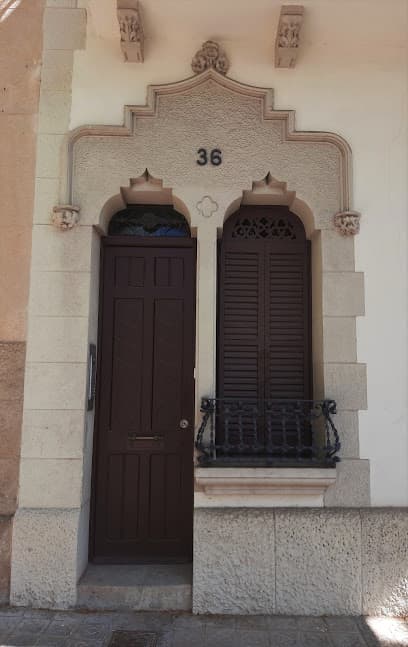
A Modernista fever dream tucked away in Sarrià, where Salvador Valeri i Pupurull’s stone curves and ironwork prove that Gaudí wasn't the only genius in town.
0.0(0)
Tourist attraction
ATTRACTION
Plaça de Calvó
Sarrià-Sant Gervasi
A quiet, unpretentious slice of Sant Gervasi where the only drama is a toddler losing a shoe. No Gaudí, no crowds, just trees, benches, and the sound of real life in the Zona Alta.
0.0(0)
Park
ATTRACTION
Pipican Piscines i Esports
Sarrià-Sant Gervasi
A dirt-caked arena of canine chaos set against the polished backdrop of Sarrià-Sant Gervasi, where the neighborhood’s elite and their four-legged shadows come to settle scores.
0.0(0)
Park
Frequently Asked Questions
Is MUHBA Vil·la Joana worth visiting?
Yes, especially if you want to escape the city crowds and enjoy a mix of Catalan literary history and nature. It offers a unique, quiet perspective on Barcelona's cultural identity within the beautiful Collserola Natural Park.
How do I get to MUHBA Vil·la Joana?
Take the FGC train (S1 or S2) to Peu del Funicular, then the Vallvidrera Funicular to Vallvidrera Superior. From there, it is a scenic 15-minute walk following the signs through the park.
What is the best time to visit MUHBA Vil·la Joana?
Sunday afternoons after 3:00 PM are ideal because entry is free. Morning visits are also great for combining the museum with a hike through the surrounding Collserola trails.
Is there an entry fee for MUHBA Vil·la Joana?
General admission is typically €5, but it is free on the first Sunday of every month and every Sunday after 3:00 PM. Check the official MUHBA website for current holiday closures.
Reviews
0 reviews for MUHBA Vil•la Joana
No reviews yet. Be the first to share your experience!