4.8
6 verified reviews
About
Poble-sec is a neighborhood that doesn't care if you like it or not. It’s a place of steep hills, old-school bodegas, and the lingering scent of fried calamari and diesel. It’s real. It’s unvarnished. And right there, on a street that most tourists couldn't find with a GPS and a Sherpa, sits the Mosaic façana del Carrer Elkano 4. It’s a reminder that in this city, even the most mundane apartment block can suddenly punch you in the throat with beauty.
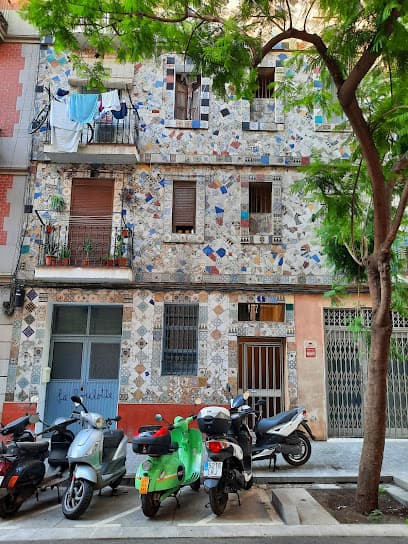
Walking down Carrer d'Elkano, you’re surrounded by the everyday business of Barcelona life—laundry hanging from balconies, the clatter of shutters, the low hum of a neighborhood waking up. Then you hit number 4. You look up, and there it is: a riot of ceramic tiles that feels like a Modernista hangover in the best possible way. This isn't the polished, ticketed perfection of the Sagrada Família. This is street-level art, a ceramic skin stretched over a residential building that has seen decades of history pass by its front door.
The mosaic is a masterclass in the 'trencadís' and ceramic tile traditions that defined the city’s golden age. Research tells us these tiles likely came from the legendary factory of Hijo de Jaime Pujol i Bausis in Esplugues de Llobregat—the same place that supplied the heavy hitters like Gaudí and Domènech i Montaner. We’re talking about deep greens, crisp whites, and floral motifs—specifically irises—that seem to grow right out of the masonry. It’s a testament to a time when even a developer building a block of flats felt the need to give something back to the street, to leave a mark that wasn't just functional, but soulful.
What makes this place worth your time isn't just the craftsmanship; it’s the context. You aren't standing in a museum line with a thousand people wearing zip-off cargo pants. You’re standing on a sidewalk in Poble-sec. You might have to dodge a delivery scooter or step over a puddle to get the right angle for a photo. That’s the price of admission, and frankly, it’s a bargain. The light hits the glazed surfaces differently depending on the hour, but if you catch it in the morning, the colors pop with a clarity that makes the surrounding grey buildings look like they’re in black and white.
This is the Barcelona that matters—the one that exists in the cracks between the landmarks. It’s a city where art wasn't just for the elite; it was baked into the very walls of the barrios. The Mosaic façana del Carrer Elkano 4 is a quiet, beautiful middle finger to the bland, glass-and-steel architecture of the modern world. It’s a piece of history that you can touch, a fragment of a dream that someone decided to glue to a wall over a century ago. If you’re looking for the 'best architecture Barcelona' has to offer, don't just look at the palaces. Look at the places where people actually live. This is where the heart of the city beats, hidden in plain sight behind a layer of glazed clay and stubborn Catalan pride.
Type
Tourist attraction
Duration
15-30 minutes
Best Time
Morning for the best natural light on the tiles
Features
Tourist attraction
Categories
ArchitectureModernismeStreet ArtHistory
Ticket Prices
Free Admission
No tickets required
Opening Hours
- MondayOpen 24 hours
- TuesdayOpen 24 hours
- WednesdayOpen 24 hours
- ThursdayOpen 24 hours
- FridayOpen 24 hours
- SaturdayOpen 24 hours
- SundayOpen 24 hours
Must-See Highlights
The intricate iris floral motifs
The contrast between the glazed tiles and the stone masonry
The 'Hijo de Jaime Pujol i Bausis' factory craftsmanship
Visitor Tips
Don't just look at the ground floor; the best details are on the upper levels of the facade
Combine this with a tapas crawl on nearby Carrer de Blai
Bring a camera with a good zoom to capture the tile patterns
Good For
Architecture enthusiastsPhotography loversBudget travelersHistory buffs
Why Visit
Authentic Pujol i Bausis ceramics from the early 20th century
Zero crowds and no entrance fee for a genuine Modernista experience
Located in the heart of the unpretentious Poble-sec neighborhood
Nearby Landmarks
- 8-minute walk from Carrer de Blai (tapas street)
- 10-minute walk from Sala Apolo
Accessibility
- Viewable from the public sidewalk
- Flat terrain on the street level
Location
Carrer d'Elkano, 4
Sants-Montjuïc, Barcelona
Nearby Hotels
Nearby Restaurants
In Sants-Montjuïc
ATTRACTION
Bolets1
Sants-Montjuïc
A gritty, earthy temple to the Catalan obsession with wild mushrooms, where the dirt is real, the fungi are seasonal gold, and the air smells like the damp floor of a Pyrenean forest.
0.0(0)
Tourist attraction
ATTRACTION
Montjuic aparca
Sants-Montjuïc
The unglamorous base camp for your Montjuïc assault. A tactical slab of asphalt where the city's chaos fades into the pine-scented ghosts of the 1992 Olympics.
0.0(0)
Tourist attraction
ATTRACTION
Паркінг Барселона
Sants-Montjuïc
A sprawling slab of industrial reality in the Zona Franca. No Gaudí here—just hot asphalt, diesel fumes, and the honest utility of a secure place to park your rig.
0.0(0)
Park
Frequently Asked Questions
Is the Mosaic façana del Carrer Elkano 4 worth visiting?
Yes, if you appreciate architecture and want to see authentic Modernista details without the crowds. It is a quick, free stop that showcases the detailed tile work that defined the city's Modernista era.
How do I get to Carrer d'Elkano 4?
The easiest way is to take the Metro (L3 or L2) to the Poble Sec station. From there, it is a short 5-minute walk into the heart of the neighborhood.
What is the best time to see the mosaic?
Morning light is best, as it illuminates the glazed tiles and brings out the vibrant greens and whites of the floral patterns before the street falls into shadow.
Reviews
0 reviews for Mosaic façana del Carrer Elkano 4
No reviews yet. Be the first to share your experience!