4.3
9 verified reviews
About
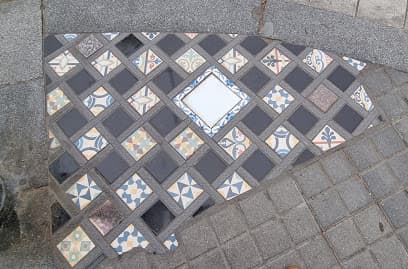
Barcelona is a city obsessed with its floors. From the iconic Panot flowers that pave the Eixample to the wavy, sea-inspired tiles of the Passeig de Gràcia, the ground here usually has more personality than the people walking on it. But then there’s the Mosaic EMEMEM. It’s not some grand, city-sanctioned project commissioned by a committee of suits in a glass office. It’s a guerrilla act of kindness. A French artist, known only as Ememem, decided that the potholes and cracks of the world shouldn't be ignored or filled with lazy, soul-crushing asphalt. He calls it "flacking"—a sort of urban surgery where he fills the city's wounds with intricate, colorful mosaics.
Located at Carrer de Fontanella, 22, right on the edge of the Eixample and the Gothic Quarter, this isn't something you stand in line for. There are no velvet ropes, no bored security guards, and no gift shop selling overpriced magnets. It’s just there, under your boots, a sudden explosion of geometric patterns and vibrant ceramics amidst the drab, grey concrete. If you’re looking for the best street art in Barcelona, this is the real deal—the kind that doesn't scream for attention but waits for those who are actually paying attention. It’s a protein rush for the eyes in a neighborhood that can sometimes feel a bit too corporate.
The location itself is a study in urban chaos. You’re a stone's throw from Plaça d'Urquinaona, a place that feels like the grinding gears of the city. It’s loud, it’s fast, and most people are too busy staring at their phones or rushing to the metro to notice the art beneath them. But stop for a second. Look down. You’ll see how the artist has meticulously fitted tiny shards of tile into a jagged fissure in the pavement. It’s beautiful, sure, but it’s also a bit of a dark joke. The city breaks, the infrastructure fails, and instead of a repair crew, a "pavement surgeon" comes in the dead of night to turn a trip hazard into a masterpiece. It’s the kind of thing that makes you realize that even in a city as polished as Barcelona, the cracks are where the interesting stuff happens.
Is it worth visiting? If you’re the type who needs a map and a guided tour to feel like you’ve "seen" a city, probably not. You’ll walk right over it and complain that there wasn't enough to see. But if you give a damn about the soul of a place—the small, defiant acts of beauty that survive in the cracks of a modern metropolis—then yes, it’s essential. It’s one of the best free things to do in Barcelona because it reminds you that the city is alive, it’s hurting, and someone out there is trying to fix it, one tile at a time. It’s a quiet, beautiful protest against the blandness of modern urban planning.
Don't expect a museum experience. Expect to be bumped into by a hurried office worker while you’re crouching down to take a photo. Expect the tiles to be a little scuffed by thousands of soles. That’s the point. This isn't precious art kept behind glass; it’s art that lives in the dirt. It’s a reminder that even in the most corporate, polished parts of the Eixample, there’s room for a little bit of beautiful, colorful chaos. It’s the kind of discovery that makes travel worth the hassle—a secret shared between you and the sidewalk. It’s honest, it’s raw, and it’s exactly what street art should be.
Type
Tourist attraction
Duration
5-10 minutes
Best Time
Daylight hours to appreciate the colors and detail of the tiles.
Features
Tourist attraction
Categories
MosaicContemporary ArtUrban Exploration
Ticket Prices
Free Admission
No tickets required
Opening Hours
- MondayOpen 24 hours
- TuesdayOpen 24 hours
- WednesdayOpen 24 hours
- ThursdayOpen 24 hours
- FridayOpen 24 hours
- SaturdayOpen 24 hours
- SundayOpen 24 hours
Must-See Highlights
The intricate geometric patterns within the sidewalk crack
The contrast between the colorful ceramic shards and the grey asphalt
The artist's signature style of 'healing' the city's wounds
Visitor Tips
Look down! It's very easy to walk right over it if you aren't paying attention.
Watch out for heavy pedestrian traffic; this is a very busy street near Plaça de Catalunya.
Bring a camera with a good macro lens if you want to capture the detail of the tile work.
Good For
Street art enthusiastsPhotographersBudget travelersUrban explorers
Why Visit
Guerrilla street art by the world-famous 'pavement surgeon' Ememem
A rare example of 'flacking'—mosaic art used to repair urban decay
Completely free and hidden in plain sight in the busy Eixample district
Nearby Landmarks
- 2-minute walk from Plaça d'Urquinaona
- 4-minute walk from Plaça de Catalunya
- 6-minute walk from Palau de la Música Catalana
Accessibility
- Located on a public sidewalk
- Wheelchair accessible
Location
Carrer de Fontanella, 22
Eixample, Barcelona
Nearby Hotels
Nearby Restaurants
In Eixample
ATTRACTION
Mural Margalef
Eixample
A towering splash of Mediterranean blue breaking the rigid geometry of Eixample, Joan Margalef’s mural is a visceral reminder that Barcelona’s soul isn't just in its museums.
0.0(0)
Tourist attraction
ATTRACTION
Mural Margalef
Eixample
A geometric middle finger to urban decay, this massive kinetic mural by Eduard Margalef turns a drab Eixample blind wall into a rhythmic, shifting explosion of optical art.
0.0(0)
Tourist attraction
ATTRACTION
Happy Foodies
Eixample
Forget the plastic-wrapped tourist traps; this is a deep dive into the grease, garlic, and soul of Catalan cooking where you actually learn to handle a knife and a porrón.
0.0(0)
Sightseeing tour agencyTour agency
Frequently Asked Questions
Is Mosaic EMEMEM worth visiting?
Yes, if you appreciate street art and the 'hidden' details of a city. It is a small, guerrilla mosaic installation in the sidewalk, not a large monument, so it's perfect for those who like discovering offbeat details.
Where exactly is the Ememem mosaic located?
You can find this specific piece of 'flacking' at Carrer de Fontanella, 22, which is very close to Plaça d'Urquinaona in the Eixample district.
Do I need tickets for Mosaic EMEMEM?
No, it is a public street art installation located on a city sidewalk. It is completely free and accessible 24/7.
What is 'flacking'?
Flacking is a term coined by the artist Ememem to describe the process of filling potholes and sidewalk cracks with colorful mosaic tiles, effectively 'healing' the pavement.
Reviews
0 reviews for Mosaic EMEMEM
No reviews yet. Be the first to share your experience!