4.4
56,044 verified reviews
About
The first thing you notice about Montjuïc Castle isn’t the history; it’s the wind. It whips off the Mediterranean, carrying the scent of salt and diesel from the industrial port below. This place is a massive, star-shaped slab of military engineering that has spent the last few centuries staring down at Barcelona, sometimes to protect it, but more often to remind the city exactly who was in charge. If you’re looking for a fairytale palace, you’re in the wrong neighborhood. This is a fortress, built for the cold, hard business of control.
Getting here is half the trip. You can take the Telefèric de Montjuïc—the cable car—which is undeniably a tourist move, but one that offers a perspective of the city you can’t get anywhere else. You’ll see the Sagrada Família poking out of the Eixample grid like a giant stone termite mound, and the sea stretching out toward the horizon. Or, you can do it the honest way: take the 150 bus or hike up from the Poble Sec side. The walk is steep, but it gives you time to think about the people who were dragged up this hill against their will.
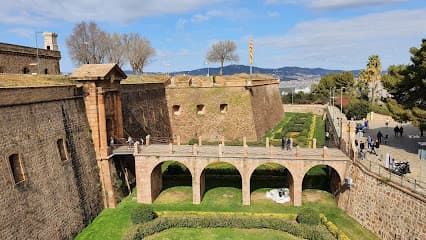
Once you cross the bridge over the dry moat—now filled with manicured gardens instead of sharpened stakes—the scale of the place hits you. It’s silent in a way the Gothic Quarter never is. You’re standing on a site that’s seen the Reapers' War, the Napoleonic Wars, and the darkest days of the Spanish Civil War. For many locals, this isn't just a 'thing to do in Barcelona'; it’s a site of trauma. This is where Lluís Companys, the president of the Generalitat, was executed by Franco’s regime in 1940. You can feel that weight in the stones, even as tourists snap selfies with the 18th-century cannons.
Is Montjuïc Castle worth it? If you only care about catching the best views Barcelona has to offer, then yes, absolutely. From the terrace of the parade ground, you get an uninterrupted panorama. To the south, the massive logistics hub of the port, a labyrinth of shipping containers and cranes that looks like a giant’s Lego set. To the north, the entire city laid out like a map. It’s the kind of view that makes you feel small, which was exactly the point when they built it.
Inside, the museum sections are sparse but informative, detailing the fortress’s evolution from a 1640 watchtower to a military prison. Don't expect high-tech interactive displays at every turn. The real exhibit is the architecture itself—the thick walls, the damp cells, and the echoing courtyard. It’s a place for quiet observation rather than frantic sightseeing.
When you’re done, don’t just rush back to the cable car. Wander the perimeter. Look at the way the light hits the stone at sunset. It’s a beautiful place with a hideous past, and that’s Barcelona in a nutshell. It’s a city that has been burned, bombed, and rebuilt, and this castle is the ultimate witness to all of it. Grab a water from the kiosk, sit on a rampart, and watch the ferries crawl toward Italy. It’s honest, it’s heavy, and it’s one of the few places where you can actually hear yourself think above the roar of the city.
Type
Castle, Fortress
Duration
1.5-2 hours
Best Time
Late afternoon for the sunset views over the port, or Sunday after 3 PM if you want to save the entry fee.
Guided Tours
Available
Audio Guide
Available
What People Say
cable car(692)port(147)cannons(107)metro(95)gondola(81)spanish civil war(54)1640(44)sagrada familia(43)
Features
Castle
Fortress
Museum
Tourist attraction
Categories
Military HistoryFortressMuseum
Ticket Prices
adult€12
child€8
senior€8
Opening Hours
- Monday10 AM to 8 PM
- Tuesday10 AM to 8 PM
- Wednesday10 AM to 8 PM
- Thursday10 AM to 8 PM
- Friday10 AM to 8 PM
- Saturday10 AM to 8 PM
- Sunday10 AM to 8 PM
Must-See Highlights
The Parade Ground (Patio de Armas)
The Hornabeque Ramparts
The Santa Eulàlia Bastion
The Moat Gardens
Visitor Tips
Bring a jacket even in summer; the wind at the top of the hill is significantly cooler than in the city center.
The 150 bus is included in standard T-casual or Hola BCN transport passes, making it much cheaper than the cable car.
Check the schedule for temporary exhibitions in the casemates.
Good For
History buffsPhotographersBudget travelers on free SundaysFamilies with space for kids to run in the moat
Why Visit
Sweeping panoramic views of the Mediterranean, the industrial port, and the entire Barcelona skyline
A deep, somber history as a former military prison and execution site that offers a counterpoint to the city's modern tourism
The dry moat gardens which provide a peaceful, green escape from the urban density of the city below
Nearby Landmarks
- 10-minute walk from the Telefèric de Montjuïc (Cable Car) top station
- 15-minute walk from the Joan Miró Foundation
- 20-minute walk from the Estadi Olímpic Lluís Companys
Accessibility
- Wheelchair accessible via specific ramps
- Accessible toilets available
- Elevator access to the terrace
Location
Ctra. de Montjuïc, 66
Sants-Montjuïc, Barcelona
Nearby Hotels
Nearby Restaurants
In Sants-Montjuïc
ATTRACTION
Bolets1
Sants-Montjuïc
A gritty, earthy temple to the Catalan obsession with wild mushrooms, where the dirt is real, the fungi are seasonal gold, and the air smells like the damp floor of a Pyrenean forest.
0.0(0)
Tourist attraction
ATTRACTION
Montjuic aparca
Sants-Montjuïc
The unglamorous base camp for your Montjuïc assault. A tactical slab of asphalt where the city's chaos fades into the pine-scented ghosts of the 1992 Olympics.
0.0(0)
Tourist attraction
ATTRACTION
Паркінг Барселона
Sants-Montjuïc
A sprawling slab of industrial reality in the Zona Franca. No Gaudí here—just hot asphalt, diesel fumes, and the honest utility of a secure place to park your rig.
0.0(0)
Park
Frequently Asked Questions
Is Montjuïc Castle worth visiting?
Yes, especially if you value sweeping panoramic vistas and want to understand the darker, military side of Barcelona's history beyond the Gaudí architecture.
How do I get to Montjuïc Castle?
The most scenic way is the Montjuïc Cable Car from Avinguda Miramar, but the most affordable way is taking the 150 bus from Plaça d'Espanya directly to the castle gates.
What should I see at Montjuïc Castle?
Don't miss the parade ground for the best views, the moat gardens, and the memorial to Lluís Companys, which marks a pivotal moment in Catalan history.
When is Montjuïc Castle free?
Entry is free every Sunday after 3:00 PM and all day on the first Sunday of every month, though expect significantly larger crowds during these times.
Reviews
0 reviews for Montjuïc Castle
No reviews yet. Be the first to share your experience!