4.3
116 verified reviews
About
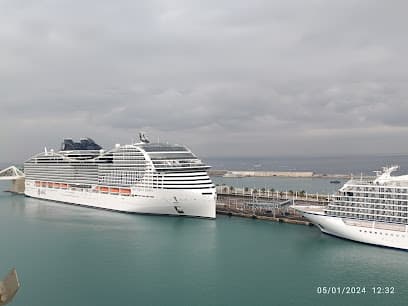
Let’s be clear: nobody comes to Moll de Ponent to find their soul or admire a sunset over a glass of cava. This isn't the postcard Barcelona of Gaudí’s whimsy or the Gothic Quarter’s narrow, romantic shadows. This is the industrial throat of the city. It is a massive, sun-bleached expanse of concrete and asphalt designed for one thing: moving people and cargo from the land to the deep, blue abyss of the Mediterranean. If you find yourself here, you’re likely either boarding a floating apartment block disguised as a cruise ship or waiting for a Grimaldi Lines ferry to haul you across the sea to Italy or Sardinia.
The first thing that hits you isn't the smell of the sea—it’s the smell of logistics. It’s the scent of heavy fuel oil, hot tires, and the metallic tang of massive cranes. It is a sensory assault of scale. Standing at the foot of one of the mega-ships docked at Terminal E or the Palacruceros terminal, you feel insignificantly small. These ships are monuments to human excess, towering over the pier like horizontal skyscrapers. It’s a place of transition, a liminal space where the city ends and the journey begins. There is a certain honest grit here that you won't find at the Sagrada Família. It’s the sound of heavy chains, the hiss of pneumatic brakes, and the multilingual chatter of thousands of travelers all trying to figure out which gangway leads to their cabin.
Walking the length of the Moll de Ponent is a lesson in the reality of a port city. To your left, the Mediterranean stretches out, indifferent and vast. To your right, the industrial machinery of the Port of Barcelona hums with a relentless, low-frequency vibration. You’ll see the blue-and-white hulls of the ferries, often looking a bit more lived-in than the pristine cruise liners, carrying trucks and backpackers toward Civitavecchia. It’s not 'pretty' in any conventional sense, but there is a brutalist beauty to it. The way the light reflects off the glass of the World Trade Center in the distance, or the way the Montjuïc hill looms over the docks like a silent guardian, reminds you that you are still in Barcelona, even if you’re in its most functional, unadorned corner.
Is Moll de Ponent worth visiting if you aren't catching a boat? Probably not. Unless you have a fetish for maritime engineering or you want to see the sheer scale of global tourism from the ground up, there are better places to spend your afternoon. But if you are here, embrace the chaos. Watch the tugboats maneuver the giants. Observe the weary travelers dragging suitcases over the uneven pavement. There’s a raw, unscripted energy to the place. It’s the gateway to the rest of the world, and it doesn't apologize for its lack of charm. It’s a working dock, a place of sweat and schedules, and in a city that often feels like a museum, that honesty is almost refreshing.
Don't expect a high-end meal here. You’re looking at vending machine coffee or perhaps a sad sandwich in a terminal lounge if you’re lucky. If you have time before boarding, do yourself a favor and stay closer to the city center or the Barceloneta neighborhood until the last possible moment. Once you cross the bridge to the Moll de Ponent, you are in the hands of the port authorities and the tides. It’s a place of waiting, of anticipation, and of the inevitable realization that the sea is much, much bigger than we are.
Type
Tourist attraction
Duration
1-2 hours (for boarding)
Best Time
Two hours before your scheduled ship departure to handle security and boarding.
What People Say
port(3)boarding(2)sea(2)
Features
Tourist attraction
Categories
MaritimeTransport HubIndustrial
Ticket Prices
Free Admission
No tickets required
Must-See Highlights
The massive cruise liners at Terminal E
The boarding process for the Grimaldi Lines ferries
Views of the Montjuïc hill from the pier
Visitor Tips
Take the Portbus (T3) from the Columbus Monument; it's much cheaper than a taxi and drops you at the terminal doors.
Check your terminal letter (A, B, C, D, or E) before you arrive; the pier is very long and walking between terminals with luggage is brutal.
Bring water and snacks, as terminal prices are high and options are limited.
Good For
Cruise passengersFerry travelersMaritime enthusiasts
Why Visit
Primary gateway for Mediterranean ferry routes to Italy and Sardinia
Home to some of the world's largest and most modern cruise ship terminals
Unrivaled views of the industrial scale and machinery of one of Europe's busiest ports
Nearby Landmarks
- World Trade Center Barcelona (15-minute walk/5-minute drive)
- W Hotel Barcelona (10-minute drive)
- Montjuïc Castle (15-minute drive)
- Columbus Monument (20-minute walk/shuttle bus ride)
Accessibility
- Wheelchair accessible terminals
- Elevators in main terminal buildings
- Shuttle buses with wheelchair ramps
Location
08039, Moll de Ponent, 1
Sants-Montjuïc, Barcelona
Nearby Hotels
Nearby Restaurants
In Sants-Montjuïc
ATTRACTION
Bolets1
Sants-Montjuïc
A gritty, earthy temple to the Catalan obsession with wild mushrooms, where the dirt is real, the fungi are seasonal gold, and the air smells like the damp floor of a Pyrenean forest.
0.0(0)
Tourist attraction
ATTRACTION
Montjuic aparca
Sants-Montjuïc
The unglamorous base camp for your Montjuïc assault. A tactical slab of asphalt where the city's chaos fades into the pine-scented ghosts of the 1992 Olympics.
0.0(0)
Tourist attraction
ATTRACTION
Паркінг Барселона
Sants-Montjuïc
A sprawling slab of industrial reality in the Zona Franca. No Gaudí here—just hot asphalt, diesel fumes, and the honest utility of a secure place to park your rig.
0.0(0)
Park
Frequently Asked Questions
Is Moll de Ponent worth visiting?
Only if you are boarding a cruise or a ferry. It is a functional industrial port area with very little in the way of traditional sightseeing or amenities.
How do I get to Moll de Ponent?
The easiest way is by taxi or the 'Cruise Bus' (T3 Portbus) that runs from the bottom of La Rambla (Plaça de les Drassanes) to the various terminals.
Which ferries depart from Moll de Ponent?
It is the primary hub for Grimaldi Lines, which operates ferries to Italy (Civitavecchia, Savona) and Sardinia (Porto Torres).
Are there restaurants at Moll de Ponent?
Facilities are very limited. There are basic cafes inside the ferry and cruise terminals, but for a real meal, you should eat in Barceloneta or the Poble-sec neighborhood before heading to the pier.
Reviews
0 reviews for Moll de Ponent
No reviews yet. Be the first to share your experience!