About
Barcelona is a city that demands you work for its secrets. If you’re sticking to the flat, paved tourist corridors of the Gothic Quarter, you’re seeing the makeup, not the skin. To see the skin, you have to climb. You head north, away from the sea, toward the hills of Sarrià-Sant Gervasi, where the air gets a little thinner and the streets get a lot steeper. This is where you find Illa de la Costa, a place that most guidebooks wouldn't bother to mention, and that’s exactly why it matters.
Located on Carrer de la Costa, this isn't a sprawling park with monuments and gift shops. It’s an 'illa'—a block-interior garden. It’s part of a brilliant, decades-long urban project to reclaim the hollowed-out centers of city blocks and turn them back over to the people. In a city as dense as this, space is the ultimate luxury. Finding a patch of green hidden behind the fortress-like walls of apartment buildings feels like finding a secret passage in a house you thought you knew.
Getting here is a physical commitment. Carrer de la Costa is the kind of street that makes your calves scream and your lungs question your life choices. It’s a vertical ascent through a neighborhood that feels worlds away from the neon-lit chaos of La Rambla. But once you step into the garden, the city noise drops away. It’s replaced by the rhythmic 'thwack' of a tennis ball against a wall, the distant murmur of a television through an open window, and the rustle of Mediterranean shrubs.
This is not a 'must-see' in the traditional, exhausting sense of the word. There are no Gaudí masterpieces here. No overpriced mojitos. Just some benches, maybe a few trees struggling against the sun, and the unvarnished reality of Barcelona life. It’s where the locals come to escape their cramped apartments. You’ll see an old man reading a newspaper with the intensity of a diamond cutter, or a mother watching her toddler navigate the gravel. It’s a functional space, a lung for the neighborhood, and it’s beautiful because it doesn't try to be anything else.
The architecture surrounding the garden tells the story of the Putxet neighborhood—a mix of mid-century functionalism and the occasional older, more stubborn structure that refused to be torn down. Looking up from the center of the garden, you see the private lives of Barcelonans laid out in laundry lines and potted geraniums. It’s an intimate, almost voyeuristic perspective on the city that you can’t get from a tour bus.
Is it worth the trek? If you’re looking for a spectacle, no. Go back to the Sagrada Família and join the queue. But if you’re the kind of person who finds beauty in the quiet corners, who wants to see how a city actually breathes when it thinks no one is looking, then yes. It’s a reminder that the best parts of travel aren't always the landmarks; they’re the moments of stillness you find in between them. It’s a place to sit, catch your breath after that brutal climb, and realize that you’ve finally found a spot in Barcelona where no one is trying to sell you a plastic bull or a cheap sombrero. That, in itself, is a miracle.
When you leave, walk back down toward Vallcarca. The view of the city opening up below you, framed by the gritty urban landscape of the northern districts, is better than any postcard. It’s honest. It’s raw. It’s Barcelona without the filter.
Type
Park
Duration
30-45 minutes
Best Time
Late afternoon when the sun is lower and the neighborhood comes alive with locals.
Features
Park
Categories
Urban GardenLocal LifeArchitecture
Ticket Prices
Free Admission
No tickets required
Must-See Highlights
The view of surrounding residential balconies
The peaceful interior courtyard layout
The steep climb of Carrer de la Costa itself
Visitor Tips
Wear comfortable shoes; the hill is one of the steepest in the city.
Bring water as there are no shops immediately adjacent to the garden entrance.
Respect the neighbors; sound echoes in these interior courtyards.
Good For
Solo travelersLocal experience seekersBudget travelers
Why Visit
Authentic local atmosphere far from the tourist trail
Unique 'Illa' architecture reclaiming urban space
Peaceful respite from the city's noise and heat
Nearby Landmarks
- Jardins del Turó del Putxet (10-minute walk)
- Viaducte de Vallcarca (12-minute walk)
- Park Güell (20-minute walk uphill)
Accessibility
- Limited accessibility due to the very steep incline of Carrer de la Costa
- The garden interior is generally flat
Location
Carrer de la Costa, 87-75
Sarrià-Sant Gervasi, Barcelona
Nearby Hotels
Nearby Restaurants
In Sarrià-Sant Gervasi
ATTRACTION
Casa Narcís Bosch
Sarrià-Sant Gervasi
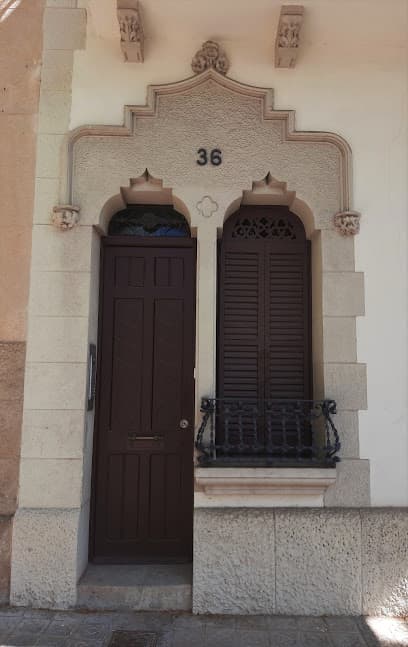
A Modernista fever dream tucked away in Sarrià, where Salvador Valeri i Pupurull’s stone curves and ironwork prove that Gaudí wasn't the only genius in town.
0.0(0)
Tourist attraction
ATTRACTION
Plaça de Calvó
Sarrià-Sant Gervasi
A quiet, unpretentious slice of Sant Gervasi where the only drama is a toddler losing a shoe. No Gaudí, no crowds, just trees, benches, and the sound of real life in the Zona Alta.
0.0(0)
Park
ATTRACTION
Pipican Piscines i Esports
Sarrià-Sant Gervasi
A dirt-caked arena of canine chaos set against the polished backdrop of Sarrià-Sant Gervasi, where the neighborhood’s elite and their four-legged shadows come to settle scores.
0.0(0)
Park
Frequently Asked Questions
Is Illa de la Costa worth visiting?
Only if you are already in the Sarrià-Sant Gervasi area or seeking a very quiet, local spot away from tourists. It is a small residential garden, not a major landmark.
How do I get to Illa de la Costa?
Take the L3 Metro to Vallcarca or the L7 FGC to El Putxet. Be prepared for a very steep uphill walk on Carrer de la Costa.
What is there to do at Illa de la Costa?
It is a place for rest and quiet observation. There are benches for sitting and a small play area for children, but no commercial facilities or cafes inside.
Reviews
0 reviews for La Costa, Illa
No reviews yet. Be the first to share your experience!