
About
Let’s be honest: most of the 'views' you’re sold in Barcelona come with a side of elbowing a teenager out of your shot or paying twenty euros for the privilege of standing on a crowded terrace. If you want the city without the theater, you have to work for it. You head north, away from the Gothic Quarter’s damp alleys and the Eixample’s grid-locked luxury, to a place where the air actually moves. Jardins del Turó del Putxet isn't a 'must-see' on some glossy checklist; it’s a lung-burning reality check for anyone who thinks they’ve seen the real Barcelona from the top of a tour bus.
This is a hill, a proper one, rising 178 meters above the sea. Back in the late 19th century, this was where the Barcelona bourgeoisie built their summer retreats to escape the stifling heat and the grime of the industrial city below. They wanted the breeze, the pines, and the distance. Today, the grand estates are mostly gone, replaced by the quiet, moneyed residential blocks of Sant Gervasi, but the hill remains a public sanctuary. It was officially turned into a park in 1970, and it feels like it hasn't tried to impress anyone since. That’s its greatest strength.
As you start the ascent from Carrer de Roca i Batlle, the city noise begins to peel away. The paths are winding, paved with stone and shaded by a dense canopy of Mediterranean pines, cedars, and holm oaks. It’s not a manicured French garden; it’s a bit rugged, a bit wild around the edges, and steep enough to make you regret that third vermouth from the night before. There are stairs—lots of them—and terraces that act as resting points for the local retirees who have been walking these paths since the Franco era.
When you finally hit the summit, the payoff is a visual gut-punch. It’s a full 360-degree panorama. To the north, the Tibidabo mountain looms with its church looking like a gothic wedding cake. To the south, the Mediterranean stretches out, a flat blue sheet behind the dense thicket of the city. You can see the Sagrada Família from here, looking like a strange, skeletal sandcastle, and the Agbar Tower glowing in the distance. But unlike Park Güell, which you can see across the valley teeming with people, here you might be sharing the view with exactly three people: a jogger, a guy reading a newspaper, and a dog chasing a tennis ball.
There are no gift shops here. No one is trying to sell you a plastic miniature of a mosaic lizard. There’s a playground where local kids scream in Catalan, a few benches worn smooth by decades of use, and the smell of dry earth and pine needles. It’s a place for contemplation, for realizing how small the city actually is, and for catching your breath. It’s one of the best things to do in Sarrià-Sant Gervasi if you value your sanity over a souvenir.
Is it worth the trek? If you’re looking for Gaudí-esque whimsy, go elsewhere. If you want to see the real layout of this chaotic, beautiful, sprawling mess of a city while standing in a forest in the middle of a neighborhood, then yes. It’s the perfect antidote to the 'Disney-fication' of the city center. Just bring water, wear shoes that don't prioritize fashion over function, and be prepared to sweat for your dinner. This is the Barcelona that doesn't care if you like it or not, and that’s exactly why it’s worth visiting.
Type
Tourist attraction
Duration
1-2 hours
Best Time
Late afternoon shortly before sunset to see the city lights come on without the heat.
Features
Tourist attraction
Categories
NaturePhotographyLookout PointDog Friendly
Ticket Prices
Free Admission
No tickets required
Must-See Highlights
The summit watchtower for the full 360-degree view
The shaded pine groves on the northern slope
The panoramic terrace overlooking the Sagrada Família
Visitor Tips
Enter via Carrer de Marmellà for a slightly less punishing incline than the main entrance.
Combine this with a visit to Casa Vicens, which is a downhill walk away.
There are no shops inside, so grab a cold beer or water at a 'supermercat' near the Metro before you start the climb.
Good For
Solo travelersPhotography enthusiastsBudget travelersDog ownersLocal experience seekers
Why Visit
360-degree unobstructed panoramic views of the entire city and sea
Authentic local atmosphere completely free of tourist traps
Lush Mediterranean forest environment in the heart of the upper city
Nearby Landmarks
- Casa Vicens Gaudí (15-minute walk)
- Parc del Turó de Monterols (12-minute walk)
- Placa de Lesseps (10-minute walk)
Accessibility
- Limited accessibility due to steep slopes and numerous stairs
- Some paved paths available but difficult for wheelchairs
Location
Carrer de Roca i Batlle, 15
Sarrià-Sant Gervasi, Barcelona
Nearby Hotels
Nearby Restaurants
In Sarrià-Sant Gervasi
ATTRACTION
Casa Narcís Bosch
Sarrià-Sant Gervasi
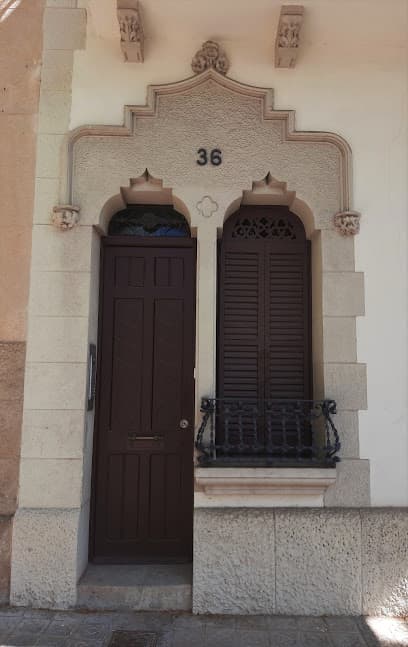
A Modernista fever dream tucked away in Sarrià, where Salvador Valeri i Pupurull’s stone curves and ironwork prove that Gaudí wasn't the only genius in town.
0.0(0)
Tourist attraction
ATTRACTION
Plaça de Calvó
Sarrià-Sant Gervasi
A quiet, unpretentious slice of Sant Gervasi where the only drama is a toddler losing a shoe. No Gaudí, no crowds, just trees, benches, and the sound of real life in the Zona Alta.
0.0(0)
Park
ATTRACTION
Pipican Piscines i Esports
Sarrià-Sant Gervasi
A dirt-caked arena of canine chaos set against the polished backdrop of Sarrià-Sant Gervasi, where the neighborhood’s elite and their four-legged shadows come to settle scores.
0.0(0)
Park
Frequently Asked Questions
Is Jardins del Turó del Putxet worth visiting?
Yes, if you want 360-degree panoramic views of Barcelona without the massive crowds of Park Güell. It requires a steep climb, but the peace and the perspective of the city are unmatched for those seeking a local experience.
How do I get to Jardins del Turó del Putxet?
The easiest way is taking the FGC (Ferrocarrils) to the 'El Putxet' station or the Metro L3 to 'Vallcarca'. From there, it is a 10-15 minute uphill walk to the main entrance on Carrer de Roca i Batlle.
Is there an entrance fee for the gardens?
No, the gardens are a public municipal park and admission is completely free. It is open daily from 10:00 AM until sunset.
What should I bring to the park?
Bring comfortable walking shoes as the paths are steep and involve many stairs. There are no cafes inside the park, so bring water and perhaps a snack if you plan to stay for sunset.
Reviews
0 reviews for Jardins del Turó del Putxet
No reviews yet. Be the first to share your experience!