4.7
6 verified reviews
About
Barcelona is a city built on water, but not the kind you find at the beach. Long before the cruise ships and the mojito-slinging kiosks, there was the Rec Comtal. This was the city’s jugular, a thousand-year-old irrigation canal that pumped life from the Besòs river into the heart of the old town. If you want to see where that story begins to surface, you don’t go to the Gothic Quarter. You get on the L1 metro, head north until the tourists start to thin out, and step out into Sant Andreu.
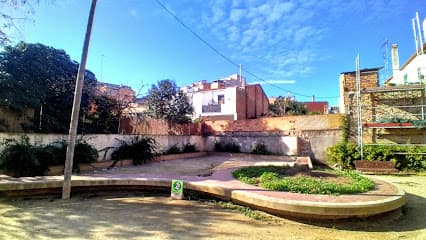
The Jardins del Rec—or what the locals often call the Parc del Rec Comtal—isn't your typical European garden. There are no manicured rose bushes or statues of forgotten generals. Instead, it’s a landscape of recovery, a place where the city is slowly peeling back the layers of concrete to show its scars. Located near the intersection of Carrer de Fernando Pessoa and Carrer del Palomar, this site is a collision of Roman engineering, medieval necessity, and modern urban renewal. It’s gritty, it’s honest, and it smells like sun-baked stone and wild rosemary.
Standing here, you’re looking at the remains of the Molí de Sant Andreu, a 13th-century flour mill that once hummed with the power of the rushing water. Nearby, the ghosts of a Roman aqueduct stand silent. For decades, this area was a neglected wasteland, a casualty of the railway tracks and industrial sprawl that defined Sant Andreu. But the neighborhood fought back. They didn’t want a theme park; they wanted their history back. The result is a space that feels more like an archaeological dig than a park. You’ll see the 'corten' steel markers tracing the path of the old water line, native Mediterranean plants reclaiming the soil, and the ancient stones of the Santa Coloma bridge.
What makes this place special is the lack of pretense. On a Tuesday afternoon, you won’t find a single selfie stick. You’ll find grandfathers from the nearby housing blocks sitting on benches, debating the merits of the local football team, and kids kicking a ball near ruins that saw the Count of Barcelona pass by in the 10th century. It is a reminder that Barcelona is a living, breathing organism, not just a backdrop for your vacation photos. The air here feels different—less like a museum, more like a workshop.
Is it worth the trek? If you’re looking for the 'Instagrammable' Barcelona, probably not. But if you want to understand the plumbing of civilization, if you want to see how a neighborhood honors its past without turning it into a commodity, then yes. It’s a quiet, powerful testament to the endurance of the city. You walk along the path, look at the dry channel where water once roared, and realize that the real Barcelona isn't found in the center—it’s out here, in the fringes, where the roots are still visible.
Type
Garden
Duration
45-60 minutes
Best Time
Late afternoon when the sun hits the stone ruins and the neighborhood locals come out to stroll.
Features
Garden
Categories
HistoryArchaeologyUrban ParkRoman Ruins
Ticket Prices
Free Admission
No tickets required
Opening Hours
- MondayOpen 24 hours
- TuesdayOpen 24 hours
- WednesdayOpen 24 hours
- ThursdayOpen 24 hours
- FridayOpen 24 hours
- SaturdayOpen 24 hours
- SundayOpen 24 hours
Must-See Highlights
The remains of the Molí de Sant Andreu
The archaeological markers of the Rec Comtal path
The ancient Santa Coloma bridge stones
Visitor Tips
Combine your visit with a trip to the nearby Fabra i Coats cultural center.
Grab a vermouth at Bar Versalles on Carrer Gran de Sant Andreu afterward for the full local experience.
Don't expect a lush green garden; it's an urban archaeological park.
Good For
History buffsSolo travelersLocal culture seekersArchitecture enthusiasts
Why Visit
Ancient Rec Comtal ruins dating back to the 10th century
Authentic local atmosphere far from the tourist center
Visible remains of a medieval flour mill and Roman aqueduct
Nearby Landmarks
- 5-minute walk from Sant Andreu Comtal train station
- 10-minute walk from Fabra i Coats Art Factory
- 8-minute walk from Church of Sant Andreu de Palomar
Accessibility
- Wheelchair accessible paths
- Flat terrain
- Open public space
Location
Sant Andreu, Barcelona
Nearby Hotels
Nearby Restaurants
In Sant Andreu
ATTRACTION
Camsbio,S.L
Sant Andreu
Not a park for picnics, but the workshop where Barcelona’s green future is built. Camsbio is the grit behind the city's vertical gardens and bio-construction.
0.0(0)
Park
ATTRACTION
Multan los Domingos
Sant Andreu
A defiant slice of Sant Andreu where industrial ruins meet community gardens. It’s the anti-tourist Barcelona: raw, brick-heavy, and smelling of vermut and rebellion.
0.0(0)
Garden
ATTRACTION
Plaça d'Albert Badia i Mur
Sant Andreu
A gritty, honest slice of Sant Andreu where the 'Cases Barates' history meets modern life. No Gaudí here—just real people, a playground, and the unvarnished soul of Bon Pastor.
0.0(0)
Park
Frequently Asked Questions
Is Jardins del Rec worth visiting?
Yes, if you are interested in authentic history and urban archaeology. It is a quiet, non-touristy spot that reveals the ancient water systems of Barcelona.
How do I get to Jardins del Rec?
Take the Metro L1 (Red Line) to the Sant Andreu station. From there, it is a 5-minute walk toward Carrer de Fernando Pessoa.
What is the Rec Comtal?
The Rec Comtal was a 12-kilometer long irrigation canal built in the 10th century (on Roman foundations) that supplied Barcelona with water for nearly a millennium.
Is there an entrance fee for Jardins del Rec?
No, it is a public outdoor space and archaeological site with free admission for everyone.
Reviews
0 reviews for Jardins del Rec
No reviews yet. Be the first to share your experience!