4.1
725 verified reviews
About
Most people stumble into the Jardins de Walter Benjamin by accident, usually while wandering lost between the towering cruise ships of the port and the steep climb of Montjuïc. It isn’t a garden in the way the tourism board wants you to think of gardens. There are no manicured rose bushes here, no fountains gurgling with pristine water, and certainly no gift shops selling overpriced postcards. Instead, you get the unvarnished truth of Barcelona: a liminal space where the city’s industrial fringe meets its creative soul.
Named after the German-Jewish philosopher who took his own life in the border town of Portbou while fleeing the Nazis, the park carries a weight of melancholy that fits its surroundings. It’s located at the edge of the Poble Sec and Sants-Montjuïc neighborhoods, a patch of land that feels like the city’s digestive tract. You’ll hear the low hum of port traffic, the hiss of air brakes, and the distant clatter of the maritime museum. It’s not 'pretty' in any conventional sense, but for those who find beauty in the cracks of the pavement, it’s essential.
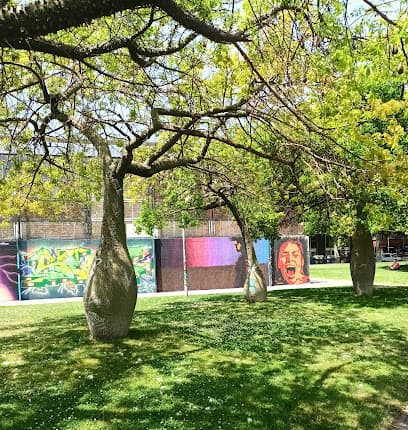
The real draw here—the thing that gives the park its pulse—is the sanctioned street art zone. This is one of the few places in Barcelona where graffiti isn't just tolerated; it’s the point. On any given afternoon, you’ll find artists with respirators and bags full of Montana Cans transforming the concrete into a saturated collision of pigment and style. The art here is ephemeral. A masterpiece that took six hours to execute might be buried under a layer of fresh chrome and black by tomorrow morning. It’s an ongoing dialogue between the city and its residents, a far cry from the static, preserved-in-amber history of the Gothic Quarter.
Walking through the gardens, you’ll notice the smell first—a pungent cocktail of sea salt, diesel fumes, and fresh aerosol paint. The ground is often littered with the plastic caps of spray cans, and the benches are occupied by a mix of local skaters, street artists taking a break, and the city’s displaced. The reviews mention the homeless presence, and they aren't lying. This is a place where the social safety net’s failures are visible. If that makes you uncomfortable, stay in the Eixample. But if you want to see how the city actually functions when the cameras aren't rolling, this is it.
There is a strange, quiet dignity to the place. Benjamin’s philosophy often dealt with the 'Angel of History,' looking back at the wreckage of the past while being blown into the future. Standing here, looking at a mural of a neon-colored cyborg painted onto a wall that looks like it’s seen better decades, you feel that tension. It’s a place of transition. It’s where the tourists get on the buses and the locals go to disappear for a while.
Don’t come here for a romantic picnic. The grass is patchy, and the shade is hard to find. Come here to see the 'best street art Barcelona' has to offer without the filter of a guided tour. Come here to watch a kid from the suburbs perfect his lettering on a legal wall. Come here to remember that Barcelona is a working city, a port city, and a city that still knows how to get its hands dirty. It’s a raw, honest corner of a town that is increasingly being polished into a theme park. It’s a reminder that art doesn't need a museum to be important, and a garden doesn't need flowers to be alive.
Type
Garden, Park
Duration
30-45 minutes
Best Time
Late afternoon to see artists actively working on the graffiti walls.
What People Say
graffiti(14)walls(10)port(5)strolling(5)homeless people(4)the environment(3)tagging(2)curiosity(2)
Features
Garden
Park
Tourist attraction
Categories
Urban ArtStreet ArtMemorialModern History
Ticket Prices
Free Admission
No tickets required
Opening Hours
- MondayOpen 24 hours
- TuesdayOpen 24 hours
- WednesdayOpen 24 hours
- ThursdayOpen 24 hours
- FridayOpen 24 hours
- SaturdayOpen 24 hours
- SundayOpen 24 hours
Must-See Highlights
The sprawling legal graffiti walls and murals
Views of the port and the Transbordador Aeri del Port cable cars overhead
The memorial plaque dedicated to Walter Benjamin
Visitor Tips
Bring a camera; the murals change almost daily.
Don't expect a quiet park experience; it's noisy due to port traffic.
Combine this with a visit to the nearby Maritime Museum for a full morning.
Good For
Street art enthusiastsPhotographersBudget travelersSkaters
Why Visit
Legal Graffiti Walls: One of the few places in the city where street artists can work openly and legally.
Urban Art Hub: A constantly changing outdoor gallery that reflects the current pulse of Barcelona's underground scene.
Namesake History: Dedicated to philosopher Walter Benjamin, offering a somber connection to the city's 20th-century history.
Nearby Landmarks
- 5-minute walk from Museu Marítim de Barcelona
- 8-minute walk from Monument a Colom (Columbus Monument)
- 5-minute walk from World Trade Center Barcelona
- 10-minute walk from La Rambla
Accessibility
- Flat paved paths
- Wheelchair accessible
- Open layout
Location
Plaça de les Drassanes
Sants-Montjuïc, Barcelona
Nearby Hotels
Nearby Restaurants
In Sants-Montjuïc
ATTRACTION
Bolets1
Sants-Montjuïc
A gritty, earthy temple to the Catalan obsession with wild mushrooms, where the dirt is real, the fungi are seasonal gold, and the air smells like the damp floor of a Pyrenean forest.
0.0(0)
Tourist attraction
ATTRACTION
Montjuic aparca
Sants-Montjuïc
The unglamorous base camp for your Montjuïc assault. A tactical slab of asphalt where the city's chaos fades into the pine-scented ghosts of the 1992 Olympics.
0.0(0)
Tourist attraction
ATTRACTION
Паркінг Барселона
Sants-Montjuïc
A sprawling slab of industrial reality in the Zona Franca. No Gaudí here—just hot asphalt, diesel fumes, and the honest utility of a secure place to park your rig.
0.0(0)
Park
Frequently Asked Questions
Is Jardins de Walter Benjamin worth visiting?
Yes, if you are interested in street art and urban culture. It is one of the city's primary legal graffiti spots, though it lacks the traditional beauty of other Barcelona parks.
Can I paint graffiti at Jardins de Walter Benjamin?
Yes, these are legal walls, but you should check current local regulations or look for official signage indicating the designated graffiti area.
Is the park safe to visit?
It is generally safe during the day, though it has a gritty, urban feel and a visible homeless population. Like any port area, stay aware of your surroundings.
How do I get to Jardins de Walter Benjamin?
The easiest way is to take the Metro (L3) to Drassanes and walk toward the port/World Trade Center. It is located right at Plaça de les Drassanes.
Reviews
0 reviews for Jardins de Walter Benjamin
No reviews yet. Be the first to share your experience!