4.1
28 verified reviews
About
Barcelona’s Eixample is a masterpiece of urban planning, a grid of octagonal blocks that looks beautiful from a drone but can feel like an exhaust-choked labyrinth when you’re stuck behind a delivery truck on a Tuesday afternoon. The architect, Ildefons Cerdà, originally envisioned these blocks with lush green centers—breathing rooms for the working class. Then greed happened. For a century, developers filled those centers with factories, warehouses, and dark parking garages. The Jardins de Mercè Vilaret is one of the places where the city finally clawed that space back.
You enter through a nondescript passage on Carrer de Floridablanca. It’s the kind of entrance you’d walk past a thousand times without noticing, which is exactly the point. The moment you step through that tunnel, the decibel level drops. The screech of the 52 bus and the frantic hum of motorbikes vanish, replaced by the rhythmic bounce of a basketball or the low murmur of neighbors who have known each other since the transition to democracy. It’s not a 'park' in the sense of rolling hills and manicured lawns; it’s an 'interior d’illa,' a courtyard garden that serves as the collective living room for the surrounding apartments.
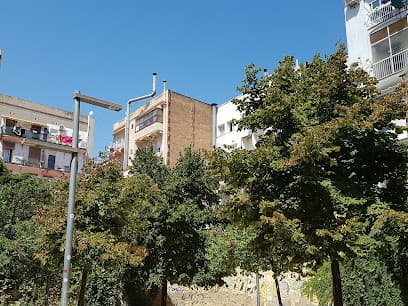
The space is named after Mercè Vilaret, a pioneering woman who directed for TV3 and spent her life capturing the reality of Catalan culture. It’s a fitting namesake. There is nothing staged here. You’ve got tipuana trees that drop yellow flowers like confetti in the spring, a few sturdy magnolias, and the kind of functional benches that are built to survive decades of gossip. The ground is a mix of hard-packed earth and pavement, worn smooth by generations of kids learning to ride bikes while their grandfathers watch from the shade, nursing a sense of hard-won peace.
For the traveler who is sick of being treated like a walking ATM, this place is a detox. There are no kiosks selling overpriced water. There are no selfie-stick vendors. There is just the sight of laundry hanging from the balconies above and the smell of damp earth after a rare Barcelona rain. It’s a reminder that people actually live in this city—they don’t just serve tapas to tourists. The playground is usually swarming with local kids after 4:30 PM, and the designated dog area is a theater of canine politics that provides better entertainment than most of the stuff on Netflix.
Is it 'stunning'? No. If you want stunning, go to the Sagrada Família and crane your neck with the rest of the herd. This is something better: it’s honest. It’s a slice of the Sant Antoni neighborhood that hasn't been fully polished for Instagram. It’s a place to sit, peel an orange, read a book, and remember what it feels like to be in a city that isn't trying to sell you something. It’s a quiet victory for urbanism over industry, a small patch of dirt and sky that belongs to the people who call these blocks home. If you’re looking for the 'real' Barcelona, you won’t find it on a tour bus. You’ll find it here, sitting on a bench, listening to the silence of a reclaimed courtyard.
Type
Park
Duration
30-45 minutes
Best Time
Late afternoon when the neighborhood comes alive with families and the sun hits the courtyard walls.
What People Say
dogs(3)
Features
Park
Categories
Urban GardenPublic SpaceLocal Life
Ticket Prices
Free Admission
No tickets required
Opening Hours
- Monday10 AM to 7 PM
- Tuesday10 AM to 7 PM
- Wednesday10 AM to 7 PM
- Thursday10 AM to 7 PM
- Friday10 AM to 7 PM
- Saturday10 AM to 7 PM
- Sunday10 AM to 7 PM
Must-See Highlights
The tipuana trees
The entrance passage from Floridablanca
The view of the surrounding Eixample balconies
Visitor Tips
Bring a book and a snack; there are no shops inside the garden.
Respect the neighbors—sound echoes in these courtyards.
Combine this with a visit to the nearby Mercat de Sant Antoni for a perfect local morning.
Good For
Families with kidsSolo travelers seeking quietDog ownersBudget travelers
Why Visit
Authentic 'Interior d'Illa' experience inside a residential block
Complete acoustic isolation from the heavy traffic of Eixample
Dedicated local atmosphere with zero tourist-trap elements
Nearby Landmarks
- Mercat de Sant Antoni (5-minute walk)
- Ronda de Sant Antoni (6-minute walk)
- Plaça de la Universitat (12-minute walk)
Accessibility
- Flat entrance
- No stairs
- Accessible benches
Location
Carrer de Floridablanca, 141
Eixample, Barcelona
Nearby Hotels
Nearby Restaurants
In Eixample
ATTRACTION
Mural Margalef
Eixample
A towering splash of Mediterranean blue breaking the rigid geometry of Eixample, Joan Margalef’s mural is a visceral reminder that Barcelona’s soul isn't just in its museums.
0.0(0)
Tourist attraction
ATTRACTION
Mural Margalef
Eixample
A geometric middle finger to urban decay, this massive kinetic mural by Eduard Margalef turns a drab Eixample blind wall into a rhythmic, shifting explosion of optical art.
0.0(0)
Tourist attraction
ATTRACTION
Happy Foodies
Eixample
Forget the plastic-wrapped tourist traps; this is a deep dive into the grease, garlic, and soul of Catalan cooking where you actually learn to handle a knife and a porrón.
0.0(0)
Sightseeing tour agencyTour agency
Frequently Asked Questions
Is Jardins de Mercè Vilaret worth visiting?
Only if you want to escape the tourist crowds and see how locals actually live. It’s a functional neighborhood garden, not a major landmark, perfect for a quiet break in the Eixample.
How do I find the entrance to the gardens?
The entrance is a small, easy-to-miss passage located at Carrer de Floridablanca, 141. Look for the sign indicating 'Jardins de Mercè Vilaret' above the walkway.
Are dogs allowed in Jardins de Mercè Vilaret?
Yes, there is a designated area for dogs, making it a popular spot for local pet owners in the Sant Antoni area.
What are the opening hours?
Like most interior gardens in Barcelona, it typically opens at 10:00 AM and closes at sunset (around 7:00 PM in winter and 9:00 PM in summer).
Reviews
0 reviews for Jardins de Mercè Vilaret
No reviews yet. Be the first to share your experience!