3.9
4,726 verified reviews
About
They call this place a 'garden,' which is the kind of dark joke only a city planner or a cynic could appreciate. If you’re looking for manicured hedges, chirping birds, and a place to wear your Sunday best, turn around and head back to the Eixample. The Jardins de les Tres Xemeneies is a brutalist playground of concrete, rust, and the persistent, chemical tang of fresh spray paint. It is one of the most honest patches of dirt in all of Barcelona.
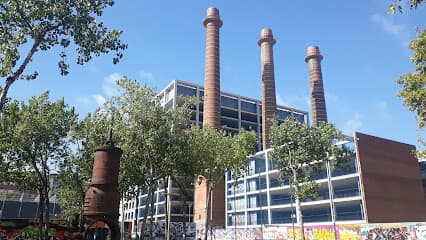
Located on the edge of Poble-sec along the Avenida del Paral·lel, the park is dominated by three massive brick chimneys—the skeletal remains of 'La Canadiense,' the power plant that once fueled this city’s industrial heart. This isn't just old masonry; this is hallowed ground for the working class. In 1919, a strike began right here that eventually forced the Spanish government to become the first in the world to implement an eight-hour workday. You can almost feel that defiant energy still vibrating in the air, though these days it’s channeled through the 'clack-clack' of skateboards hitting the pavement and the hiss of Aerosol cans.
This is the epicenter of the best street art Barcelona has to offer. Unlike the rest of the city, where graffiti is scrubbed away by the midnight cleaning crews, the walls here are legal. Through the Wallspot system, artists from all over the world come to claim a piece of concrete for a few hours or a few days. The 'gallery' changes constantly. You might see a hyper-realistic portrait of a local legend one morning, only to find it buried under a layer of neon-drenched bubble letters by sunset. It’s ephemeral, messy, and beautiful in a way that a museum could never capture.
The atmosphere is unapologetically urban. You’ve got skaters practicing kickflips on the ramps, breakdancers rehearsing on pieces of cardboard, and old men sitting on the few available benches, watching the chaos with a look of practiced indifference. It’s a 'hard' square—meaning there’s more cement than grass—and yes, it can be a bit dusty. In the evenings, it’s a prime spot for a 'botellón,' where local kids gather to drink cheap beer and talk loud. If that makes you nervous, stay in the hotel bar. But if you want to see where the city’s subcultures actually breathe, this is the place.
Is it worth visiting? If you have an appreciation for industrial heritage and the raw creativity of the street, then absolutely. It’s a window into the Poble-sec neighborhood, a place that has resisted the 'Disneyfication' that has swallowed the Gothic Quarter whole. It’s not pretty in a postcard way, but it’s real. You come here to see the ghosts of the industrial revolution rubbing shoulders with the kids of the digital one.
Don't expect amenities. The shade is sparse, the 'ecological' features are mostly aspirational, and the ground is often littered with the remnants of the previous night’s festivities. But there is a soul here that you won't find at the Sagrada Familia. It’s the sound of a city that refuses to be quiet, a place where the history of labor and the future of art collide on a slab of sun-baked concrete. Grab a cold beer from a nearby 'paki,' find a spot on a ledge, and just watch the paint dry. It’s the most authentic show in town.
Type
Park, Tourist attraction
Duration
45-90 minutes
Best Time
Late afternoon to see artists at work and skaters in action before the evening crowds arrive.
What People Say
street art(87)cement(20)dirt(15)botellón(14)ecological(10)gradient(9)dogs(9)homeless(6)
Features
Park
Tourist attraction
Categories
Street ArtIndustrial HeritageSkate ParkPublic Plaza
Ticket Prices
Free Admission
No tickets required
Opening Hours
- MondayOpen 24 hours
- TuesdayOpen 24 hours
- WednesdayOpen 24 hours
- ThursdayOpen 24 hours
- FridayOpen 24 hours
- SaturdayOpen 24 hours
- SundayOpen 24 hours
Must-See Highlights
The three 19th-century chimneys of the former power plant
The legal graffiti walls (Wallspot) featuring world-class street art
The central skate park area
The 'La Canadiense' commemorative plaque
Visitor Tips
Check the Wallspot website if you want to see which artists are scheduled to paint.
Combine a visit with a tapas crawl on nearby Carrer de Blai.
Don't expect a quiet picnic spot; this is a loud, active urban space.
Keep an eye on your belongings, as it's a high-traffic area for skaters and groups.
Good For
Street art photographersSkatersHistory buffsBudget travelersUrban explorers
Why Visit
The premier legal graffiti zone in Barcelona with ever-changing murals
Historic site of the 1919 strike that won the 8-hour workday
Iconic industrial architecture featuring three 72-meter tall brick chimneys
Nearby Landmarks
- 2-minute walk from Sala Apolo
- 5-minute walk from Carrer de Blai (tapas street)
- 10-minute walk from Maritime Museum (Drassanes)
- 12-minute walk from Mirador de Poble-sec
Accessibility
- Fully wheelchair accessible
- Flat concrete terrain
- Open public space
Location
Av. del Paral·lel, 49
Sants-Montjuïc, Barcelona
Nearby Hotels
Nearby Restaurants
In Sants-Montjuïc
ATTRACTION
Bolets1
Sants-Montjuïc
A gritty, earthy temple to the Catalan obsession with wild mushrooms, where the dirt is real, the fungi are seasonal gold, and the air smells like the damp floor of a Pyrenean forest.
0.0(0)
Tourist attraction
ATTRACTION
Montjuic aparca
Sants-Montjuïc
The unglamorous base camp for your Montjuïc assault. A tactical slab of asphalt where the city's chaos fades into the pine-scented ghosts of the 1992 Olympics.
0.0(0)
Tourist attraction
ATTRACTION
Паркінг Барселона
Sants-Montjuïc
A sprawling slab of industrial reality in the Zona Franca. No Gaudí here—just hot asphalt, diesel fumes, and the honest utility of a secure place to park your rig.
0.0(0)
Park
Frequently Asked Questions
Is Jardins de les Tres Xemeneies worth visiting?
Yes, if you are a fan of street art, industrial history, or skate culture. It is not a traditional green park, so don't expect gardens; go for the massive legal graffiti walls and the iconic industrial chimneys.
Can I legally paint graffiti at Jardins de les Tres Xemeneies?
Yes, but you must book a spot through the Wallspot platform (formerly Rebobinart). It is one of the few places in Barcelona where street art is legal and encouraged.
Is the park safe at night?
The park is a popular spot for 'botellón' (street drinking) and can feel a bit gritty after dark. While generally safe, it's best to stay aware of your surroundings as you would in any urban area with large crowds.
How do I get to the Three Chimneys park?
Take the L2 (Purple) or L3 (Green) Metro to the Paral·lel station. The park is a two-minute walk from the exit, located right on Avinguda del Paral·lel.
Reviews
0 reviews for Jardins de les Tres Xemeneies
No reviews yet. Be the first to share your experience!