3.0
1 verified reviews
About
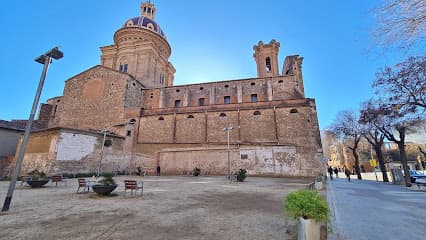
Sant Andreu isn’t really Barcelona. Not in the way the guidebooks want you to think. It’s a village that got swallowed by the city’s expansion but never quite digested. It’s got its own rhythm, its own pride, and a long, jagged history of standing its ground. If you want to see where that spirit lives, you don't go to a museum. You go to a small, paved square tucked next to the massive Parròquia de Sant Andreu de Palomar. This is the Jardins de les Dones de la Motor Ibèrica, and it’s a monument to a fight that most tourists will never hear about.
To understand this place, you have to go back to June 1976. Franco was dead, but the dictatorship’s ghost was still wearing combat boots. The Motor Ibèrica factory—the guys who built the iconic Ebro trucks—had fired 1,800 workers after a massive strike. Families were being crushed. That’s when the women stepped in. Wives, mothers, and sisters, led by figures like the indomitable Maruja Ruiz, didn't just protest; they occupied the church. For 28 days, nearly 300 women and children lived inside the pews of Sant Andreu de Palomar. They turned the sacristy into a school for the kids and the altar into a logistics hub. The neighborhood fed them, smuggling in bread and news while the police circled outside like sharks. It wasn't just a labor strike; it was a feminist awakening in a country that was just beginning to breathe again.
The occupation ended in blood and broken glass on June 28th when the police finally smashed through the doors and dragged the women out one by one. This square, officially named in 2016 to honor those women, sits on the very ground where that struggle played out. If you’re looking for manicured rose bushes and soft grass to lie on, you’re in the wrong place. This is a 'placeta'—a small urban square. It’s paved, it’s functional, and it’s lived-in. You’ll see old men arguing about football on the benches, kids kicking balls against the church walls, and locals walking their dogs. It’s a piece of the real Sant Andreu, stripped of any tourist-facing veneer.
As of late 2024 and into 2025, the city has been working with the neighborhood to renovate the space. The goal isn't to make it 'pretty' for the Instagram crowd, but to make it greener and more 'dignified' for the people who actually live here. It’s a designated ZUC (Zona d'Ús Compartit), meaning there are specific hours when dogs can run off-leash, adding to the chaotic, communal energy of the barrio.
Don’t come here expecting a 'must-see' attraction. Come here to sit for twenty minutes and feel the weight of the history. Look at the church doors and imagine the police charging through. Look at the plaque and remember that labor rights weren't a gift; they were taken by people who had nothing left to lose. It’s a quiet, unassuming corner of the city that represents the backbone of Barcelona’s working class. If you can’t appreciate the grit of a paved square where people once fought for their lives, then stay in the Eixample. But if you want to see the soul of a neighborhood that refuses to be tamed, Sant Andreu is waiting for you.
Type
Park
Features
Park
Categories
HistoryLabor RightsUrban SquareFeminism
Accessibility
- Flat paved surface
- Wheelchair accessible
- Stroller friendly
Location
Carrer dels Segadors, 5
Sant Andreu, Barcelona
Nearby
ATTRACTION
Plaça d'Orfila
100 m · Sant Andreu
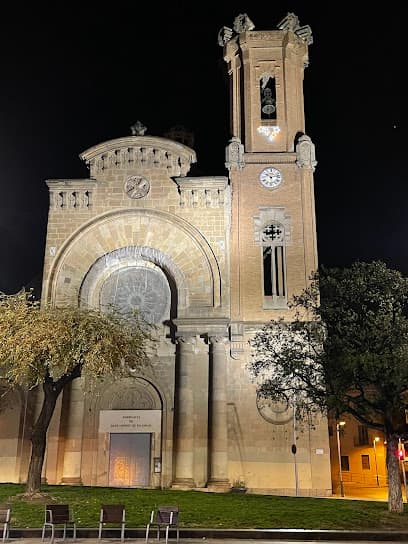
The stubborn core of Sant Andreu, where the ghost of an independent village lingers over cheap vermouth, old men on benches, and a church dome that actually means something.
4.5(114)
Garden
ATTRACTION
Jardins d'Elisa García Sáez
100 m · Sant Andreu
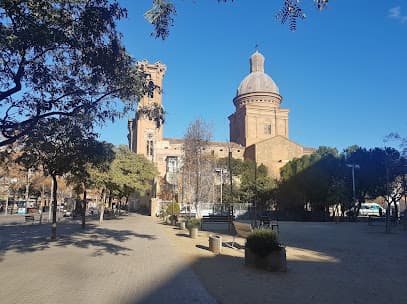
A concrete-edged sanctuary in Sant Andreu named for a Civil War nurse. It’s not a botanical wonderland; it’s a raw slice of local life where history meets the laundry lines.
2.6(5)
Garden
RESTAURANT
Marín by Öuzö
€€50 m · Sant Andreu
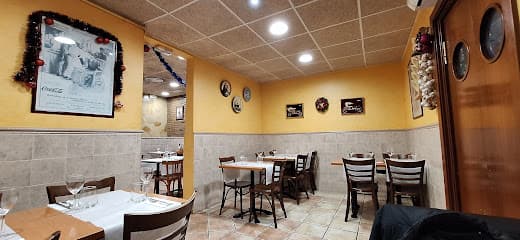
A loud, unapologetic temple to the neighborhood tapa in Sant Andreu. No tourist fluff, just legendary bravas, fresh shellfish, and the soul of a barrio that refuses to be gentrified.
4.4(1K)
Tapas barTraditional restaurant
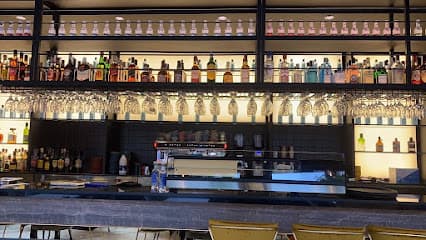
RESTAURANT
LeChamp
€€50 m · Sant Andreu
A no-nonsense Sant Andreu stronghold where the bravas are legendary, the portions are massive, and the only thing missing is a crowd of tourists with selfie sticks.
4.0(606)
Bar & grill
HOTEL
Catalonia La Maquinista
€750 m · Sant Andreu
Forget the Gothic Quarter's humidity and the Rambla's pickpockets. This is Barcelona for the pragmatist: clean, quiet, and parked right next to a massive open-air cathedral of commerce.
4.4(1K)
Hotel
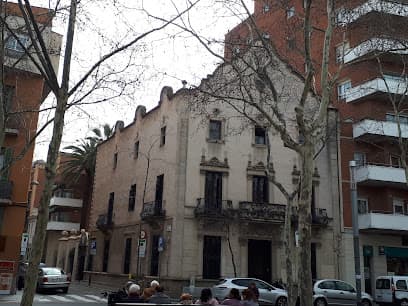
HOTEL
Hotel d'Entitats Can Guardiola
800 m · Sant Andreu
Don't come here looking for a mint on your pillow. This 1920s modernist gem is a 'hotel' for the soul of Sant Andreu, housing the activists and dreamers of the barrio.
4.4(7)
Civic centerEcologists association
Frequently Asked Questions
Is Jardins de les Dones de la Motor Ibèrica worth visiting?
Yes, if you are interested in Barcelona's labor and feminist history. It is a modest urban square, not a traditional park, but its historical significance as the site of the 1976 church occupation makes it a powerful local landmark.
What is the history of the Motor Ibèrica strike?
In 1976, 1,800 workers were fired from the Motor Ibèrica factory. In response, 300 women and children occupied the nearby Sant Andreu de Palomar church for 28 days to demand their reinstatement, a landmark event in Spanish labor history.
How do I get to Sant Andreu from central Barcelona?
The easiest way is to take the L1 (Red Line) Metro to the 'Sant Andreu' station. The gardens are a short 3-minute walk from the station, located right next to the main church.
Are there facilities for dogs in the park?
Yes, the square is a designated ZUC (Shared Use Zone), meaning dogs are allowed off-leash during specific morning and evening hours. Check the local signage for the current schedule.
Reviews
0 reviews for Jardins de les Dones de la Motor Ibèrica
No reviews yet. Be the first to share your experience!