4.2
637 verified reviews
About
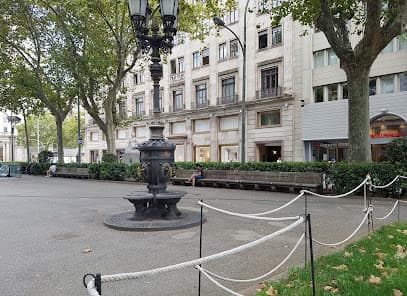
Gran Via de les Corts Catalanes is a beast. It’s a ten-lane river of steel, glass, and burning fossil fuels that cuts through the heart of the Eixample district like a surgical scar. It is loud, it is relentless, and it is the primary artery pumping the lifeblood of Barcelona from one end to the other. And right there, at the chaotic intersection where the moneyed elegance of Passeig de Gràcia meets the industrial roar of the Gran Via, sits the Jardins de la Reina Victòria.
Let’s be honest: this isn’t the hanging gardens of Babylon. It’s a glorified traffic island, a triangle of dirt, stone, and chlorophyll fighting a losing battle against the city’s carbon footprint. But in a city as dense and frantic as Barcelona, every square inch of shade is a godsend. Named after Victoria Eugenie of Battenberg—the English-born Queen of Spain who probably wouldn't recognize this patch of land today—the gardens serve as a necessary buffer zone. It’s the place where you stop to catch your breath after realizing you’ve just spent three hours dodging selfie sticks at Casa Batlló.
The centerpiece of this little urban oasis is the monument to Joan Güell i Ferrer. If the name sounds familiar, it’s because his son, Eusebi Güell, was the guy who bankrolled Antoni Gaudí. The elder Güell was an industrialist, a man of the 19th century whose statue has seen better days—and worse. The original monument was torn down during the heat of the Spanish Civil War in 1936, a victim of the revolutionary fervor that swept these streets. What you see now is a reconstruction, a stone ghost of the past looking down at the commuters rushing toward the Passeig de Gràcia metro station. It’s a reminder that in Barcelona, even the quietest corners are built on layers of conflict and reinvention.
Then there’s the Font de la Gran Via. It’s a solid, dependable fountain that provides a much-needed acoustic shield. The sound of splashing water does its best to drown out the screech of the L2 metro line rumbling beneath your feet and the incessant whine of delivery scooters. It’s not the Trevi, but when the afternoon sun hits the spray at just the right angle, you can almost forget you’re surrounded by six lanes of gridlock.
The benches here are the real stars. They are worn smooth by thousands of backs—tourists frantically checking Google Maps, elderly locals who have watched the neighborhood transform from a quiet residential grid into a high-end shopping mall, and office workers snatching ten minutes of sunlight with a cheap espresso. It’s a front-row seat to the theater of the street. You see the fashionistas strutting toward the luxury boutiques and the tired commuters disappearing into the maw of the subway.
Is it worth a dedicated pilgrimage? Probably not. If you’re looking for botanical wonders, go to Montjuïc. But if you want to understand the real, unvarnished rhythm of Eixample, sit here for twenty minutes. Feel the vibration of the city in your teeth. Smell the mix of jasmine and diesel. The Jardins de la Reina Victòria is Barcelona in a nutshell: historic, slightly soot-stained, incredibly loud, and yet, somehow, exactly where you need to be when the weight of the city starts to feel like too much. It’s a place to regroup, reload, and dive back into the beautiful, messy fray.
Type
Garden, Tourist attraction
What People Say
metro(6)fountain(6)benches(5)monument(3)traffic(3)shadow(3)trees(3)square(3)
Features
Garden
Tourist attraction
Categories
GardenMonumentHistoryUrban Space
Opening Hours
- Monday6 AM to 10 PM
- Tuesday6 AM to 10 PM
- Wednesday6 AM to 10 PM
- Thursday6 AM to 10 PM
- Friday6 AM to 10 PM
- Saturday6 AM to 10 PM
- Sunday6 AM to 10 PM
Accessibility
- Flat paved surfaces
- Wheelchair accessible
- Accessible via metro with elevators
Location
Gran Via de les Corts Catalanes, 632
Eixample, Barcelona
Nearby
ATTRACTION
Font Monumental del Passeig de Gràcia
50 m · Eixample
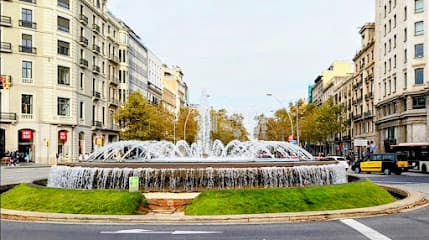
A stone-and-water centerpiece by Jujol, standing defiant in a swirl of Eixample traffic, marking the grand intersection where the city’s grid meets the high-fashion chaos of Passeig de Gràcia.
4.3(140)
Tourist attraction
ATTRACTION
Roundabout water fountain
100 m · Eixample
A defiant explosion of water and stone pinned between luxury boutiques and the relentless roar of Eixample traffic. It’s Barcelona’s most beautiful, exhaust-choked intersection.
5.0(2)
Tourist attraction
RESTAURANT
Batea
50 m · Eixample
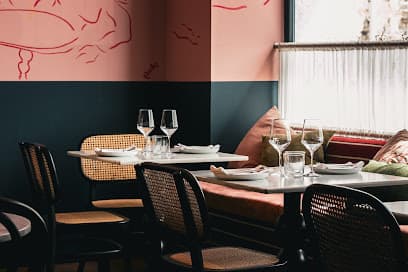
A high-voltage seafood bistro in Eixample where Galician soul meets Barcelona cool, serving up briny oysters, killer cocktails, and a liquid-gold tortilla that demands your full attention.
4.7(907)
RestaurantSeafood restaurant
RESTAURANT
Ciutat Comtal
€€100 m · Eixample
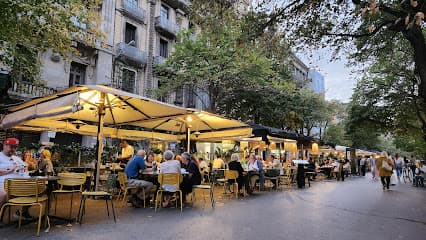
A tapas bar on Rambla de Catalunya in the Eixample, open daily from 8 AM, rated 4.4 from 19,219 Google reviews that mention razor clams most.
4.4(19K)
Tapas barSpanish restaurant

HOTEL
El Avenida Palace
€€€€50 m · Eixample
Step into 1952 at this old-world matriarch of the Gran Via, where The Beatles once hid from screaming fans and the marble lobby still whispers of old-school Catalan high society.
4.3(1K)
Hotel
HOTEL
Hotel Onix Rambla
€100 m · Eixample
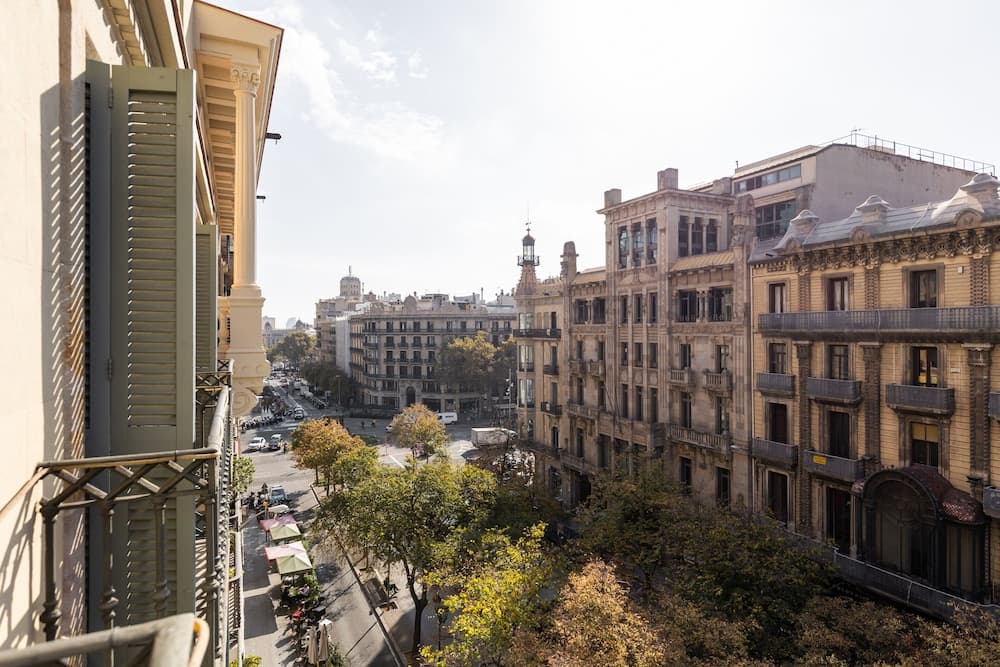
A sharp, no-nonsense base camp on the civilized side of the Ramblas. It’s got a rooftop plunge pool for the heat and balconies for watching the Eixample elite pass by.
4.1(650)
Hotel
Frequently Asked Questions
Is Jardins de la Reina Victòria worth visiting?
It's worth a stop if you're already in Eixample or shopping on Passeig de Gràcia. It's a great spot to rest your legs and see the Joan Güell monument, but don't expect a massive park.
How do I get to Jardins de la Reina Victòria?
The gardens are located right at the Passeig de Gràcia metro station (Lines L2, L3, and L4). It's also a short walk from the Plaça de Catalunya transport hub.
Is there an entrance fee for the gardens?
No, it is a public space and completely free to enter 24 hours a day.
What is the best time to visit?
Late afternoon is best when the sun hits the fountain, though it can be noisy during peak traffic hours. It's a convenient spot for a quick break between sightseeing stops.
Reviews
0 reviews for Jardins de la Reina Victòria
No reviews yet. Be the first to share your experience!