3.0
1 verified reviews
About
Barcelona’s Eixample is a masterpiece of urban planning, but let’s be honest: it’s a relentless, noisy grid of stone, exhaust, and the never-ending whine of scooters. Ildefons Cerdà, the man who dreamed up this neighborhood, originally envisioned every block having a lush, green heart where residents could breathe. Then the developers moved in, the greed took over, and those green hearts were filled with warehouses, workshops, and parking lots. The Jardí d’Assumpció Català is one of the small, hard-won victories where the city has clawed back that space for the people who actually live here.
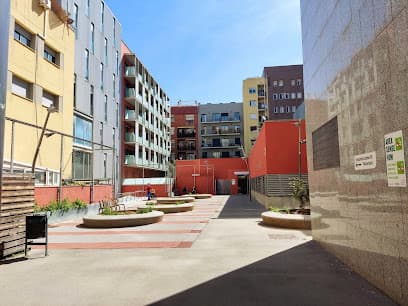
You won’t find this on the front of a postcard. There are no soaring spires or trencadís mosaics here. To find it, you have to look for a nondescript entrance on Carrer del Comte Borrell, near the massive brick complex of the Escola Industrial. You walk through a passage, and suddenly, the roar of the city drops by twenty decibels. You’re standing in an 'interior d’illa'—an interior block garden. It’s a rectangular slice of peace carved out of the surrounding apartment buildings, where laundry hangs from balconies and the neighbors look down into the courtyard like spectators in a low-stakes theater.
The garden is named after Assumpció Català i Poch, a woman who deserved a hell of a lot more than a quiet courtyard. She was the first woman to become a professional astronomer in Spain, a pioneer who spent her nights at the University of Barcelona tracking the movements of stars and planets while the rest of the country was still catching up to the 20th century. There’s a quiet dignity in naming this specific place after her; it’s a spot where you can actually look up and see a patch of sky without a crane or a tourist bus blocking the view.
Inside, it’s functional, not flashy. There’s a playground where local kids burn off energy while their parents sit on benches, scrolling through their phones or arguing about the latest Barça match. There are tipuana and magnolia trees that provide a desperate canopy of shade during the brutal July heat. The ground is a mix of hard-packed earth and paving stones, worn smooth by the feet of people who aren't trying to 'experience' anything—they’re just living. You’ll see old men in flat caps staring into the middle distance and students from the nearby university trying to cram for exams in the only quiet spot they can find.
Is it worth a cross-town trek? Probably not if you’ve only got forty-eight hours in the city and a list of Gaudí hits to check off. But if you’re tired of being elbowed by crowds on La Rambla, if your head is spinning from the sheer density of the Eixample, or if you just want to see what real life looks like in a neighborhood that is increasingly being sold off to the highest bidder, this is where you go. It’s an honest place. It doesn’t pretend to be anything other than a backyard for the block.
There is a specific kind of melancholy and beauty in these interior gardens. They represent the Barcelona that could have been—a city of light and air—and the Barcelona that persists despite everything. Grab a coffee from a nearby granja, find a bench that isn't occupied by a pigeon, and just sit. Listen to the sound of a ball hitting a fence and the distant hum of the city you just escaped. It’s not a 'must-see' attraction; it’s a 'must-breathe' sanctuary. And in a city as frantic as this one, that’s worth more than any souvenir.
Type
Garden
Duration
30-45 minutes
Best Time
Late afternoon when the sun hits the upper balconies and the neighborhood comes alive with locals.
Features
Garden
Categories
GardenUrban SpaceHistory
Ticket Prices
Free Admission
No tickets required
Opening Hours
- Monday10 AM to 8 PM
- Tuesday10 AM to 8 PM
- Wednesday10 AM to 8 PM
- Thursday10 AM to 8 PM
- Friday10 AM to 8 PM
- Saturday10 AM to 8 PM
- Sunday10 AM to 8 PM
Must-See Highlights
The astronomy-themed mural and plaque dedicated to Assumpció Català
The mature Tipuana trees that bloom with yellow flowers in early summer
The unique perspective of Eixample architecture from the inside of the block
Visitor Tips
Enter from Comte Borrell for the easiest access.
The garden closes at dusk, so don't plan a late-night visit.
Pick up a pastry at a nearby bakery on Carrer de Rosselló to enjoy on a bench.
Good For
Families with childrenSolo travelers seeking quietArchitecture and urban planning enthusiastsBudget travelers
Why Visit
Authentic 'interior d'illa' experience away from tourist crowds
Dedicated to Spain's first female professional astronomer
Quiet sanctuary located near the busy Hospital Clínic area
Nearby Landmarks
- 5-minute walk from Hospital Clínic
- 8-minute walk from Mercat del Ninot
- 10-minute walk from Escola Industrial
- 12-minute walk from Plaça de Francesc Macià
Accessibility
- Flat entrance
- Accessible pathways
- Benches available
Location
Carrer del Comte Borrell, 305
Eixample, Barcelona
Nearby Hotels
Nearby Restaurants
In Eixample
ATTRACTION
Mural Margalef
Eixample
A towering splash of Mediterranean blue breaking the rigid geometry of Eixample, Joan Margalef’s mural is a visceral reminder that Barcelona’s soul isn't just in its museums.
0.0(0)
Tourist attraction
ATTRACTION
Mural Margalef
Eixample
A geometric middle finger to urban decay, this massive kinetic mural by Eduard Margalef turns a drab Eixample blind wall into a rhythmic, shifting explosion of optical art.
0.0(0)
Tourist attraction
ATTRACTION
Happy Foodies
Eixample
Forget the plastic-wrapped tourist traps; this is a deep dive into the grease, garlic, and soul of Catalan cooking where you actually learn to handle a knife and a porrón.
0.0(0)
Sightseeing tour agencyTour agency
Frequently Asked Questions
Is Jardí d'Assumpció Català worth visiting?
It is worth it if you are already in the Eixample or near Hospital Clínic and need a quiet break from the city noise. It is a local neighborhood spot, not a major tourist landmark.
Who was Assumpció Català?
She was a pioneering Spanish astronomer and the first woman to hold a professional astronomy post at a Spanish university (University of Barcelona).
How do I find the entrance to the garden?
The main entrance is through a pedestrian passageway located at Carrer del Comte Borrell, 305, between the streets of Còrsega and Rosselló.
Is there an entrance fee for the garden?
No, admission is free. Like most interior block gardens in Barcelona, it is a public space open during daylight hours.
Reviews
0 reviews for Jardí dʼAssumpció Català
No reviews yet. Be the first to share your experience!