4.1
7 verified reviews
About
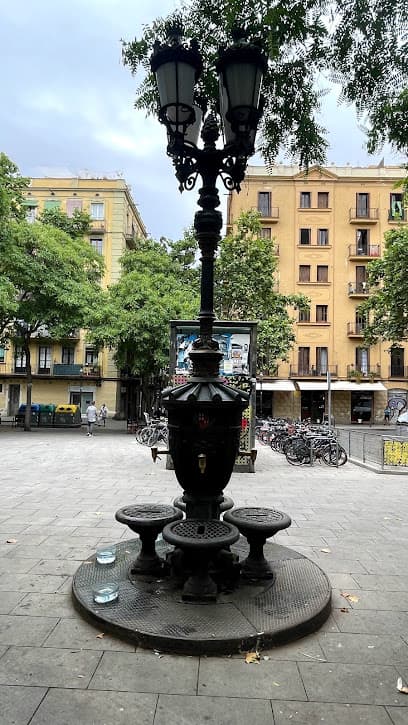
If you want the choreographed waterworks and the Freddie Mercury soundtrack, head up the hill to the Magic Fountain with the rest of the camera-clutching masses. But if you want to see how this city actually breathes, you come to Poble Sec. Specifically, you come to Plaça del Sortidor. This isn’t a 'must-see' on some glossy brochure. It’s a neighborhood lung, a concrete clearing in the dense, sloping grid of Sants-Montjuïc where the Font de la Plaça del Sortidor—the Fountain Farola—stands as a quiet, cast-iron sentinel.
To understand this fountain, you have to understand the name of the barrio. Poble Sec translates to 'Dry Village.' Back in the day, this was the land outside the city walls, a place of factories and workers that the municipal water lines conveniently forgot. For a long time, it was a dust bowl. When the city finally saw fit to install a 'sortidor'—a spout—in the late 19th century, it wasn't an aesthetic choice. It was a lifeline. The square grew around the water, and the neighborhood grew around the square. The current fountain, a classic Barcelona design topped with a street lamp, is the descendant of that original struggle for a basic human right.
Standing in the Plaça del Sortidor today, you aren't looking at a monument; you’re looking at a social anchor. The air here smells of strong café solo, cheap tobacco, and the occasional whiff of frying garlic from the surrounding tapas bars. It’s a place where the sound of clinking glasses from the terraces competes with the shouts of kids kicking a deflated football against the stone. The fountain itself is unpretentious. It’s got that dark, heavy ironwork that defines the city’s industrial age, four spouts that have quenched the thirst of generations of laborers, anarchists, and immigrants.
This is one of the best things to do in Poble Sec if your idea of travel involves sitting still and shutting up. You grab a seat at one of the unglamorous metal tables on the square, order a vermut, and watch the theater of the everyday. You’ll see the old men who have lived here since the days of the dictatorship, their faces etched like the Pyrenees, arguing over things that happened forty years ago. You’ll see the new wave of Poble Sec—the artists, the young families, the people who moved here because the Gothic Quarter became a theme park. They all meet here, under the dim glow of the Farola.
Is it worth visiting? If you’re looking for a 'grammable' moment of high-art architecture, probably not. But if you’re looking for the soul of Barcelona in 2025, it’s essential. It’s a reminder that the city isn't just a collection of Gaudí buildings and overpriced paella; it’s a collection of neighborhoods that refuse to be erased. The fountain isn't 'magic' because it changes color; it’s magic because it’s still here, still flowing, and still the reason people gather in the heat of a Mediterranean afternoon. It’s honest. It’s functional. It’s Poble Sec in a nutshell. Don't expect a show. Just expect the truth.
Type
Fountain
Duration
30-45 minutes
Best Time
Late afternoon or early evening when the terraces are full and the neighborhood comes alive.
Features
Fountain
Categories
HistoryPublic SquareLocal Culture
Ticket Prices
Free Admission
No tickets required
Opening Hours
- MondayOpen 24 hours
- TuesdayOpen 24 hours
- WednesdayOpen 24 hours
- ThursdayOpen 24 hours
- FridayOpen 24 hours
- SaturdayOpen 24 hours
- SundayOpen 24 hours
Must-See Highlights
The cast-iron lamp post design typical of 19th-century Barcelona
The surrounding local terraces like Bar Sortidor
The vibrant neighborhood life that centers around the water spout
Visitor Tips
Don't just look at the fountain; grab a vermut at a nearby bar and people-watch.
Combine this with a walk down Carrer de Blai for pinchos.
It's a great spot to escape the heat under the trees in the square.
Good For
Solo travelersBudget travelersCulture seekersLocal life enthusiasts
Why Visit
Authentic neighborhood social hub away from tourist crowds
Historical symbol of Poble Sec's industrial and working-class roots
Surrounded by some of the city's most genuine local tapas terraces
Nearby Landmarks
- 5-minute walk from Carrer de Blai (tapas street)
- 4-minute walk from Quimet & Quimet
- 8-minute walk from Refugi 307 (Air Raid Shelter)
- 15-minute walk from the Magic Fountain of Montjuïc
Accessibility
- Public square is flat and wheelchair accessible
- Pedestrianized area
Location
Plaça del Sortidor
Sants-Montjuïc, Barcelona
Nearby Hotels
Nearby Restaurants
In Sants-Montjuïc
ATTRACTION
Bolets1
Sants-Montjuïc
A gritty, earthy temple to the Catalan obsession with wild mushrooms, where the dirt is real, the fungi are seasonal gold, and the air smells like the damp floor of a Pyrenean forest.
0.0(0)
Tourist attraction
ATTRACTION
Montjuic aparca
Sants-Montjuïc
The unglamorous base camp for your Montjuïc assault. A tactical slab of asphalt where the city's chaos fades into the pine-scented ghosts of the 1992 Olympics.
0.0(0)
Tourist attraction
ATTRACTION
Паркінг Барселона
Sants-Montjuïc
A sprawling slab of industrial reality in the Zona Franca. No Gaudí here—just hot asphalt, diesel fumes, and the honest utility of a secure place to park your rig.
0.0(0)
Park
Frequently Asked Questions
Is Fountain Farola worth visiting?
Only if you want to experience a real, non-touristy Barcelona neighborhood. It's a local social hub, not a major monument or a light show.
What is the history of Plaça del Sortidor?
The square is named after the fountain (sortidor) installed in the 1860s to provide water to Poble Sec, which was known as the 'Dry Village' due to its lack of water infrastructure.
How do I get to Plaça del Sortidor?
Take the L3 (Green Line) Metro to Poble Sec station. From there, it's a 5-minute walk uphill into the heart of the neighborhood.
Reviews
0 reviews for Fountain Farola
No reviews yet. Be the first to share your experience!