4.1
40 verified reviews
About
If you want the neon-lit, choreographed water show and the thumping speakers of the Magic Fountain, keep walking down the hill toward Plaça d’Espanya. You’ll find plenty of company there, clutching selfie sticks and overpriced gelato. But if you want to understand the quiet, slightly melancholic soul of Montjuïc—the mountain of the Jews, the mountain of ghosts—you stop here, at the Font del passeig de Santa Madrona. It’s a stone-carved middle finger to the flashy and the temporary, a monument to a woman the city largely decided to forget.
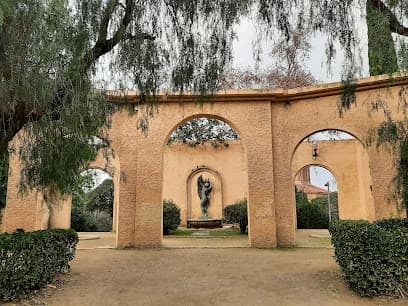
This isn't just a tap in the wall. It’s a piece of the 1929 International Exposition’s grand design, back when Barcelona was desperate to prove it was a world-class player. They brought in the heavy hitters, including Josep Puig i Cadafalch, the man who helped define the look of modern Barcelona. He didn't just build a fountain; he built a shrine. It’s neoclassical, stern, and beautiful in that way only old stone can be when it’s been baked by the Mediterranean sun for a century. The fountain sits tucked into the slope, a niche housing the statue of Santa Madrona herself, looking out over the pass with an expression that suggests she’s seen it all and isn't particularly impressed.
Let’s talk about the saint. Everyone knows La Mercè—she gets the big parties, the fire-runs, and the concerts. Everyone knows Santa Eulàlia and her thirteen geese. But Madrona? She’s the third wheel of Barcelona’s patron saints. Legend says she was a local girl who died in Greece, and when a ship tried to carry her relics away, the sea turned violent every time they passed Montjuïc. The message was clear: she wanted to stay home. For centuries, her chapel on this hill was a place of pilgrimage. Now, she’s mostly a name on a street sign and this fountain, where the water—if it’s running at all—trickles with a sort of dignified indifference.
The walk up here from Poble Sec is a slow burn. You leave the noise of the tapas bars and the scooters behind, and the air starts to change. It gets cooler, smelling of pine needles and damp earth. You’ll pass the Museu d'Arqueologia de Catalunya, a massive brick beast of a building that holds the bones of the people who lived here before the tourists arrived. The fountain is right there, a quiet sentinel. It’s the kind of place where you see locals actually living—not the 'authentic' experience sold in brochures, but real people sitting on a bench, smoking a cigarette, or staring into the trees.
Is it spectacular? No. It won't make your TikTok followers jealous. But it’s honest. It’s a reminder that Barcelona is a city built in layers, and sometimes the most interesting layers are the ones that aren't shouting for your attention. The stone is worn, the basin might have a few stray leaves in it, and the silence is only broken by the occasional bird or the distant hum of the city below. It’s a place for the wanderers, the people who find beauty in the cracks of the pavement and the stories of forgotten saints.
Don't come here looking for a show. Come here to breathe. Come here to see what remains when the crowds go home. It’s a small, stone-carved piece of history that asks for nothing and gives you a moment of genuine, unmanufactured peace in a city that is increasingly forgetting how to be quiet. If you’re lucky, the water will be flowing, a cool thread of history connecting you to the pilgrims who climbed this hill a thousand years ago. If not, the stone still tells the story just fine.
Type
Park
Duration
15-30 minutes
Best Time
Late afternoon when the light hits the stone and the shadows of the trees lengthen.
What People Say
strolling(2)
Features
Park
Categories
ArchitectureHistoryPublic ArtPark
Ticket Prices
Free Admission
No tickets required
Opening Hours
- MondayOpen 24 hours
- TuesdayOpen 24 hours
- WednesdayOpen 24 hours
- ThursdayOpen 24 hours
- FridayOpen 24 hours
- SaturdayOpen 24 hours
- SundayOpen 24 hours
Must-See Highlights
The statue of Santa Madrona in the central niche
The neoclassical stonework by Puig i Cadafalch
The surrounding gardens of the 1929 International Exposition
Visitor Tips
Combine this with a visit to the Archaeological Museum right next door.
Don't expect a massive water display; the fountain is often dry or a small trickle.
It's a great spot for a quiet rest while hiking up to the Montjuïc Castle.
Good For
History buffsArchitecture loversSolo travelersBudget travelers
Why Visit
Designed by legendary Modernista architect Josep Puig i Cadafalch
Dedicated to Santa Madrona, the 'forgotten' third patron saint of Barcelona
A peaceful alternative to the crowded Magic Fountain nearby
Nearby Landmarks
- 2-minute walk from Museu d'Arqueologia de Catalunya (MAC)
- 3-minute walk from Teatre Lliure
- 10-minute walk from Fundació Joan Miró
- 12-minute walk from Poble Espanyol
Accessibility
- Outdoor public space
- Paved walkways nearby
- Slight incline due to hill location
Location
Passeig de Santa Madrona, 25
Sants-Montjuïc, Barcelona
Nearby Hotels
Nearby Restaurants
In Sants-Montjuïc
ATTRACTION
Bolets1
Sants-Montjuïc
A gritty, earthy temple to the Catalan obsession with wild mushrooms, where the dirt is real, the fungi are seasonal gold, and the air smells like the damp floor of a Pyrenean forest.
0.0(0)
Tourist attraction
ATTRACTION
Montjuic aparca
Sants-Montjuïc
The unglamorous base camp for your Montjuïc assault. A tactical slab of asphalt where the city's chaos fades into the pine-scented ghosts of the 1992 Olympics.
0.0(0)
Tourist attraction
ATTRACTION
Паркінг Барселона
Sants-Montjuïc
A sprawling slab of industrial reality in the Zona Franca. No Gaudí here—just hot asphalt, diesel fumes, and the honest utility of a secure place to park your rig.
0.0(0)
Park
Frequently Asked Questions
Is Font del passeig de Santa Madrona worth visiting?
Yes, if you appreciate quiet history and architecture away from the main tourist crowds. It's a beautiful example of 1929 Expo design by Puig i Cadafalch, though it's a subtle landmark rather than a major spectacle.
Who was Santa Madrona?
She is one of the three patron saints of Barcelona. According to legend, she was a local woman whose relics refused to leave Montjuïc, leading to her becoming a protector of the city, though she is less celebrated today than La Mercè.
How do I get to the fountain?
It is located on Passeig de Santa Madrona in Montjuïc. You can walk up from the Poble Sec metro station (L3) or take the 55 bus, which drops you nearby at the Archaeological Museum.
Is there an entrance fee?
No, the fountain is located in a public space and is completely free to visit at any time.
Reviews
0 reviews for Font del passeig de Santa Madrona
No reviews yet. Be the first to share your experience!