About
If you’ve had enough of the neon-soaked fever dream of the city center, you head uphill. You keep going until the air gets cooler and the sound of scooters is replaced by the rustle of cypress trees. This is Sarrià, the part of Barcelona that still feels like a village that happens to be inhabited by people with very large bank accounts. And tucked away here, at Calle de los Monjes 15, is a place that defies the modern world: the gardens of the Monestir de Pedralbes, often referred to by those in the know for its botanical centerpiece, the Ficus carica—the ancient fig tree that anchors the soul of this place.
This isn’t a 'park' in the way you’re thinking. There are no frisbees, no kiosks selling overpriced water, and no buskers playing 'Wonderwall.' This is a medieval medicinal garden, a reconstruction of the 'Jardí Petit' where the Poor Clare nuns once grew the herbs and roots that kept them alive and cured the local sick. It is one of the best gardens in Barcelona precisely because it doesn't try to entertain you. It just exists, smelling of rosemary, lavender, and damp stone.
When you walk through the gates of the Monestir de Pedralbes, the first thing that hits you is the silence. It’s heavy. It’s the kind of silence that makes you want to apologize for your own footsteps. The cloister is one of the largest and most complete Gothic cloisters in the world, three stories of elegant arches surrounding a central garden that feels like a portal to 1326. The Ficus carita (or carica, if we’re being botanically pedantic) stands as a testament to the Mediterranean's enduring relationship with the land. It’s a gnarled, beautiful thing that has seen empires rise and fall while it just focused on growing fruit.
The medicinal garden itself is a masterclass in functional beauty. You’ll find over fifty species of plants that were used in the Middle Ages to treat everything from toothaches to the plague. There’s something deeply grounding about seeing the actual plants that formed the basis of human survival for centuries. It’s a reminder that before we had apps and pharmacies, we had dirt and knowledge. The way the light hits the orange trees in the late afternoon, casting long shadows across the stone walkways, is enough to make even the most cynical traveler stop and breathe.
Is Monestir de Pedralbes worth it? If you’re looking for a thrill, no. If you want to see where the 14th-century Queen Elisenda de Montcada decided to spend her widowhood in quiet contemplation, then yes. It’s a hike to get here—you’ll need to take the L6 train or a bus and then walk uphill—but that’s the point. The distance acts as a filter. It keeps out the casual tourists who just want a selfie with a monument and leaves the space for people who actually want to feel the weight of history.
Don't expect a gift shop full of plastic junk. Expect a quiet museum, a stunning church, and a garden that asks nothing of you. It’s one of the few places left in this city where you can actually hear yourself think. Bring a book, or better yet, bring nothing. Just sit by the fountain, look at the fig tree, and realize that the world is a lot older and a lot quieter than the Ramblas would have you believe.
Type
Garden
Duration
1-2 hours
Best Time
Sunday after 3 PM for free entry or weekday mornings for total solitude.
Guided Tours
Available
Audio Guide
Available
Features
Garden
Categories
GardenArchitectureHistoryReligious Site
Ticket Prices
adult€5.00
child€0.00
senior€3.50
Must-See Highlights
The three-story Gothic Cloister
The Medieval Medicinal Garden
St. Michael's Chapel with 14th-century murals
The tomb of Queen Elisenda de Montcada
Visitor Tips
Combine this with a visit to the old town of Sarrià for a local lunch.
The walk from the metro is uphill, so wear comfortable shoes.
Check the monastery website for temporary exhibitions in the dormitory.
Good For
History buffsArchitecture loversSolo travelers seeking peaceCouples
Why Visit
One of the largest and best-preserved Gothic cloisters in the world
Authentic 14th-century medicinal garden reconstruction
Absolute silence and escape from the Barcelona tourist crowds
Nearby Landmarks
- Palau Reial de Pedralbes (12-minute walk)
- Parc de l'Oreneta (12-minute walk)
- Plaça de Sarrià (15-minute walk)
- Pavellons Güell (15-minute walk)
Accessibility
- Wheelchair accessible areas
- Accessible restrooms
- Elevators available for upper cloister levels
Location
Calle de los Monjes, 15
Sarrià-Sant Gervasi, Barcelona
Nearby Hotels
Nearby Restaurants
In Sarrià-Sant Gervasi
ATTRACTION
Casa Narcís Bosch
Sarrià-Sant Gervasi
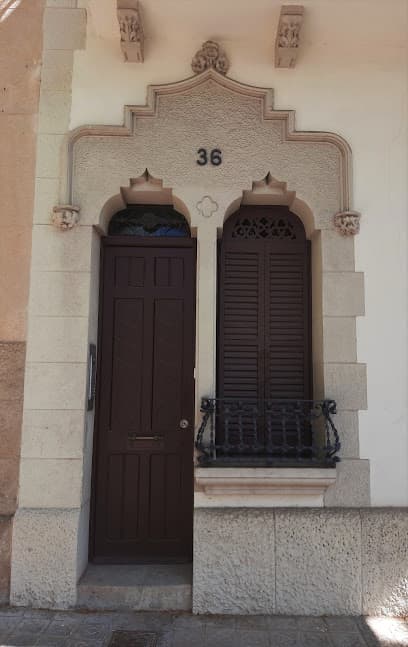
A Modernista fever dream tucked away in Sarrià, where Salvador Valeri i Pupurull’s stone curves and ironwork prove that Gaudí wasn't the only genius in town.
0.0(0)
Tourist attraction
ATTRACTION
Plaça de Calvó
Sarrià-Sant Gervasi
A quiet, unpretentious slice of Sant Gervasi where the only drama is a toddler losing a shoe. No Gaudí, no crowds, just trees, benches, and the sound of real life in the Zona Alta.
0.0(0)
Park
ATTRACTION
Pipican Piscines i Esports
Sarrià-Sant Gervasi
A dirt-caked arena of canine chaos set against the polished backdrop of Sarrià-Sant Gervasi, where the neighborhood’s elite and their four-legged shadows come to settle scores.
0.0(0)
Park
Frequently Asked Questions
Is Monestir de Pedralbes worth visiting?
Yes, if you value peace and Gothic architecture over crowded tourist spots. It offers one of the most serene and historically authentic experiences in Barcelona, far from the city noise.
What should I see at the Monestir de Pedralbes garden?
Don't miss the reconstructed medieval medicinal garden and the massive three-story Gothic cloister. The ancient fig tree (Ficus carica) and the tomb of Queen Elisenda are also highlights.
How do I get to Calle de los Monjes 15?
Take the FGC train (Line L6) to Reina Elisenda station, then it's a 10-minute uphill walk. Alternatively, use the V3 or H4 bus lines which stop nearby.
When is the best time to visit for free?
The monastery and its gardens offer free admission every Sunday after 3:00 PM and all day on the first Sunday of every month.
Reviews
0 reviews for Ficus carita
No reviews yet. Be the first to share your experience!