4.0
4 verified reviews
About
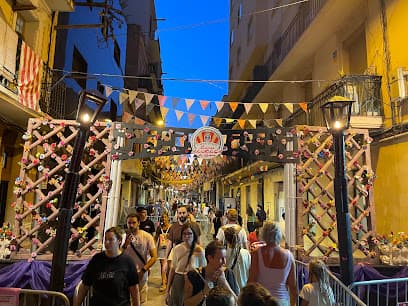
August in Barcelona is a brutal, humid slog that sends most locals fleeing for the hills, but for those who stay, the city ignites in a series of neighborhood riots known as Festes Majors. While the tourists choke the streets of Gràcia, the real ones head to Sants. Specifically, they head to Carrer d'Alcolea de Baix. This isn't some curated, city-council-sponsored 'experience.' This is a street that spends an entire year hoarding cardboard, plastic bottles, and gallons of paint to transform their narrow slice of the city into something unrecognizable.
Walking onto Alcolea de Baix during the festival is like stepping into a low-budget, high-concept film set. One year it’s a sprawling library of lost souls; the next, it’s a cinematic tribute or a journey into the deep sea. The scale is staggering, especially when you realize it’s built by the very people who live behind those decorated balconies. These are the 'veïns'—the neighbors—and they don't do this for you. They do it for the trophy, for the bragging rights over the 'Dalt' (upper) section of the street, and for the sheer, stubborn joy of reclaiming their space from the creeping tide of gentrification.
The air here is thick. It’s a cocktail of frying botifarra (the local sausage), spilled Estrella, and the sweat of several thousand people packed into a space designed for a few dozen SEAT Ibizas. It’s loud, it’s chaotic, and it’s beautiful. You’ll hear the 'gralles'—those high-pitched, slightly mournful Catalan oboes—competing with the bass-heavy thud of a local punk band or a DJ spinning Euro-pop from the 90s. It’s a sensory overload that makes the Gothic Quarter look like a sterile museum exhibit.
If you’re looking for white tablecloths and a quiet glass of Priorat, stay in the Eixample. Here, you drink out of plastic cups and eat off paper plates. You sit at long communal tables for the 'sopars de germanor'—brotherhood dinners—where entire families from three generations argue over football and politics. This is the heart of Sants-Montjuïc, a neighborhood with a long history of labor strikes and social activism, and that defiant spirit is baked into every scrap of papier-mâché on Alcolea de Baix.
Is it crowded? Yes, it’s a claustrophobe’s nightmare. Is it hot? You’ll be drenched in five minutes. But this is the unvarnished truth of Barcelona. It’s a place where the community still means something, where people still build things with their hands, and where a street can become a cathedral of trash and imagination for one glorious week in August. Don't just stand there taking photos for your feed; buy a drink, find a spot near the stage, and try to keep up. This is what a city looks like when it’s actually alive, breathing, and slightly hungover. It’s the best street festival in Barcelona precisely because it doesn't care if you like it or not.
Type
Tourist attraction
Duration
1-2 hours
Best Time
Weekday evenings around 7:00 PM to beat the heaviest weekend crowds.
Features
Tourist attraction
Categories
FestivalCultural EventStreet ArtLocal Tradition
Ticket Prices
Free Admission
No tickets required
Must-See Highlights
The entrance archway of Alcolea de Baix
Nighttime illumination of the papier-mâché structures
The 'Castellers' (human towers) performances in nearby squares
Local food stalls serving botifarra sandwiches
Visitor Tips
Don't touch the decorations; they are fragile and the neighbors worked months on them.
Use the Metro (Sants Estació or Plaça de Sants) as parking is impossible.
Look for the 'Dalt' vs 'Baix' competition signs to see the neighborhood rivalry.
Good For
Culture seekersPhotographersBudget travelersLocal atmosphere hunters
Why Visit
Award-winning DIY street decorations built entirely by local residents
Authentic working-class atmosphere far from the typical tourist trail
Immersive thematic environments that change completely every year
Nearby Landmarks
- 7-minute walk from Sants Estació
- 10-minute walk from Parc de l'Espanya Industrial
- 15-minute walk from Plaça d'Espanya
Accessibility
- Street level access
- Can be very crowded and difficult for wheelchairs during peak night hours
- Outdoor public space
Location
Carrer d'Alcolea
Sants-Montjuïc, Barcelona
Nearby Hotels
Nearby Restaurants
In Sants-Montjuïc
ATTRACTION
Bolets1
Sants-Montjuïc
A gritty, earthy temple to the Catalan obsession with wild mushrooms, where the dirt is real, the fungi are seasonal gold, and the air smells like the damp floor of a Pyrenean forest.
0.0(0)
Tourist attraction
ATTRACTION
Montjuic aparca
Sants-Montjuïc
The unglamorous base camp for your Montjuïc assault. A tactical slab of asphalt where the city's chaos fades into the pine-scented ghosts of the 1992 Olympics.
0.0(0)
Tourist attraction
ATTRACTION
Паркінг Барселона
Sants-Montjuïc
A sprawling slab of industrial reality in the Zona Franca. No Gaudí here—just hot asphalt, diesel fumes, and the honest utility of a secure place to park your rig.
0.0(0)
Park
Frequently Asked Questions
When does the Festa Major de Sants take place?
The festival typically happens in late August, centered around the feast of Saint Bartholomew (August 24th). The street decorations on Carrer d'Alcolea de Baix are usually on display for about 7-9 days.
Is Carrer d'Alcolea de Baix free to visit?
Yes, walking through the decorated streets is completely free. However, you should bring cash for the local food stalls and bars set up by the neighbors to support the festival.
How does Alcolea de Baix compare to the Gràcia festival?
It is generally less crowded with international tourists and feels more local and 'gritty.' The decorations are just as impressive but the atmosphere is more representative of a working-class Barcelona neighborhood.
What is the best time to visit the street?
Late afternoon is best for seeing the details of the decorations without the massive nighttime crowds. However, the true atmosphere—with live music and communal dinners—peaks after 9:00 PM.
Reviews
0 reviews for Festa Major de Sants - Carrer d'Alcolea de Baix
No reviews yet. Be the first to share your experience!